‘The knowledge of Davos will be a blessing to many’ (Morland, 1878)
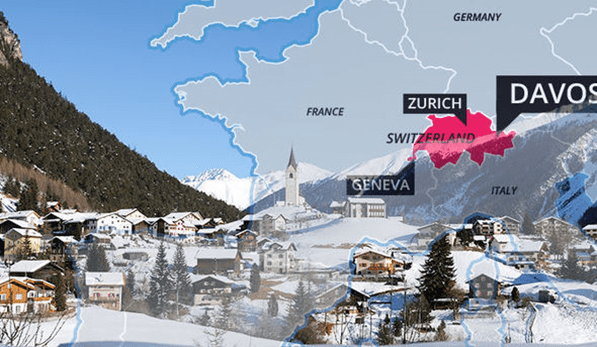
Source: Location of Davos
For centuries people have been travelling abroad to improve their health. Industrialization and poor quality from factory smoke led to cities being a ‘breeding ground for diseases’ (Barton,2009). Thus, leading to many people in Victorian Britain being affected by Tuberculosis (TB) this was a disease that caused its victims to have ‘fever, night sweats and coughing up blood’ (Barton,2009). And so, those who could, travelled to lands with sun exposure and better air quality. Heliotherapy is the ‘use of natural sunlight for treatment’ (Chung, 2015) for a variety of diseases and skin conditions.
The idea of travelling to another country to restore one’s health is a practice that has been around all throughout history. There is evidence to suggest that many ancient civilizations such as the Egyptians also believed in the suns powers and attempted to ‘harness it to cure diseases’ (Brodie, 2015.P8). Indicating that this practice has been around a lot longer than many realise. And so those who were partaking in this practice in the Victorian period were not illogical.
Dr Rollier produced work on heliotherapy. His work concluded that patients should ‘sunbathe for health’ (Collins, 2007). He designed buildings to ‘optimize exposure to the sun’s rays’ (Collins, 2007), these often had south-facing balconies in order to gain the most sunlight. He suggests that it can provide enough help so that they can now ‘condemn surgical intervention’ (Rollier, 1927. P815), suggesting that the air exposure and the other elements of the treatment helped enough that surgery was no longer needed to try and help those suffering. It suggests that the sun exposure causes a ‘flow of blood the depth to the surface’ (Rollier, 1927. P817) which then causes a regulation of circulation around the body. He concludes that this is more beneficial than the ‘best massages’ (Rollier, 1927. P.817) and it helps restore the muscles. All this exposure to the sun and the fresh alpine air helps ‘revive the appetite’ (Rollier, 1927. P817) and then ‘gives new life’ (Rollier, 1927. P817). Those who have undergone this treatment can now leave feeling stronger and in better health than when they arrived.

An industrial town in Victorian Britain. Source: Victorian Britain
SAFE HAVEN:
An example of a popular destination for this is called Davos, located in southeast Switzerland. This place became a ‘haven for tuberculosis sufferers’ (Fahy, 2016) throughout the 19th and 20th centuries. Alexander Spengler, a German doctor, travelled to Davos in the 19th century and was impressed by the ‘clean, healthy air’ (Zimmerman, ND). He was convinced this would help people with lung disease.
While in Davos people began to ‘believe the mountain air could cure them’ (Fahy, 2016) and so many sufferers of TB began to travel there in hopes of leaving with their health restored. BY 1940 Davos had around ’40 such medical institutions’ (Fahy, 2016) that all began to appear since the 1860s, they came about following Dr Alexander Spengler developed a TB treatment of ‘hours lying on sun loungers’ (Fahy, 2016) while breathing in the fresh alpine air.
People have been visiting Davos to help heal them for centuries. Davos was exposed to ‘many hours of sunshine’ even in winter (Morland, 1878), and so Davos was often favoured by many. People believed that time spent in Davos would ‘patch and mend’ (Morland, 1878) the ill. However, it still important to remember that it cannot ‘perform impossibilities’ (Morland, 1878) some that attended may not have been treated. However, it is noted that during their time here many believed the ‘invalid may live as the healthy do elsewhere’ (Morland, 1878) they weren’t held back by their disease.
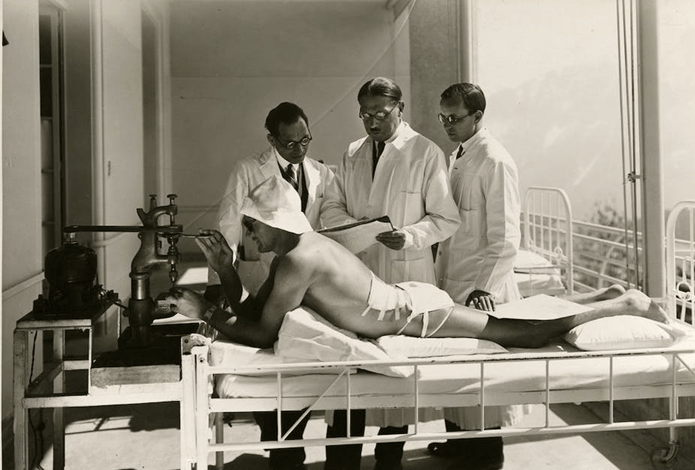
In the middle is Dr Rollier, he is examining a patient undergoing treatment. Source: Treatment
HELIOTHERAPY AND ITS POWERS
It is important to realise that Tuberculosis had no cure and so heliotherapy would not heal those who contracted it. Prior to the treatment those who contracted TB often died at home where they may have ‘infected their carers and families’ (Barton, 2009. P). And so being in these facilities will have lessened the spread of the disease.
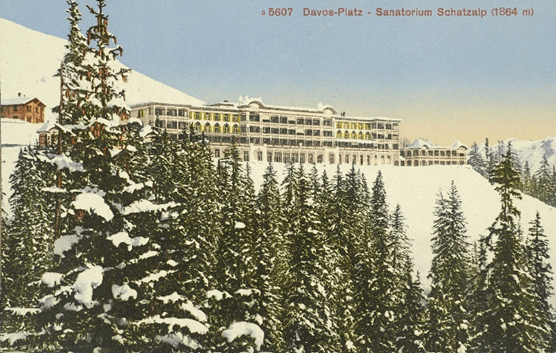
Typical place of treatment. Source: Davos treatment centre
DAILY LIFE IN DAVOS:
While in Davos people had a very strict daily schedule to follow. There days were very organised and how people spent their time all depended on the stage they were in of treatment. They often ate a lot of food while in treatment as TB made people lose weight and so doctors during this time believed that eating in ‘large quantities would help’ (Fahy, 2016) and so this was interpreted in their daily tasks. It is regarded that during the treatment the patient ‘eats the malady away’ (Morland, 1878). This is important as during their stay there is a big emphasis placed on eating and drinking fresh milk. People had to fit in ‘two litres of cows milk’ (Fahy, 2016) per day, while also eating between ‘seven and thirteen courses’ (Fahy. 2016).
When they first arrived the patients were required to acclimate themselves to the conditions such as ‘the cold air and the intense sunlight’ (Brodie, 2015. P10). in order to do this they often stayed In ‘open porch rooms’ and as time went on they were ‘moved closer to open windows’ (Brodie, 2015.P10). This was done in order for them to be exposed indirectly to the sunlight prior to direct exposure. This was done so any open wounds would have had time to heal. So, once this had been done the children were then slowly exposed to the direct sunlight. Throughout their time their patients became ‘physically and emotionally stronger’ (Brodie, 2015) and once they were strong enough they were out of bed and were sent outdoors. This was done so they could engage with a ‘wide variety of physical exercise’ (Brodie, 2015). This was to further the exposure to direct sunlight while also getting movement and exercise. Patients followed the rules ‘to the book if they wanted to get better’ (Brodie, 2015).
PRESENT DAY
Nowadays Davos is used for a different purpose. It is well known for hosting the annual meeting of ‘World Economic Forum’ (Fahy, 2016). Many rich people such as ‘CEO’s, politician, celebrities’ (Fahy, 2016) attend this. They stay in the towns hotels. The locations many patients would have stayed in. In simple terms the meeting is held for those who are invited to discuss ‘global political and economic challenges’ (Franks, 2013) However, the country has not lost it’s medical ties.
Since the COVID-19 pandemic the amount of people ‘concerned about their health and wellbeing has rocketed’ (Barrell, 2023). The pandemic saw people confined to the house for months on end, this created a huge impact on people’s mental and physical health’ (Barrell, 2023). People are increasingly more worried and more aware of their own health, they’re taking more time to look after themselves. Many people were reporting as wanting to ‘change their lifestyle in 2021’ (Barrell, 2023), whether this be more exercise, better eating or travelling abroad to something such as a spa. It has been estimated that just over one fifth of people travelling are ‘currently travelling for health’ (Barrell, 2023). This has resulted in a ‘30% increase in demand for wellness breaks’ (Barrell, 2023). In todays age, wellness travel is not ‘confined to the spa’ (Barrell, 2023). Those who are taking part in the travels take part in a range of activities to increase ‘mental and physical health’. Wellness travel is now associated with enhancing a ‘healthy lifestyle’ (Barrell, 2023) unlike in the past when people went to help with diseases such as TB. It is now more likely that wellness travel is now more associated with ‘fitness holidays and adventure travel’ (Barrell, 2023). Many travel companies are advertising wellness breaks, they are advertising for people to ‘find your happy’ (Barrell, 2023) by booking holidays to get away from reality and relax.
Bibliography:
Primary Sources: Images
ENG236B (ND) ‘Features of the Victorian Period’ [Online Image] Available from: https://www.google.com/url?sa=i&url=http%3A%2F%2Fbritlit-romantictopost-modern.weebly.com%2Ffeatures–historical-events2.html&psig=AOvVaw0qavyFCqaowWBgAOq-W_QT&ust=1709038271284000&source=images&cd=vfe&opi=89978449&ved=0CBUQjhxqFwoTCJCH5eiFyYQDFQAAAAAdAAAAABAJ [Accessed on 16th February 2024]
Express (2018) ‘Map of Davos’ [Online Image] Available from https://www.google.com/url?sa=i&url=https%3A%2F%2Fwww.express.co.uk%2Fnews%2Fworld%2F906612%2FDavos-where-Switzerland-town-map-what-happens-at-World-Economic-Forum&psig=AOvVaw1iRx30gioXLA0cpyFfe_rg&ust=1709038158467000&source=images&cd=vfe&opi=89978449&ved=2ahUKEwir4oG0hcmEAxWkUqQEHc95BiEQr4kDegQIARBO [Accessed on 26th February 2024]
Dr A Rollier (2020) ‘TB Treatment’ [Online Image] Available from: https://www.google.com/url?sa=i&url=https%3A%2F%2Ftheconversation.com%2Fit-cant-cure-covid-19-but-sunlight-was-long-seen-as-having-healing-powers-137542&psig=AOvVaw3CoMpYKU5zNU-ZPfi94FD9&ust=1709034771457000&source=images&cd=vfe&opi=89978449&ved=0CBQQjhxqFwoTCLDjj_aDyYQDFQAAAAAdAAAAABAE Accessed on: 26th February 2024]
Swissinfo.ch (2016) ‘A breath of fresh air for an alpine village’ Available from: https://www.swissinfo.ch/eng/society/tuberculosis-and-davos_a-breath-of-fresh-air-for-an-alpine-village/41896580#:~:text=By%201940%20Davos%20had%20around,milk%20and%20generally%20eating%20well. [Accessed on: 26th February 2024]
Primary sources:
Mrs Morland (1878) ‘For individuals. In Davos Platz: A New Alpine Resort for Sick and Sound by One who Knows it Well.’ London
Rollier A, (1927). ‘Heliotherapy: Its Therapeutic, Prophylactic and social Value’. The American Journal of Nursing. 27 (10). Pp 815-817
Secondary Sources:
Barrell, S (2023) ‘The rise of wellness travel, from rewilding to yoga and pilgrimages’ [Online] Available from: https://www.nationalgeographic.com/travel/article/wellness-travel-rewilding-yoga-pilgrimages [Accessed on: 26th February 2024]
Barton, S. (2009) ‘Healthy Living in The Alps’. Manchester University Press. pp
Brodie, B (2015) ‘Children of the sun’. University of Virginia Nursing School. PP 8-12.
Collins, E (2007) ‘The rise and fall of sunlight therapy’. [Online] Available from: [Accessed on: 25th February 2024]
Chung, J (2015) ‘Heliotherapy’. [Online] Available from: https://dermnetnz.org/topics/heliotherapy [Accessed on: 15th February]
Fahy J (2016) ‘A breath of fresh air for an alpine village’ [Online] Available from https://www.swissinfo.ch/eng/society/tuberculosis-and-davos_a-breath-of-fresh-air-for-an-alpine-village/41896580 [Accessed on: 20th February 2024]
Franks, J (2013) ‘What is Davos and what happens at the World Economic Forum meeting?’ [Online] Available from https://news.sky.com/story/what-is-davos-and-what-happens-at-the-world-economic-forum-meeting-12784281 [Accessed on: 26th February 2023]
Zimmerman, K (ND) ‘Top 10 reasons to choose Switzerland for medical treatment.’ [Online] Available from https://www.myswitzerland.com/en-gb/planning/about-switzerland/health/health-blog/top-10-reasons-for-switzerland/ [Accessed on: 27th February 2024]
 Britons Abroad