
- The Relief of Lucknow. Source: The Cultural experience
“For the individual who wishes to journey and gaze upon real or recreated death, a plethora of sites, attractions and exhibitions are now emerging across the world to cater to the darker side of travel”
(Sharpley & Stone, 2009a)
Dark tourism: An Emerging Phenomenon
Setting off on an exploration of dark tourism is one that many people do, year after year, and are completely encaptulated by the things they see. Wether it’s to world war battlefields or the sites of Pompii or Auschwitz, dark tourism is widely regarded as an eye opening journey. Dark tourists’ visit places that can’t help but be linked to suffering and tradgedy. Globalisation and 21st century technology has made it as easy as the clicking a button and booking a ticket. Dark tourists see these sites as a a way to remind themselves of the intricacy and difficulty of human history that many people may not want or get to expiernce in their lifetimes. And for holiday companies and trip organisers, it is a brilliant way to combine the curiosity for suffering and tragedy with an enjoyable holiday. ‘Consequently, the fundamental question is whether these types of product items should be offered for sale and should you purchase them? Yes’ (Hartmann, Seaton, Sharpley, White. 2018) The common market of dark tourism is worth a staggering £30 billion world wide, making it one of the largest growing industries in 2022
Imperial expansion: The origins of a colonial past
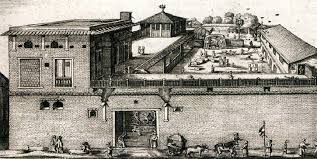
- The English east India company’s first trading post, Surat, India. Source: India today
“But Company documents from Surat (and elsewhere in India) consistently depict local officials as manipulating for their own profit their control over European trade, often in flagrant disregard of trading privileges carefully negotiated with the Mughal court.”
Journal of Early Modern History
Author: James D. Tracy
The story of the Indian mutiny begins far earlier than 1857, but 1612 when the British east India company established a post in surat . Although it only started as as a means for trade, the world would see it evolve into a massive empire that engulphed the whole of india and caused a large appitite for commerse, ambition and power to engulph the british east india company. “Colonial conquests were multifaceted endeavors, driven by a complex interplay of economic interests, political ambitions, and cultural ideologies. Despite the rhetoric of benevolent intervention, these conquests often led to profound disruptions in the social fabric of indigenous societies, perpetuating cycles of exploitation and marginalization.” (Cooper, 2009)
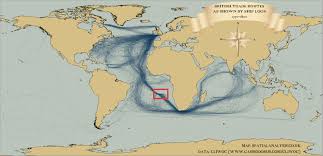
- Indias strateigic importance to british trade from 1750 to 1800 source: the guardian
The beginning of the 19th centuray sparked an even deeper level of dominance in india with the british Raj extending its reach The foothold in the Indian sub-continent allowed the British to spread out across Bengal and by 1803, the British had managed to settle disputes between land and local leaders establishing a secure area. Pridominatly through military force, the british waged a number of wars that slowly but effectively subdued the indian states and princely territories. The most bllody being the Carnatic Wars.
The Indian mutiny, often referred to as the sepoy rebellion or the first war of independence is a time in history they may be overlooked by the average holiday maker, but not to dark tourists. On the surface the Indian mutiny may seem like just another example of uprising against colonial powers, something that was frequent throughout the 18th and 19th cenutries; but look a bit deeper and we can understand why the Indian mutiny is so prominent when focusing on dark tourism. Clear clashes of cultures, ideologies, and power dynamics are what leads this time in history to being a darek touriusm hot spot.
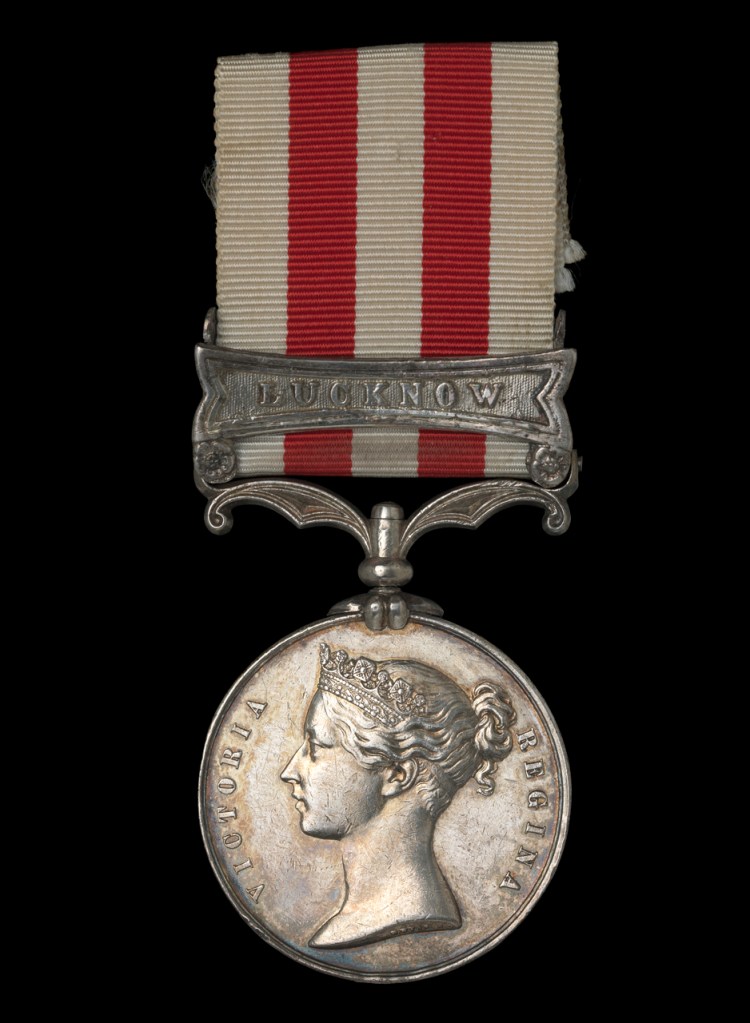
- Indian Mutiny Medal 1857-58. Awarded to Thomas Young VC. Obverse: Head of Queen Victoria with a diadem, hair tied in a knot. source: Royal museums Greenwich
The Indian mutiny was triggered by a difference in beleifs, as the hindu sepoy soldiers found it offence that they were made to use rifle cartrages that had been coated in animal fat, this caused the soldiers to refuse to use them as the tips of the cartages had to be bitten off. Due to their refusal, the british arrested and punished a number the soldiers. This caused the majority of the sepoys to rebell against the british officers that were in command, they stored the meerut jail and marched towards the capital of dheli with the aim of joining forces with already rebellios soldiers. These soldiers besieged and ultimately captured Dehli and declared Bahadur Shah ll as their leader and took proclaimed the restoration of Mughal rule .
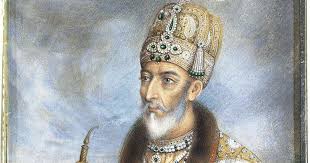
- Bahadur shah ll. source: Royal Collection Trust
After the resteration of the Mughal rule, the rebellion spread to other parts of northern and central india, to places such as Kanpur, lucknow, Jhansi and Allahabad. It was in June of 1857 that the british forces besieged Lucknow and Kanpur, this lead to the massacre of British men, women and children at Bibghar and Kanpur. Sir henry Havelock and Sir James outram lead the relief of the city of lucknow and the british recaptured Cawpore and supressed the rebellion in Jhansi. The rebellion is deemed over in June of 1858 with the recapture of Gwalior by the british, this lead to the capture and exise of Bahadur Shah ll.
Revisiting rebellion: Exploring the Dark Tourism of India’s Mutiny

- The memorial of Cawnpore. source: Jacqueline Banerjee
“nothing lasts, not even a great city, whether Pompeii, New Orleans, or Los Angeles. Musicians and artists know this, and so do scientists and Mardi Gras revelers. But too many of the rest of us don’t even want to look. Death is everywhere, always, and the deal we make with it determine the course of our lives. The deals are all different, and they are our stories, but make no mistake: there is always a deal” (Zakin, 2006: 69).
Due to the events of the Indian mutiy, tourists have flocked to the sights of where the grousome events took place for melenia. The widespread violence, atrocities and loss of life on both sides, the events have been commemorated with a number of statues, museums and heritage sites. This, combined with other aspects of tousim in india, such as the hippy trail and the tourism associated with land marks such as the taj mahal, makes india one ofthe leading countries for toursm in east Asia. “India offers almost every sort of tourism. Although India has made significant headway in promoting specialty tourism, one market remains untapped: “Dark Tourism”. It has become extremely popular all across the world in the twenty-first century.” (Jayashree Das, 2021)
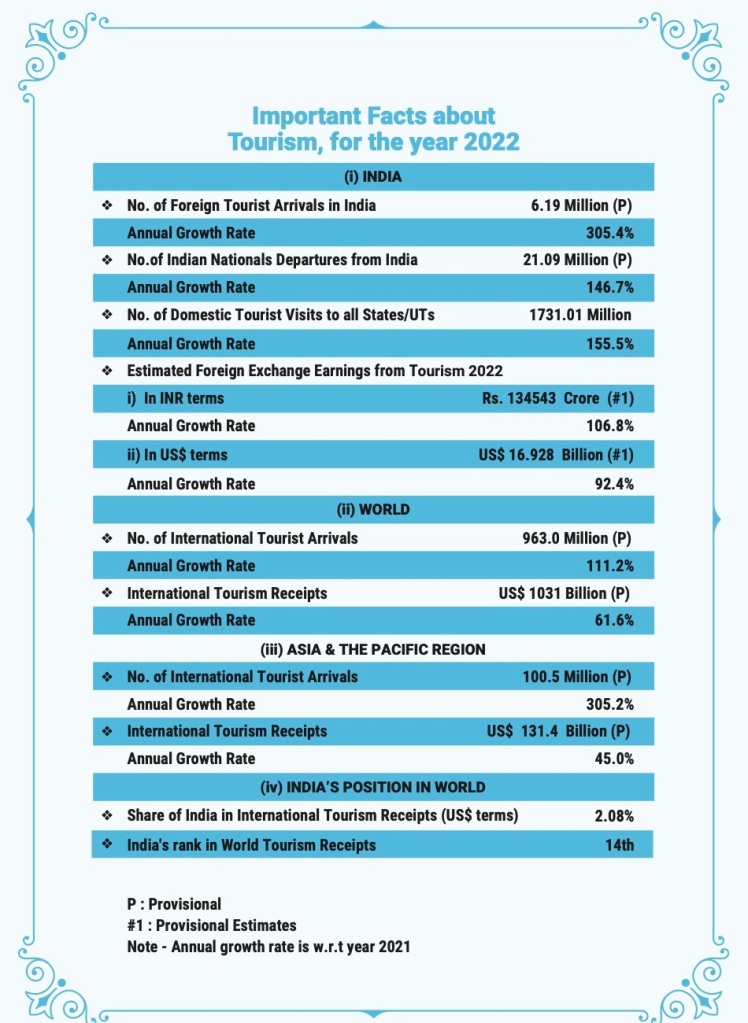
Tourism statistics for India during the year 2022. source: tourism in Asia
Lots of the sides associate with the mutiy have been presereved as historical landmarks that are open to all visitors year round, making the dark tourism business luctritive and easily accesable for the majority of people interested. The sides feature a wide range of exibittions and desp;ays that aim to capture the history of what happened during the Indian mutily and to to remember all the lives that were lost. The Residency in Lucknow is one of the most popular places associated with the Indian mutiny. It served as a residence and a stronghold for the British Officals during the siege of the city in 1857 and today it stands, preserved, as a museum and a memorial that conveys the memory and events that took place during the Indian mutiny.
People who visit the site can expect to experience and explore the ruins of the grounds and see the gardens, main buildings and courtyards that display lots of battle damage from the colonial past surrounding the property. It is no wonder that dark tourists flock here year after year. The historical attributes the buildings host is segnificsnt. The city itself became the administritve centre of the brtish empires Indian subcontinent and the residency was partly destried by cannon and bullet fire, showcasing the death and destruction that makes the Indian mutiny so popular for dark tourists.
“The affective experiences of dark tourism are often negative. Experiences may include feelings of grief, mourning and sympathy for the victims” Lili Qian

“The grave of the Hale family stands close to the entrance of the churchyard. The monument is broken, their names lost.”
Source – reflections of the Lucknow Residency
it is important to undertand that when places that have been subject ot death and distruction are used as a places of remeberance, it is not uncommon to see greif intertwined with amusment in the form of historical intruige. As dark tourists have done for years, they will travel to sights that are the subject of battles, featuring tombs and graveyards. This distorts the line betweenthe public and the private for some people, as people who are in mourning may find this insensitive, it is important to try and not and not allow modern commercial pressures to create an unsettling juxtaposition. This can be seen within almost all of the dark tourism sites in India. especially the Memorial in Cawnpore. the Memorial was erected to remember the 73 women and 124 children that were brutally massacred by the British during the uprising. many people who flock to the memorial have relatives who were killed or who’s relatives knew the people killed in this massacre, making it a delicate subject to understand when faced with foreign tourists.
Embracing Shadows: India’s Dark Tourism Landscape and Its Promising Future
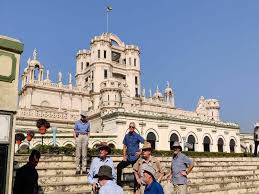
tourists outside La Martiniere School, India. 2021. Source: the cultural experience
The phenomenon of dark tourism in India is one that is set to continue growing. the rich social and cultural ties that be found in India, as well as its affordability provide lots of opportunities for travellers looking to explore the darker aspects of Indian history. yes, some aspects of the Indian mutiny may deter some travellers, but others are attracted to the opportunity to engage themselves with the challenging narrative of Indias colonial past. the growing infrastructure and improved accessibility and preservation of historic sites are meaning it is only getting easier to explore India and everything it has to offer historically, with the Indian mutiny standing as a significant focal point in this exploration of dark tourism.
Reference list
Cooper, F. (2009). Colonialism in Question: Theory, Knowledge, History. Berkeley, California: University of California Press.
Dalrymple, W. (2015). The East India Company: The original corporate raiders | William Dalrymple. [online] the Guardian. Available at: https://www.theguardian.com/world/2015/mar/04/east-india-company-original-corporate-raiders.
Das, J. (2021). Scope of Dark Tourism as a Revival Strategy for the Industry- A Study with Special Reference to Rajasthan.
get your guide (2016). Krakow and Auschwitz-Birkenau. [online] Available at: https://www.getyourguide.co.uk/krakow-l40/auschwitz-birkenau-salt-mine-guided-tour-in-english-t92097/.
India Today (2019). When and why did the British first choose to invade India? [online] India Today. Available at: https://www.indiatoday.in/education-today/gk-current-affairs/story/when-and-why-british-first-came-to-india-1591166-2019-08-24.
Kidron, C.A. (2013). BEING THERE TOGETHER: DARK FAMILY TOURISM AND THE EMOTIVE EXPERIENCE OF CO-PRESENCE IN THE HOLOCAUST PAST. Annals of Tourism Research, 41, pp.175–194. doi:https://doi.org/10.1016/j.annals.2012.12.009.
Ltd, F.M.I.G. and C.P. (2022). Dark Tourism Market is Estimated to Attain a Revenue of US$ 36.5 Bn at an Impressive CAGR between the Forecast Period of 2022-32 | Future Market Insights, Inc. [online] GlobeNewswire News Room. Available at: https://www.globenewswire.com/news-release/2022/10/24/2539757/0/en/Dark-Tourism-Market-is-Estimated-to-Attain-a-Revenue-of-US-36-5-Bn-at-an-Impressive-CAGR-between-the-Forecast-Period-of-2022-32-Future-Market-Insights-Inc.html.
Olsen, D.H. and C.A.B. International (2019). Dark tourism and pilgrimage. Boston, Massachusetts: Cabi, [] © Cab International.
Schawohl, E. (2011). The Lucknow Residency: Silent Stones. [online] The Lucknow Residency. Available at: http://reflectionsonthelucknowresidency.blogspot.com/2011/09/silent-stones.html [Accessed 28 Feb. 2024].
Sharpley, R. and Stone, P.R. (2009). The darker side of travel : the theory and practice of dark tourism. Bristol, Uk ; Buffalo, Ny: Channel View Publications.
Tracy, J.D. (2006). Europe’s Reformations, 1450-1650. Rowman & Littlefield.
victorianweb.org. (n.d.). ‘An Icon of Empire. The Angel at the Cawnpore Memorial,’ by Baron Marochetti (1805-1867). [online] Available at: https://victorianweb.org/sculpture/marochetti/30.html.
http://www.rct.uk. (n.d.). India – Crown of the Emperor Bahadur Shah II. [online] Available at: https://www.rct.uk/collection/67236/crown-of-the-emperor-bahadur-shah-ii.
http://www.rmg.co.uk. (n.d.). Indian Mutiny Medal 1857-58 | Royal Museums Greenwich. [online] Available at: https://www.rmg.co.uk/collections/objects/rmgc-object-207694 [Accessed 28 Feb. 2024].
http://www.theculturalexperience.com. (n.d.). 12 Day Indian Mutiny Tour | Wake Up Call For The British. [online] Available at: https://www.theculturalexperience.com/tours/the-indian-mutiny-battlefield-tour/ [Accessed 28 Feb. 2024].
http://www.theculturalexperience.com. (n.d.). The Indian Mutiny Tour Images. [online] Available at: https://www.theculturalexperience.com/tour-reviews/the-indian-mutiny-tour-images-november-2019/ [Accessed 28 Feb. 2024].
 Britons Abroad