“They [ocean liners] began to assume the character of ocean-going city states, covering a complete cross-section of modern human civilization, in all walks of life’’
(Dawson, 2005, p. 97)
Marred by Tragedy
The Olympic class liners were undoubtedly some of the most luxurious forms of travel available at the turn of the twentieth century but their story is marred by tragedy. As is well known, on the night of April fourteenth, 1912, the middle sister of the Olympic liners, the RMS Titanic struck an iceberg on her maiden voyage to New York. In just over two hours she would be on the seabed and 1,500 dead. Undoubtedly, the Titanic’s place in history is warranted with it still regarded as on of the largest peacetime maritime disasters in history along with the improvements it made to ocean liner safety systems.

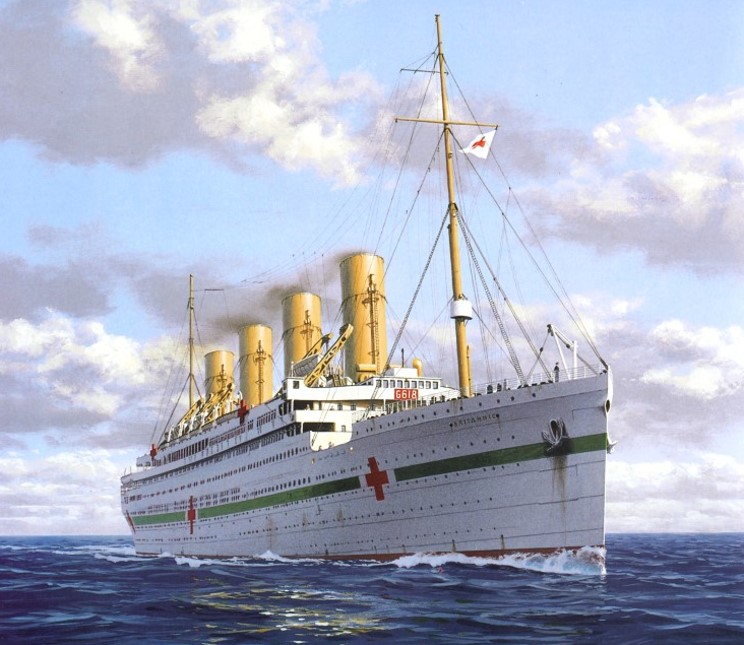
This was followed only three years later when only four years later, the youngest sister, HMHS Britannic, currently serving the British Royal Navy as a hospital ship for the Gallipoli campaign, would strike a German mine in the straits of Kea in Greece. Luckily, Britannic was on her way to pick up wounded troops in Gallipoli and the evacuation went somewhat smoothly, although the ship was still lost along with thirty people losing their lives. Unlike her sisters, Britannic also never got to see passenger use as she was completed after the outbreak of the First World War and was requisitioned by the navy for wartime service.
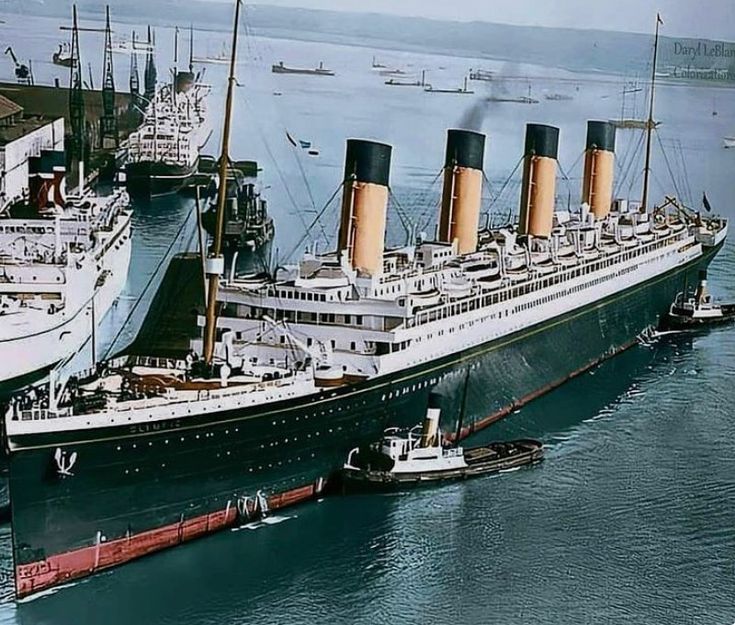
It is the eldest sister that we are here to discuss however, the RMS Olympic. Olympic is often overshadowed by the tragic tales of her ill-fated sister ships but her story is no less as intriguing, especially given she was the only Olympic sister to fulfil her full service lifetime, ferrying passengers from her inaugural voyage in 1911 to her decommissioning in 1935, with a stint between 1915 to 1919 as HMT Olympic, bringing across Canadian and later American troops to the western front of the First World War during which she would gain the moniker ‘Old Reliable’ after attempting to ram a German U-Boat off the coast of Cherbourg, France.

A Floating City of Victorian Style
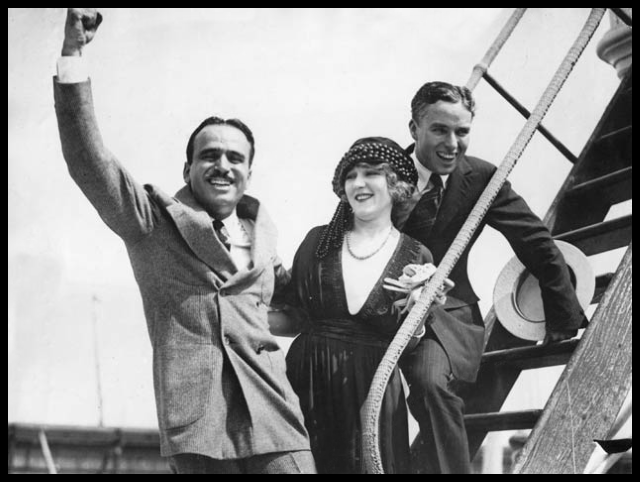
It is well known in our popular history of the Titanic that the Olympic class liners were the very epitome of Victorian style and elegance, being likened to floating cities due to their size and luxury. On Olympic first-class passengers would find luxury cabins with some even equipped with private bathrooms and access to the ship’s dining saloon and the À La Carte Michelin star restaurant. She also housed multiple smoking rooms, a café, a library, swimming pools, a Turkish Bath and a gymnasium, not to mention the Grand Staircase present on all Olympic Class liners. After renovations in the 1920s, this would even include the installation of a movie theatre on board playing the latest hits of the interwar period. Over the course of her lifetime, Olympic would play host to many of the early twentieth century’s celebrities; Marie Curie, Sir Arthur Conan Doyle, Charlie Chaplin, Mary Pickford and Douglas Fairbanks, and Prince Edward, then Prince of Wales.
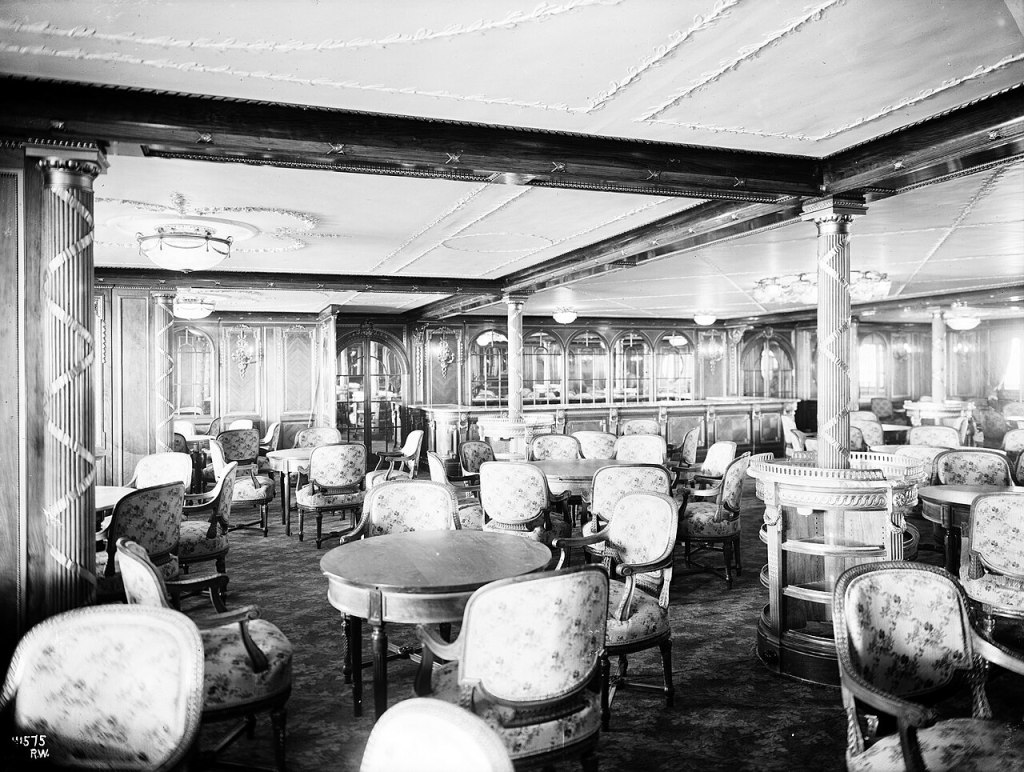
Of course, just like Titanic, Olympic played into the many classist attitudes of steam liner traffic with strict class divides imposed on the ship with the decks divided between first, second and third classes, along with the disparity of the sizes of rooms. This was somewhat lifted in the interwar period with the Olympic’s shift to predominantly tourist traffic and the resulting reduced cost of fares.
Bibliography
Chirnside, Mark (2004). The Olympic-Class Ships. Stroud:
Chirnside, Mark (2015). RMS Olympic: Titanic’s Sister. Stroud:
Hawley, Brian (2012). RMS Olympic. Stroud: Amberley Publishing.
Beveridge, Bruce; Hall, Steve (2004). Olympic & Titanic. Buy Books.
 Britons Abroad