Manicured Lawns and the Mentally Ill: the Rise and Fall of Asylum Tourism.

‘Curiosity about the patients doesn’t erase stigma; it perpetuates stigma. Sneaking around asylums diminishes the lived experience of the patients who suffered in there. It’s not OK to lie in someone else’s coffin or wear someone else’s straitjacket’ (Yanni, 2010).
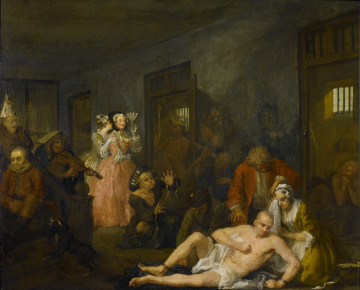
Colour image of P47, A Rake’s Progress VIII: The Madhouse by William Hogarth. Unframed view, taken in 2010 for the Public Catalogue Foundation (Art UK) oil paintings project.

The Historical Madhouse and its Treatments

Meaning a ‘place of refuge’, the historical mental asylum is the ancestor of modern day psychiatric hospitals, and its institutional roots can be traced as far back as 1247, in London. Originally named the New Order of our Lady of Bethlehem, the hospital would undergo four regenerations before settling in its current location of Beckenhem, yet it will never shake its well known nickname: Bedlam, now a byword for mayhem or madness. Prior to the opening of such institutions, those with mental illness and learning disabilities would be cared for by their families, and when the families could not provide that care, they would end up most likely destitute, homeless and begging for food and shelter.

By the 18th century, private institutions started to emerge but as Bazar & Burman point out, the patients in these institutions were more than likely the powerless wives of bored and jealous aristocrats, who would be forced into institutions no better than human zoos (Bazar & Burman, 2014).

Yet despite the age of psychiatric inpatient treatment, prior to the 19th century there was no real set treatment for mental illness, and for centuries the preferred treatment would change alongside other trends of the day.

Some notable examples are trephination, bloodletting and of course, lobotomies. Each of these ‘treatments’ revolved around removing something from the body – either a part of the skull to release pressure on the brain, or blood, bile, and vomit to re-balance the humours, or removing the connection between parts of the brain – yet no move was made to change the environment in which the person lived, or to make changes to their lives. 

Thus enter, the ‘moral treatment’. For the first time, mental illness was seen as a curable disease, the depletion of one’s mental energies leading to insanity, and the cure was… almost simple, compared to past methods – it could be broken down into five things: rest, meaningful employment, appropriate amusements, hygienic conditions and, most importantly, kindness. 

If you had wanted to visit an asylum in the 19th century, you would need to purchase a guidebook such as Miller’s New York As It Is, or the Englishman’s Illustrated Guide to the United States and Canada, and you would have to physically travel to the institutions, and pay to walk through them, a costly endevour. Instead, a simple search on YouTube offers thousands of videos ranging from millions of views to barely a thousand that you can watch from the comfort of your own home.

The Tourist and the Asylum

As mentioned above, the Victorian tourist would require guidebooks for their visits to new cities and towns, and more often than not these guidebooks recommended asylums as a must-see destinaiton. For example, Miller’s New York recommended visiting twelve different asylums within the city, whilst the Englishman’s Illustrated Guide recommended at least twenty-one.

Bloomingdale Asylum in 1834

One asylum Miller recommends is the Bloomingdale Asylum for the Insane, as shown above, located in the Morningside Heights neighbourhood of Manhattan. Miller’s As It Is marks a move from interest in asylums for their patients, and interest in asylums for their architecture and landscaping – a move from the mentally ill, to manicured lawns.

Miller’s guide describes the approach to the asylum from the southern entrance as ‘highly pleasing’, and continues to say that ‘the sudden opening of the view, the extent of the grounds, the various avenues gracefully winding through so large a lawn. … The central building … is always open to visitors, and the view from the top of it being the most extensive and beautiful of any in the vicinity of the city, is well worthy of their attention’ (Miller, 1880, p. 46-47).

The shift in a more focused, set treatment also meant a shift in the way asylums are viewed – thus, every element of the institution was an integral part of treatment, both inside the building and out of it, and so visitors were encouraged to visit the gardens, and take in the beautiful buildings. No longer were people coming to view the patients, but instead to view the asylum – Jane Miron, author of ‘Prisons, Asylums and the Public’ argued that for asylum administrators, encouraging tourism became a way of gaining public support and confidence – it would also help to discourage the scepticism of treatment and the stigma surrouding mental illness (Miron, 2011).

But have we really left asylum tourism behind? Or has it simply changed formats?

A Move to Modern Voyeurism

Bazar & Burman write that the practice of asylum tourism may seem strange and uncomfortable to 21st century readers, but I would like to argue that we still hold fascination with asylum tourism, and that not only does it still exist, that it has simply changed forms and it some ways, become even more accessible than its predecessors, and even more voyeuristic.

Although it primarily holds sexual connotations, to be a voyeur and to be voyeuristic also extends to the interest and enjoyment of other peoples suffering and misery, and is that not the very basis of asylum tourism?

The use of photography in asylums and psychiatric hospitals is not a new one, its use can be traced back to the 1870s with clinicians Henri Dagonet and Jean-Martin Charcot as some of the first to make use of it as a diagnostic tool (Eghigian, 2010). Their diligent work in photographing patients experiencing hysteria allowed for the creation of diagnostic criteria for maladies of the mind.
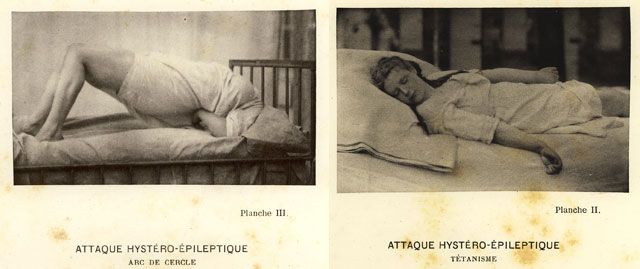
An example of Charcot’s photography, here demonstrating an attack of hystero-epilepsy.

While the image above is an example of photography to be used in aid of diagnostic criteria, it is still an example of the voyeuristic interest we hold with regards to asylums and their patients, in this case, we are still seeking some intrusive entertainment from another persons vulnerable moments in order to satisfy our own curiosity.

The relationship between asylums and photography continues even today, but now for new reasons – it is no longer used to document patients and their symptoms, but instead it is used to fulfil the voyeuristic curiosity that surrounds abandoned asylums and hospitals – a sentiment not dissimilar to the one held by our predecessors when presented with the opportunity to tour functioning asylums.

Not only do we embrace asylum tourism presented to us in accessible formats such as videos and photographs, we are still interested in touring the buildings themselves. Through companies such as Haunted Happenings, you can follow in your Victorian ancestors footsteps and book to tour asylums and hospitals for the price of £69 per person – with the added excitement of the paranormal, as its not enough to simply tour the buildings where people faced dehumanising and inhumane treatments, but we must be able to witness their continued suffering from beyond the grave! But its not just tours, its books which tell us the biographies of patients, and their illnesses and their subsequent fates – such as Voices from the Asylum: West Riding Pauper Lunatic Asylum by Mark Davis, and its podcasts such as Asylum Stories as available on Spotify which discusses hospitals, patient stories and treatments.

Closing Thoughts

As humans, we have always been interested in the macabre, the morbid and the unknown – we will always want to know whats behind the curtain, and asylums and mental hospitals only naturally fall into our path of curiosity – be it through physically touring the buildings, photography, videos, books or podcasts, we have a desire to know everything we can about taboo subjects.

Though original believe was that asylum tourism died out following the change from asylum to psychiatric hospital, I have aimed to show that not only is this not true, but our attitudes to psychiatric hospitals, psychiatry and the mentally ill are more voyeuristic than before.

References

Primary Sources

Englishman and Oxford University (1880). The Englishman’s illustrated guide book to the United States and Canada. (Centennial ed.). [online] Internet Archive. Available at: https://archive.org/details/englishmansillu00englgoog/mode/2up.

Miller, J. and The Library of Congress (1872). Miller’s New York as it is, or Stranger’s guide-book to the cities of New York, Brooklyn, and adjacent places .. [online] Internet Archive. New York, J. Miller. Available at: https://archive.org/details/millersnewyorkas00mill/page/42/mode/1up?view=theater.

Secondary Sources

Bazar, J.L. and Burman, J.T. (2014). Asylum Tourism. https://www.apa.org. [online] Feb. Available at: https://www.apa.org/monitor/2014/02/asylum-tourism.

Box, C. (2021). 19th-Century Tourists Visited Mental Asylums Like They Were Theme Parks. [online] Ranker. Available at: https://www.ranker.com/list/asylum-visitors-in-the-nineteenth-century/christy-box.

Chambers, P. (2020). Bethlem Royal Hospital: Why Did the Infamous Bedlam Asylum Have Such a Fearsome reputation?[online] HistoryExtra. Available at: https://www.historyextra.com/period/victorian/bethlem-royal-hospital-history-why-called-bedlam-lunatic-asylum/.

Coleborne, C. (2001). Exhibiting ‘Madness’: Material Culture and the Asylum. Health and History, 3(2), pp.104–117. doi:https://doi.org/10.2307/40111408.

CSP Online. (2020). A History of Mental Illness Treatment. [online] Available at: https://online.csp.edu/resources/article/history-of-mental-illness-treatment/.

Eghigian, G. (2010). Who’s Haunting Whom? The New Fad in Asylum Tourism. [online] Psychiatric Times. Available at: https://www.psychiatrictimes.com/view/whos-haunting-whom-new-fad-asylum-tourism.

HauntedHappenings.co.uk. (n.d.). Haunted Asylums & Hospitals. [online] Available at: https://www.hauntedhappenings.co.uk/haunted-asylums-hospitals/.

Kahn, E.M. (2016). Chains, Whips and Misery: Studying and Preserving Old ‘Lunatic’ Asylums (Published 2016). The New York Times. [online] 29 Sep. Available at: https://www.nytimes.com/2016/09/30/arts/design/chains-whips-and-misery-studying-and-preserving-old-lunatic-asylums.html.

Miron, J. (2011). Prisons, asylums, and the public : institutional visiting in the nineteenth century. Toronto: University Of Toronto Press.

Narula, B. (2021). What It Meant to Be a Mental Patient in the 19th Century? [online] Lessons from History. Available at: https://medium.com/lessons-from-history/what-it-meant-to-be-a-mental-patient-in-the-19th-century-86340b93199b.

Ottin, T. (2022). What Was Life like in a Victorian Mental Asylum? [online] History Hit. Available at: https://www.historyhit.com/life-in-a-victorian-mental-asylum/.

Rondinone, T. (2021). Dark Places—Our History of Asylum Tourism | Psychology Today United Kingdom. [online] http://www.psychologytoday.com. Available at: https://www.psychologytoday.com/gb/blog/the-asylum/202103/dark-places-our-history-asylum-tourism.

Science Museum. (2018). A Victorian Mental Asylum. [online] Available at: https://www.sciencemuseum.org.uk/objects-and-stories/medicine/victorian-mental-asylum.

Yanni, C. (2010). Review – Forbidden Places: Online Photography Exhibit of the New Jersey State Hospital for the Insane. [online] h-madness. Available at: https://historypsychiatry.com/2010/08/09/review-forbidden-places-photograph-exhibit-of-the-new-jersey-state-hospital-for-the-insane/.

York, B. (2023). Inside The Haunting Past of 19th-Century Mental Hospitals. [online] History Defined. Available at: https://www.historydefined.net/the-history-of-19th-century-mental-hospitals/.

Images

Bloomingdale Insane Asylum in 1834. (n.d.). Available at: https://bloomingdalehistory.com/2016/01/10/the-bloomingdale-insane-asylum/.

Charcot, J.-M. (n.d.). Attaque Hystero-Epileptique. [Photography] Available at: https://hystoria.ca/2015/11/29/charcots-photography/.

Hogarth, W. (1734). A Rake’s Progress VIII: The Madhouse. [Oil on Canvas] Sir John Sloane’s Museum Collection Online. Available at: https://collections.soane.org/object-p47.
Tour Buses and Travel Guides: Defining the Who By the What

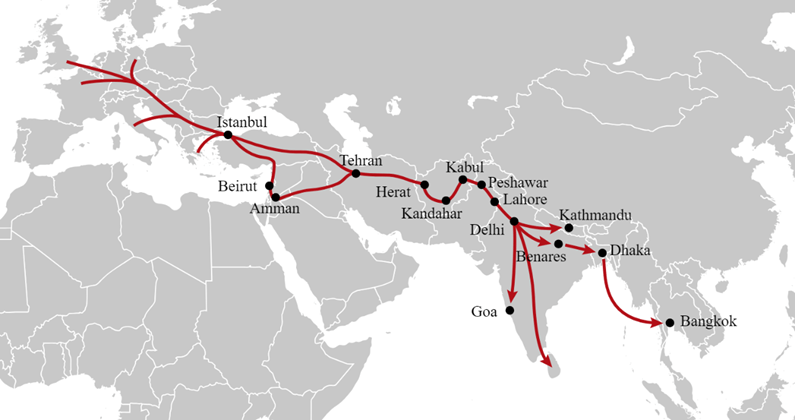
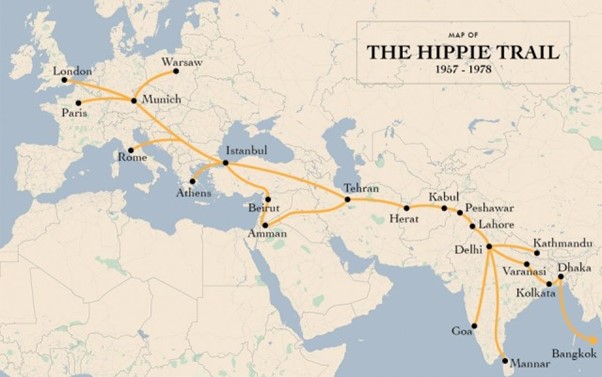
Map of the hippie trail, also known as the ‘overland trail’.

Beginning in London and ending most commonly in Kathmandu, the hippie trail, also known as the overland route, was a path through Europe and Asia that represented liberation “from the constraints of jobs, mortgages and social conventions” (Gemie, 2018, np). In other words, it was a way of leaving the Western world behind and moving across the land in search of transformation and self-discovery. However, the trail had its own social conventions and culture, which dictated a hierarchy among those who travelled the route. Some were considered inauthentic due to their means of travel and intentions on the road. Those who were more conventionally guided either via guidebooks, travel agents or tour buses were disdained as ‘tourists’, a label that was used in the pejorative, and intended to encapsulate the lack of ‘authenticity’ of those who held on to the supposed comforts of the West. This blog post will look at this debate and consider the supposed ‘authenticity’ of the traveller’s journeys, some of the differences between ‘tourist’ and ‘traveller’ and what performances distinguished them on the hippie trail, if there was any distinction between them at all.

SEARCHING FOR IDENTITY

The ability to travel along the overland route, somewhat safely, lasted for approximately a decade, between 1965 and 1978, and was popularised as part of the hippie counter-culture movement that developed during this period. The hippie movement was a ‘rejection’ of Western consumerism and led to elitism along the trail. Brian Ireland (2021) explains that traditional tourism, dictated by travel agents and tour guides, was “viewed as a symbol” of the culture they were trying to leave behind (Ireland, 2021, np). The people who moved along the routes declared themselves ‘travellers’ and as such distinguished themselves as separate from other Westerners in the East, who were disdained as ‘tourists’ due to their being “unthinking consumer[s] with no sense of discovery” (Gemie & Ireland, 2017, p.103). The reasons for following the route were varied, with some chasing dreams, others discovering themselves, and some simply pursuing something different “from the perceived monotony of middle-class life in Europe” (Sobocinska, 2014, np.) However, whatever their reasons, as Arne Walderhaug tells in his travelogue, one of the main cultural performances was to travel along the route as cheaply as possible to extend the journey (Walderhaug, nd, np). This included rejecting transportation methods traditionally used when travelling long distances such as airplanes or boats, unless strictly necessary. The methods of movement preferred were walking, hitchhiking, driving and buses, including tour buses.

TOUR BUS TRAVELLERS?
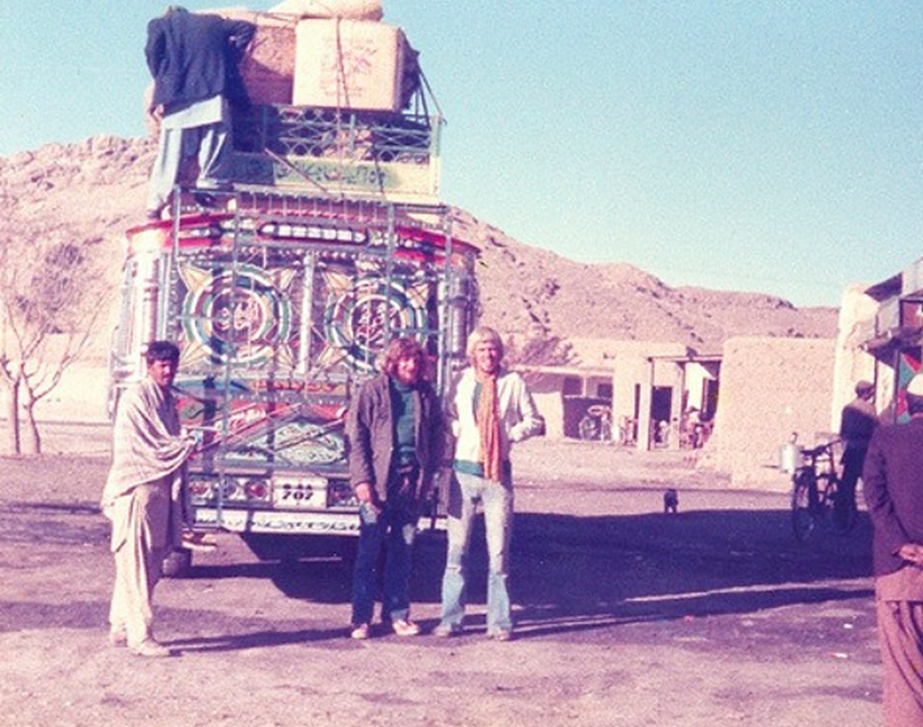
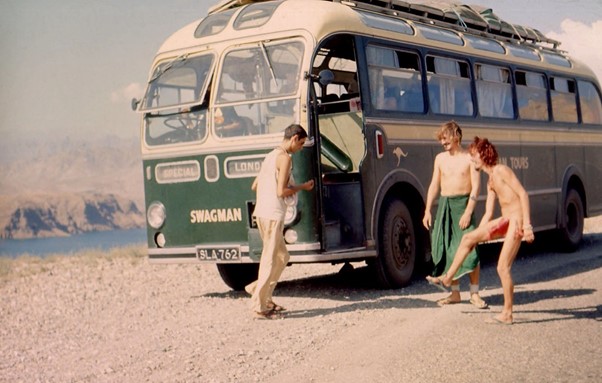
Swagman Overland Bus, Kabul, 1970.

The hippie trail, for all its travellers’ scorn of the word ‘tourist’, generated an industry in the small tour bus companies that travelled along the overland route, offering inexpensive tours where other like-minded individuals would be able to travel together in relative safety. One such company was Swagman Tours (as the image above shows), which offered travel “from London to Kathmandu and back” and whose passengers looked and acted “like young Western tourists” but still considered themselves travellers (Gemie & Ireland, p. 101, 2016).  As this documentary, The Road to Kathmandu (1975), shows, those who travelled on the route were mostly white and, in their twenties. They travelled along the same route with the same predetermined stops at sites of cultural significance. To reject Western culture, and yet still utilise inherently Western services and comforts, such as those represented by the tour bus, would appear to be hypocritical and antithetical to the spirit of the trail. However, those who used the buses believed themselves to be travellers regardless of this distinction, and Gemie and Ireland (2016) thought that the division between what constituted a traveller, and a tourist on the hippie trail could have been as simple as the belief in being a traveller (Gemie & Ireland, 2016, p. 103).

The travellers of the trail were “united in their rejection of the label ‘tourist’”, which included the search for ‘authentic’ experiences “through a range of performances that signalled their ‘authenticity’” and it was this uniting ideology that defined them (Gemie & Ireland, 2016, p. 103; Sobocinska, 2014, np.). However, Dean MacCannell (1999) noted that ‘authentic experiences’ inside cultures not your own, were merely “staged authenticity” because it was not “so easy to penetrate the true inner workings” of other cultures as there was an element of the performative that was based on visitor expectations (MacCannell, 1999, pp. 94-95). These expectations were proliferated through media such as the documentary linked above, word of mouth, and even the iconography associated with the hippie movement. This suggests that the distinction between tourist and traveller is simply the difference between the experience of how movement was achieved and the destination once movement occurred. One, the tourist, sought places to visit, a guided tour, in relative comfort, around monuments of cultural significance. Whereas the other, the traveller, sought people and approached movement across the land as an anthropological journey. This would indicate that the traveller on the hippie trail was merely a tourist of people and culture, in the same way that the tourist was a traveller of monuments.

PROGENITORS OF THE MAINSTREAM
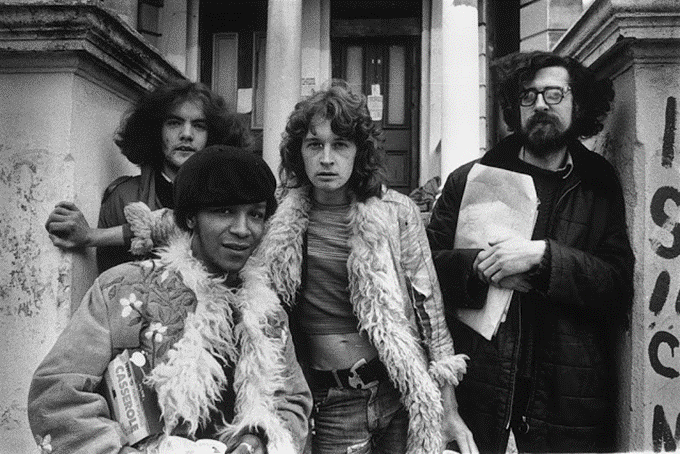
Five Travellers on the Hippie Trail

Historians such as Agnieszka Sobocinska (2014), propose that the European traveller in Asia was a benefactor of the old colonial infrastructure in places like India and, in fact, extended “the long genealogy of imperial travel” to the present day, which would not have been possible if they weren’t Western (Sobocinska, 2014, np.) While this blog does not have the space to completely explore this statement, what can be said is that the European travellers through Asia were complicit in the booming tourist industry in the Asian continent.  They were the sellers of fabrics, creators of tour guides like the Lonely Planet guidebooks, and advice pamphlets, and they were the progenitors of the ’mainstream’ backpacking tourist industry that had economic, cultural and environmental ramifications on the places they visited. The travellers were ‘developer tourists’ who utilized already existing infrastructure to provide or develop services for the next wave of travellers or ‘backpackers’ (Hampton & Hamzah, p.558, 2016). Rory Maclean gave an example of a patisserie in Istanbul that became the unofficial first meeting point of the trail (Maclean, np, nd). This shop, The Pudding Shop, was adopted by the trailgoers as the “information central” of the trail and was one of many instances of tourists appropriating an area for their own purposes. “Freak Street” in Nepal offered legally available drugs to travellers, and ashrams in Goa became a “hotbed of alternative culture” where people could meditate and “attempt to discover themselves” (Openskies, nd). By having these set destinations, printed in guidebooks and spread through notice boards and word of mouth, those who travelled the trail were acting in the capacity of the ‘tourist’ they so clearly disdained. They were not ‘discovering’ and not experiencing ‘authenticity’ in the way they claimed they were.

CONCLUSION

Those who moved along the trail created a hierarchy of travellers, with tourists being at the bottom of the list. However, when looking at the behaviours of the travellers along the hippie trail, including how they travelled, and how they appropriated culture and places as their own, we can see there was little distinction between the two. The exception, as shown above, was simply in the belief that they were travellers and not tourists because to them to be a tourist represented all that was wrong with the Western world they had left behind. Nevertheless, just because they moved out of the theoretical “West” does not mean they did not take the ideologies with them. They generated industry both at home and in places they were visiting, they were consumers and sellers who were hypocritically part of a system that was developed because of and for them. The supposed ‘authenticity’ of their experiences was questionable because the experience they wanted was performative based on their already preconceived notions of what the authentic nature of a place was.

References:

Primary Sources

Exodus Adventure Travels (2015) The Road to Kathmandu- Documentary (1975). [Online Video}. Available from: <https://www.youtube.com/watch?v=9VzS0MQw1wU&gt; [Accessed: 12 April 2024].

Shaahy, S. (nd) Overland Guide to Nepal. [Online] Available from: <https://www.richardgregory.org.uk/history/last-whole-earth-guide-1971.jpg&gt; [Accessed 17 April 2024].

‘Swagman overland bus, Kabul, 1970’ (1970) Swagman overland bus, Kabul, 1970. [Online Image]. Available from: <https://www.messynessychic.com/2014/03/11/road-trip-to-afghanistan-snapshots-from-the-lost-hippie-trail/&gt; [Accessed 12 April 2024].

Rory Macclean (c1967) ‘The Pudding Shop’. [Online Image]. Available from:< https://rorymaclean.com/hippie-trail/relive-the-journey/&gt; [Accessed 17 April 2024].

Tomory, D. (ed) (1996) A Season in Heaven: True Tales from the Road to Kathmandu.

Travellers (nd) Five travellers on the Hippie Trail. [Online Image] Available from: <https://openskiesmagazine.com/the-rise-and-fall-of-the-hippie-trail/&gt; [Accessed 15 April 2024].

Map of The Hippie Trail (nd) Map of the Hippie Trail, 1957-1978. [Online Image] Available from: <https://1960sdaysofrage.wordpress.com/2018/09/07/hippie-trail/&gt; [Accessed 14 April 2024].

Walderhaug, A (nd). ‘Travelling the Hippier Trail’. [online] Available from: <https://www.walderhaug.org/travelogues/the-hippie-trail-ii&gt; [Accessed 12 April 2024].

Secondary Sources:

Butterfield, M. (2020) ‘Full of Eastern Promise Part 1: Afghans, Kaftans and the Hippie Trail’. C20 Vintage Fashion. [Online] Available from: <https://www.c20vintagefashion.co.uk/post/full-of-eastern-promise-part-1-afghans-kaftans-and-the-hippie-trail&gt; [Accessed 15 April 2024].

CNN (2022) The road trip that inspired the Lonely Planet guidebooks. [Online Video]. Available from: <https://www.youtube.com/watch?v=VnS6HuGi6VQ&t=54s&gt; [Accessed 12 April 2024].

Gemie, S. (2018) ‘The hippie trail and the question of nostalgia’. OUP blog. [Online] Available from: <https://blog.oup.com/2018/01/hippie-trail-question-nostalgia/&gt; [Accessed:  13 April 2024]

Gemie, S. & Ireland, B. (2017) The Hippie Trail: A History. Manchester University Press: Manchester.

Hampton, M.P. & Hamzah, A. (2016) ‘Change, Choice, and Commercialization: Backpacker Routes in Southeast Asia. Growth and Change, 47 94) December, pp. 556-571.

Ireland, B. (2021) ‘The hippie trail: a pan-Asian journey through history’.  History Extra [Online] Available from: <https://www.historyextra.com/period/20th-century/what-is-hippy-trail-asia/&gt;

MacCannel, D. (1999) The Tourist. A New Theory of the Leisure Class. University of California Press, Ltd: London.

Sobocinska, A. (2014) ‘Following the “Hippie Sahibs”: Colonial Cultures of travel and the Hippie Trail’. Journal of Colonialism and Colonial History, 15 (2) Summer. [Online] Available from: <https://muse-jhu-edu.leedsbeckett.idm.oclc.org/article/549514&gt; [Accessed 12 April 2024].

‘Stylistic Origin of Kashmiri Artistic Traditions’ (nd) UNESCO. [Online] Available from: <https://en.unesco.org/silkroad/content/cultural-selection-stylistic-origins-kashmiri-artistic-traditions&gt; [Accessed 15 April 2024].

‘The rise and fall of the Hippie Trail’ (nd.) Open Skies Magazine. [Online] Available from: <https://openskiesmagazine.com/the-rise-and-fall-of-the-hippie-trail/&gt; [Accessed 15 April 2024].

The Hippie Trail Revisited: Reflections on a Spiritual and Cultural Era of Travel and Exploration

By Elliot Travis

A group of travellers stood outside their campervan in Asia.

As we saw in the previous blog post, most Brits travelled to places with lots of sun and beaches and chose package holidays. However, there was a minority that looked for an alternative, one of which was the Hippie Trail. Little routes were as enticing as the Hippie Trail in modern travel and tourism history. From the late 1960s to the 1970s, the trail from Europe to Asia thrived amongst many younger British travellers and people from other countries in Europe, Australia, and North America. Some teenagers and young adults in this era wanted a unique lifestyle, wanting to break away from society and have freedom. The typical route through Turkey, Iran, Afghanistan, and Pakistan to India was not hampered by later wars and political conflicts, and it was possible to travel northwards to Kathmandu (Oliver, 2014, p.143). Seeking cultural exchange was among many factors to people choosing to travel across the hippie trail, with the appeal of drugs becoming a significant factor towards the 1970s. Was it just the appeal of drugs that made this trail famous with younger people? This blog will focus on that question, analysing how significant learning new cultures and beliefs was in their decision.

Map of the hippie trail route.

Defining Hippie and the spiritual attraction to the Hippie Trail:

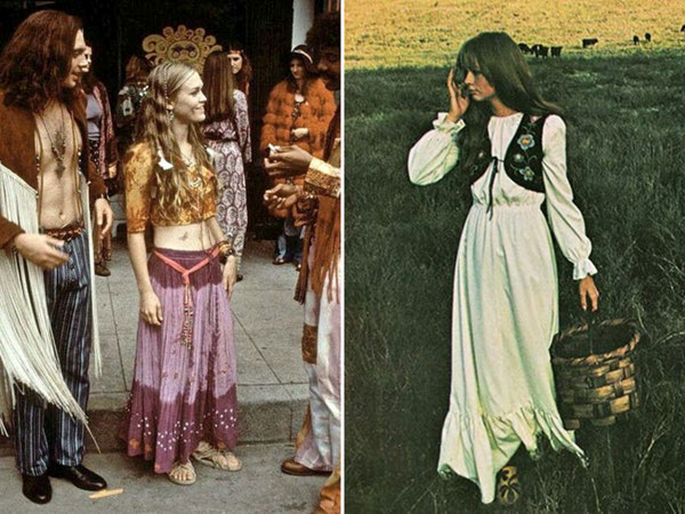
Hippie Fashion from the late 1960s to the 1970s.

The origin of the term ‘hippie’ is uncertain, but it was broadly designated that if someone was referred to as ‘hip’, they would be seen as trendy and fashionable and have a very relaxed approach to life (Oliver, 2014, p.18). While in some ways making the complete break from mainstream society, Hippies did nothing to reform their societies further, and the counterculture was made up of many very varied subcultures (Marwick, 2012, p.13). Hippies typically came from white, middle-class families in developed societies and were a minority in their culture as they wanted more freedom and fewer restrictions within it (Dallen and Zhu, 2021, p.211). The Overland route (another name for the Hippie Trail) was a perfect experience because they knew everything would be fine when they returned home because of their middle-class status. Arguably, the hippie belief could be that they did not believe in anything where they would be seen as running away from something and running to another.

Part of the hippie style was to be unique, and cultural artefacts from India became a crucial part of their fashion (Oliver, 2014, p.38). String beads were the most common artefact worn by the hippies as they acted as an aid in meditation for Buddhist and Hindu cultures, which the hippies adopted (Oliver, 2014, p.38). As the beads became popular amongst the hippie population in the West, more artefacts began to be recognised as good fits for the counter-cultural hippie lifestyle, so kaftans and shoulder bags became new and popular items (Oliver, 2014, p.38). With these becoming part of the culture, the hippie trail became more popular as hippies would travel to seek new artefacts for their fashion and embrace new cultures to feel the importance of what they wore to the Hindus or Buddhists. Girls adopted the fashion culture of the Hindus, and this was shown in Patrick Marnham’s travels when the girls he met on his travels would buy silk dresses, beads, rings and bracelets to show off to people at cannabis parties (Marnham, 2005, p. 121). When people decided to travel along the hippie trail, they had very little knowledge due to the lack of travel guides and depended heavily on stories and advice from others who had done it and people along the way (Oliver, 2014, p.144).

Indians are wearing the beads that hippies adopted to their fashion.

The artefacts collected were paired with the hippies’ ‘flower power’ philosophy, which they adopted because they realised that all human beings are interested in the planet’s state (Oliver, 2014, p.118), so the combination of these represented their counter-cultural beliefs. One hundred years earlier, similar actions were taken by travellers who attempted to cross the Overland route from European countries. They would attempt to carry flowers, birds’ feathers and shells across with them to keep as reminders of their journeys (Maddrell, Terry and Gale, 2015, p.155).

The hippie ‘flower power’ fashion.

To say that the Hippie trail was a pilgrimage is contested. Whilst lots of young people travelled to places like Kathmandu and India to embrace cultures and beliefs, many returned home with no change in belief and only adopted certain aspects of the new cultures they learnt, such as wearing beads they had collected and continuing to smoke and do drugs. In cases like Jasper Newsome’s, on return to England, he continued to smoke cannabis, which got him arrested (Tomory, 1996, p. 90). He read Orientalia, which led to him failing exams, so he was sent back to India to live legally (Tomory, 1996, p. 90).

How Drugs shaped the Hippie Trail experience:

Along the Hippie Trail, when interacting with Hindus in particular, hippies would often try cannabis as it was associated with the worship of the God Shiva and would be used in religious rituals, most likely in India (Oliver, 2014, p.76). A chillum pipe would be used to inhale the cannabis, and because of how popular this was to hippies, they would often bring these back to their homes to keep as souvenirs from India (Oliver, 2014, p.77). This reminded them of the rituals they took part in on their travels. When travellers set off across the trail, they usually had very little money, between £50 and £100 and most would stick to this amount to gain the whole experience. However, if they ran out, they would draw on the pavements for money or sell their blood to hospitals (Gemie and Ireland, 2017, p.33). However, most travellers would become drug dealers or mediators in drug deals, as this was their most accessible way of making money.

A French 29-year-old man, Charles Duchaussois, arrived in Kathmandu along the north of the hippie trail. After one stroll around Kathmandu, he realised he could easily make money there and became a mediator for drug deals (Gemie and Ireland, 2017, p.34). He was not a hippie, but he lived amongst them and in Kathmandu, he noticed that many of the travellers had no spiritual motivation among them; he only saw their mindless consumption of drugs (Gemie and Ireland, 2017, p.34). It makes you wonder whether the hippie’s reasons for travelling across the trail was the lure of drugs, as they were legal in most places, and with it being part of Hinduism’s spirituality, you would be accepted by them. It suggests their priorities were not on learning the cultures and beliefs of the Hindus but on the consumption of drugs. When Jasper Newsome was travelling on the trail, he claimed he felt incredibly alienated from all but the well-educated Indians and found Hinduism childish and comic (Tomory, 1996, p. 89). However, after he had “Accidentally” smoked cannabis with poor, uneducated folk, it changed his feelings, and he began to embrace the temple shrines and their culture (Tomory, 1996). This is a clear indication that the impact of drugs on understanding cultures and feeling a part of them for travellers was massive and that without this, the experience may have looked a lot different for them.

Indian man smoking from a chillum pipe.

An escape from ongoing political tensions and the influence of the Beatles:

The decade from 1969 to 1979 saw a lot of political tensions as the Cold War reached its peak, so to escape this, young people travelled along the hippie trail. People from North America and Britain viewed this as a great way to enjoy some freedom. The countries along the trail mostly enjoyed political stability during this decade, with only the 1971 Indo-Pakistan War in the fight for an independent Bangladesh as the only outlier (Oliver, 2014, p.144). Apart from that, overseas people were accepted by the indigenous inhabitants of the areas they passed by (Oliver, 2014, p.144).

In 1968, the Beatles stayed at Maharishi’s Ashram in India, and this visit led many people from Britain and Australia to want to travel to India as they were intrigued as to why the Beatles travelled there. The Beatles had learnt of the uniqueness of Eastern music and were drawn to how they used to write songs whilst smoking cannabis or on drugs. All the Beatles members matched the hippie stereotype as they had long hair and beards and sought spiritual growth. Their trip to India inspired two of their songs, “Mother Nature’s Son” and “Dear Prudence”, which could suggest that although they went to India intending to learn about spiritual beliefs, they selfishly wanted to use the trip as inspiration for new music, contrasting the idea of a spiritual pilgrimage.

The Beatles visited India in 1968; click the link to watch how the Indian population accepted them.

Concluding Thoughts:

Overall, the spiritual and cultural aspects that the Hippie trail offered were most exciting for young people from North America and Britain when planning their travels. The similarities drawn between the Hindus and the hippies who travelled critically impacted the fashion of hippies in Britain and their counter-cultural lifestyle. Drugs were part of Hindu spiritualism, and with this being adopted by hippies on the trail and taken back to Britain, this could stimulate the beginning of the drug problem that is still in Britain today. The people who returned to their homes acting like the Hindus they met on the trail, like smoking cannabis, suffered and would return to places like India to live. However, most people did not adopt the spiritual beliefs of Hinduism when they returned, but the artefacts they brought back, like the beads, suggest they did this to keep memories of an unforgettable trip.

Bibliography:

Images:

Wikipedia (2013) Routes of the Hippie Trail. [Online Image]. Available from: < https://en.wikipedia.org/wiki/Hippie_trail#/media/File:Hippie_trail.svg > [Accessed 8 April 2024].

Primary Sources:

British Pathe (2014) Rishikesh – Beatles With The Maharishi (1968). [Online Video]. Available from: < https://www.youtube.com/watch?v=aLeBZjPOJ-c > [Accessed 11 April 2024].

Flickr (2015) Ancient Indian style of smoking cannabis. [Online Image]. Available from: < https://www.flickr.com/photos/133630012@N05/19725846304 > [Accessed 11 April 2024].

Formidable Mag (2024) A group of travellers stood outside their campervan in Asia. [Online Image]. Available from: < https://www.formidablemag.com/hippie-trail/ > [Accessed 17 April 2024].

Manham, P. (2005) Road to Katmandu. London: Tauris Parke Paperbacks.

MyModernMet (2016) Hippie Fashion from the Late 1960s to 1970s. [Online Image]. Available from: < https://mymodernmet.com/vintage-bohemian-fashion/ > [Accessed 8 April 2024].

Open Magazine (2021) The Hippy Gaze. [Online Image]. Available from: < https://openthemagazine.com/columns/the-hippy-gaze/ > [Accessed 8 April 2024].

Revival (2020) Collage of Women in Hippie Outfits. [Online Image]. Available from: < https://revivalvintage.co.uk/blogs/news/guide-to-vintage-1970s > [Accessed 8 April 2024].

Tomory, D. (ed.) (1996) A Season in Heaven: True Tales from the

Road to Kathmandu. Thorson’s Publishing.

Secondary Sources:

Dallen, T. and Zhu, X. (2021) Backpacker Tourist Experiences: Temporal, spatial and cultural perspectives, In Sharpley, R. (ed.) The Routledge Handbook of Tourist Experience. London: Routledge, pp. 211-222.

Gemie, S. and Ireland, B. (2017) The Hippie Trial: A History. [Online]. Manchester: MUP. Available from: < https://academic.oup.com/manchester-scholarship-online/book/37352 > [Accessed 11 April 2024].

Maddrell, A., Terry, A. & Gale, T. (eds) (2015) Sacred Mobilities: Journeys of Belief and Belonging. [Online]. Farnham: Ashgate. Available from: < https://r2.vlereader.com/Reader?ean=9781472420084 > [Accessed 8 April 2024].

Marwick, A. (2012) The Sixties: Cultural Revolution in Britain, France, Italy and the United States, c.1958-c.1974. London: Bloomsbury.

Oliver, P. (2014) Hinduism and the 1960s. [Online]. London: Bloomsbury. Available from: < https://r1.vlereader.com/Reader?ean=9781472527653 > [Accessed 8 April 2024].

“We are the middle children of history. Born too late to explore Earth, too early to explore space” ,but just in time for affordable package holidays to sunny Italy!

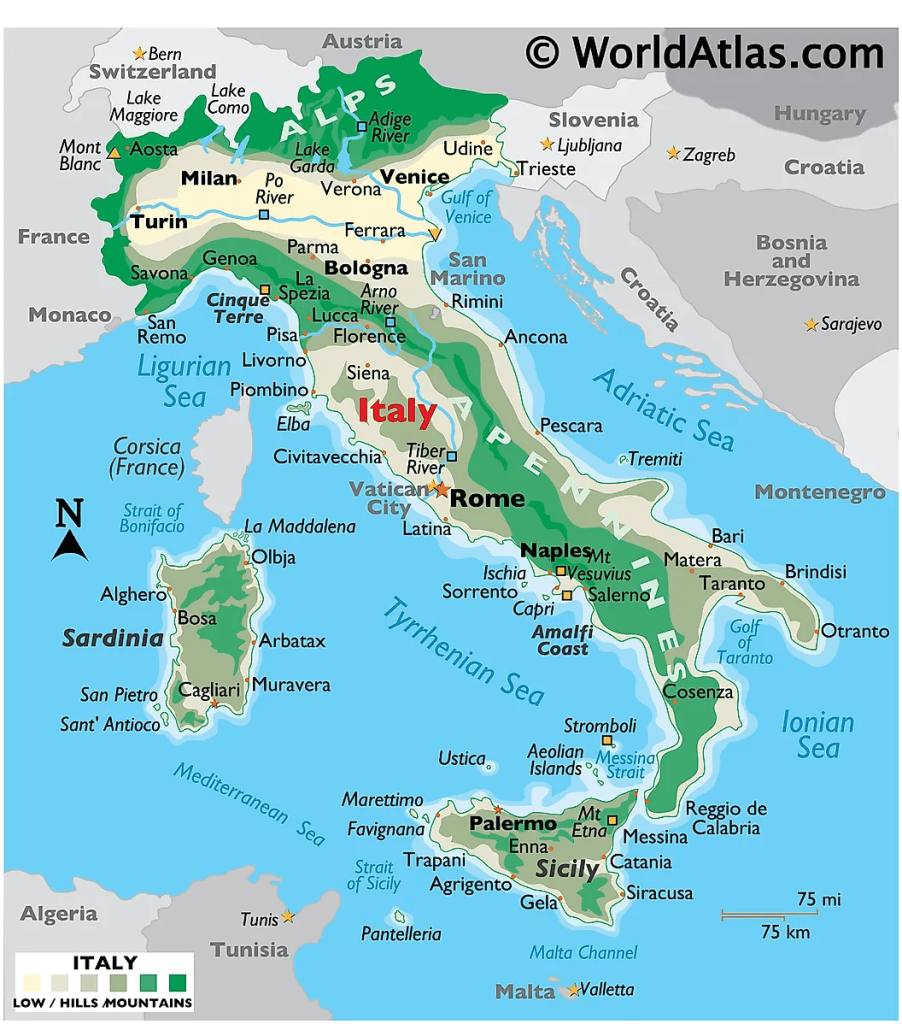
Figure 1: WorldAtlas map of Italy © 2024 worldatlas.com

The Package holiday prototype!

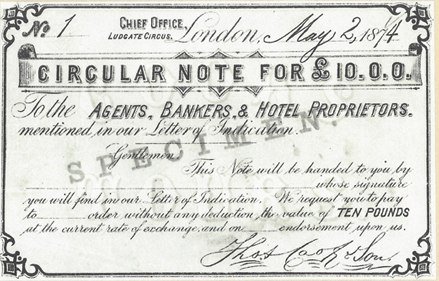
As I’m sure many people know, Thomas Cook is often accredited with offering up the first package holiday, slightly less known is his stance as a devout Baptist with a strong stance against the consumption of alcohol (Barrowden County Council call him a “pioneer of packaged international tourism”) and make reference to the company which still bears his name. The humble beginnings of Cook would be shocking to most considering the scale the company operates on today. In 1841 he arranged a notably sized rail excursion to Leicester (advocating for the abstinence from alcohol as previously mentioned) he continued to expand his operations quickly however, still remaining in the UK for now. 1846 saw him arrange travel for a group from Leicester to Liverpool, 1846 saw him arrange a (relatively) small group to tour Scotland. Suddenly however, we see an increase in operation size quite massively for Mr Cook. in 1851, 10 years on from his first expedition, he arranges for 150,000 people to attend the Great Exhibition in London. Finally we see Cook expand into European exploration with his incursions. Taking customers to Belgium, Germany and finally France to then cross back into England. These European tours led to the development of two things that defined Cook within the travel industry. The hotel coupon that came about in 1868 which allowed travellers to cover their accommodation while abroad far more easily (avoiding currency related issues and the hassle of carrying a lot of cash). The second ingenious product was the circular note of 1874, the note allowed travellers to obtain foreign currencies (where possible) in exchange for the note issued by Thomas Cook.

Figure 2: An example of a Thomas Cook “Circular Note” Image Source: www.numismaticnews.net

The Italian Job (relative to package holidays)

In Charles Owens “Britons Abroad” he takes himself to Italy as he says his wife is a fan of the country and of course, it is a popular tourist destination by the mid twentieth century without a doubt. His first thoughts clearly summarise why Italy is so popular, and why it only cements itself as a tourist destination further and further as time passes by. Hospitality is a requirement of tourism regardless of the perceived class of the traveller themselves, and as Owens says “The Italians are professionals”. He also reinforces the need for good tourism practices and hospitality by saying that a dissatisfied tourist is “bad for business” but also that it is a reflection of the treatment they receive. The text says that the booking agent used in this particular instance only had three available locations, all beautiful and picturesque enough to satisfy any reasonable tourists, but Owens and his wife chose Venice (The City of Love) which is as good a choice as any.

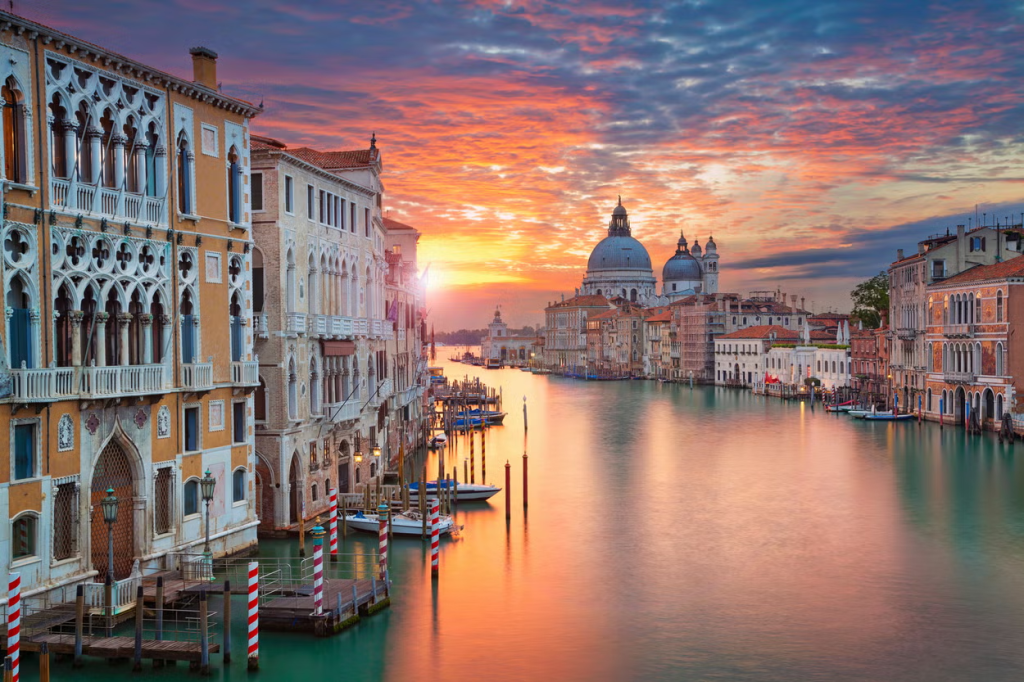
Figure 3: Canal in Venice (Getty Images/iStockphoto)

With the views showcased above, it is not hard to see why Venice is a prime choice for travelling, especially for romantic ventures. The cost for the trip has a £10 deposit that must be paid and the cost Owens quotes is £124 per person for the ten-day ventures. Converted to a modern cost this comes in at just over £2500. Not a cheap venture by any measure, and this highlights a glaring issue with the snobbery that surrounds modern package holidays. This amount of money is more than many people could afford to throw out on a holiday, and the more affordable end of package holidays receive a lot of criticism for the “class” of people who purchase them. I too, once viewed cheap package holidays through a lens of snobbery but in comparison to this trip to Venice Owens embarks on. The cheap package holidays that many people choose in the modern day are far more accessible and provide arguably more value for the amount that you spend.

Another clear difference is shown as Owens mentions the care that the travel agent takes when providing the resources (travel tickets, insurance, hotel vouchers) which have been phased out as holidays have progressed, showing that the money Owens pays covers more than just a holiday, it is a more tedious and careful act than it is now. Owen seemingly shares the views of the more expensive travellers of modern package holidays. He intends to enrich himself in Venice and enjoys the culture and beauty of the city, much akin to modern travel he talks about the cheaper wine in the city and the abundance of delicious food him and his wife can access.

The beauty of the package holiday however, is that the tour Owens has booked for himself and his wife does not just consist of their trip to Venice, the next stop on their fairly fantastic tour, was followed shortly by the time they spend in Florence which was as he says was a fairly lazy Sunday and allowed him to get the “real flavour of Florence”.

Figure 4: Aerial Photograph of Florence CREDIT: Gian Lorenzo Ferretti Photography

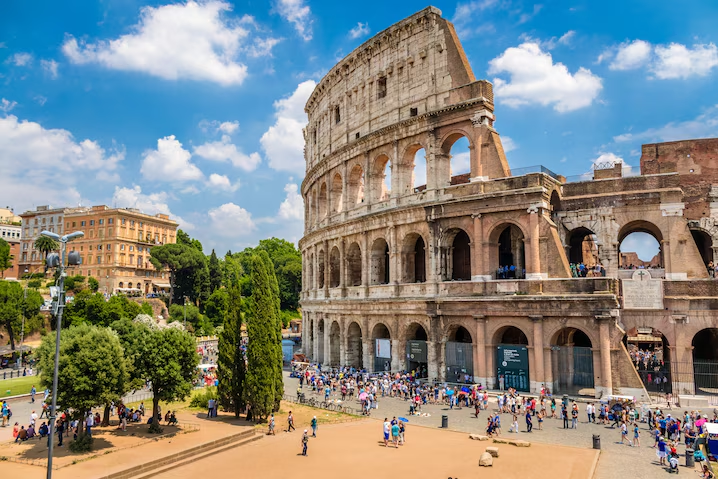
The final leg of their journey sent them to Rome (The “Eternal” City, which is far less catch than “The City of Love” which by Owens’ account was far less of a delight. The city was far busier, especially with vehicles and ultimately he says the first day was “not a success”. After that however, venturing away from the city centre “retracing the steps of an ancestor” allowed Owens to have a far better time, engaging with the culture and hospitality of Italy as he has documented he loves previously.

Figure 5: The Colosseum, Rome PHOTOGRAPH BY BELENOX, GETTY IMAGES

Italy Now

Thomas Cook offers a package holiday, once again to Venice. For an astounding £1,156 per person. Staying at a Hilton hotel for a seven day stay. Not quite the tour of Italy Owens embarks on, but I believe this to be a showing of how far the tourist industry, and package holidays in particular have come. While not a direct comparison, this holiday is cheaper than the one Owens partakes in, and the hotel would likely provide far more comforts than they did 70-80 years ago. Ultimately in reading and comparing between Owens’ journey to Italy, and the modern holidays that I could purchase on a whim (finances allowing), nothing has truly changed for the average person. Owens may have took this journey for the culture, hospitality and beauty of Italy as many people would holiday to Italy even now for the same reason. The lower end of package holidays, to cheaper hotels and resorts designed for the masses of holiday goers, or the vast travelling holidays of the upper-middle class on their gap year have change far more in the past 80 years, than the cultural enrichment holiday than Owens embarks on which remains relatively unchanged in both goal and end result. I like to think that although he no longer facilitates such holidays, the legacy of his work, and the fact that Thomas Cook still operates in the package holiday space, affordably and comfortably, would make him more than proud considering the humble beginnings he once found himself in. Owens perhaps would be shocked to know, as many people may be, that tourism in Italy brought in an estimated 190 billion Euros in 2022. This makes up 10% of the GDP of the country. A far cry from the budding tourism that Owens is part of, and an even further comparison to the first package holidays into Italy from Thomas Cook, who likely never predicted such success for himself nor the industry he worked so hard to excel within.

Tom Bould (2024)

References

Figure 1: WorldAtlas (2021) Italy Maps & Facts, WorldAtlas. Available at: https://www.worldatlas.com/maps/italy

Figure 2: Coming demise of Traveler’s checks – numismatic news. Available at: https://www.numismaticnews.net/paper-money/coming-demise-travelers-checks

Figure 3: Looking to explore Venice? these are the best hotels to try for every budget (2023) The Independent.

Available at:https://www.independent.co.uk/travel/hotels/best-hotels-cheap-luxury-venice-italy-b1975731.html

Figure 4: Swallow, N. (2019) How to spend an artistic weekend in Florence, The Telegraph. Available at https://www.telegraph.co.uk/travel/destinations/europe/italy/tuscany/florence/articles/florence-travel-guide/

Figure 5: Brown, N.F. (2018) 10 insider tips for your trip to the Eternal City, Travel. Available at: https://www.nationalgeographic.com/travel/article/top-activities-things-to-do-77

Hilton Molino Stucky Venice, Italy, Venice, Venice (no date) Thomas Cook. Available at: https://www.thomascook.com/holidays/italy/venice/venice/hilton-molino-stucky-venice-21951/

Inflation rate between 1968-2024: UK inflation calculator (no date) £124 in 1968 → 2024 | UK Inflation Calculator. Available at: https://www.in2013dollars.com/uk/inflation/1968?amount=124

The National Archives (2023) Cabinet papers, The National Archives. Available at: https://www.nationalarchives.gov.uk/education/resources/cabinet-papers-1915-1984/

Owen, C. (1968) Britons abroad: A report on the package tour. London: Routledge & K. Paul. p55-67

Published by                                    Statista Research Department and 30, J. (2024) Share of travel and tourism GDP in Italy 2022, Statista. Available at: https://www.statista.com/statistics/628849/tourism-total-contribution-to-gdp-italy-share/#:~:text=In%202022%2C%20travel%20and%20tourism,more%20than%20190%20billion%20euros.

Thomas Cook’s Leicester (no date) story of leicester. Available at: https://www.storyofleicester.info/city-stories/thomas-cooks-leicester/

Tim Callen is a former Assistant Director in the IMF’s Communication Department. (2019) Gross domestic product: An economy’s all, IMF. Available at: https://www.imf.org/en/Publications/fandd/issues/Series/Back-to-Basics/gross-domestic-product-GDP#:~:text=GDP%20measures%20the%20monetary%20value,the%20borders%20of%20a%20country.

Travel agent Thomas Cook introduces ‘Circular notes’, a precursor of traveler’s cheques (no date) Travel Agent Thomas Cook Introduces ‘Circular Notes’, a Precursor of Traveler’s Cheques : History of Information. Available at: https://www.historyofinformation.com/detail.php?id=1717

Peaks, Passion and Phthisis: Romantic Literary Depictions of Tuberculosis and Mountaineering.

‘The TB sufferer was a dropout, a wanderer in endless search of the healthy place. TB became a new reason for exile, for a life that was mainly travelling’.

(Sontag, 1978, p. 9)

Romantic descriptions of phthisis, or poet-killing disease, are imbued with a quasi-religious fervour and a frantic desire to sentimentalise what contemporaries now think of as a wholly unappealing disease. Victorian literature characterised the tubercular as a solitary sufferer, consumed with passion and feverishly scrambling to extend a fleeting existence. With this sentiment, the high altitude sanatoria was the most romantic place of respite. From the mid-nineteenth century, invalids flocked to the Alpine mountains to improve their physical and spiritual well-being in the radiant, crisp climate (Frank, 2012, p. 196).  

‘Being a mountaineer came to be seen as an important qualification for undertaking the poetic role’ (Bainbridge, 2020, p. 162).


Airs, Waters and Places

‘Whoever wishes to investigate medicine properly, should proceed thus… [consider] the winds’.

(Hippocrates, 1881, p. 1)

Before exploring how popular depictions of sickness and space impacted health tourism, it must be noted that a Hippocratic view of illness was commonplace (Bryder, 1996, p. 454). Even after Robert Koch discovered the Tuberculosis (TB) causing germ Mycobacterium tuberculosis in 1882, TB treatment remained grounded in miasma theory (Sakula, 1983, p. 128). 

It was thought that TB could be cured by clean air, nutritious food and a strong spirit. German physician Dr von Jaruntowsky (1877, p. 16) recommended that invalids lay in the open air and participate in ‘methodical hill-climbing’. In the preface to the English edition of the book, Jaruntowsky urges Britons ‘to deal with Consumption as a curable disease’ (Jaruntowsky, 1877, p. 3). This idea that all diseases were curable reinforced the air of mystery surrounding TB, as it eluded medical understanding and was, therefore, stylishly misunderstood.

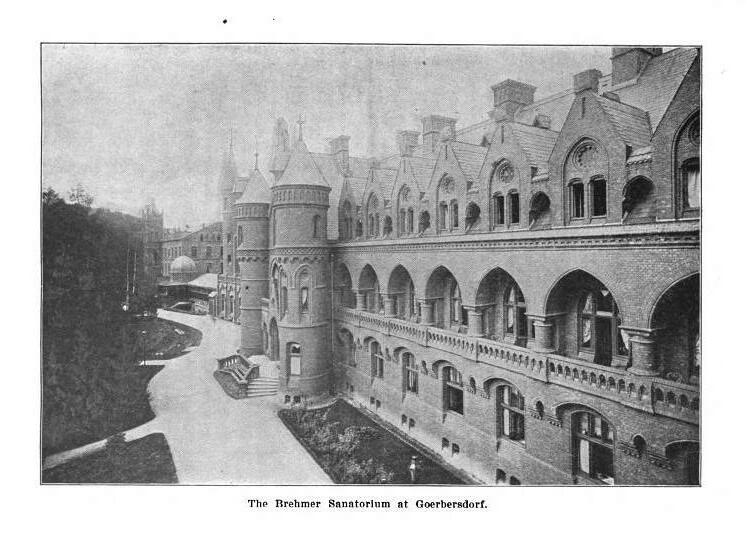
The Brehmer Sanatorium at Goerbersorf, 1854

Despite the practical application of climatological theory in TB healthcare, much of the appeal of altitude therapy came from the fusion of imaginative geography with the tubercular’s string of romantic literary depictions. When an 1881 medical textbook states ‘depressing emotions’ as a cause of TB, it seems inevitable that a pallid romantic should choose to spend their time in a picturesque Alpine resort (Dubos, 1952, p. 69). According to Susan Barton, the sanatoria’s popularity ‘emerged from a blending of the philosophies of romanticism and alternative medicine, later backed up by scientific investigation’ (Barton, 2008, p. 6). This is evident in much of the literature on mountaineering and consumption, which share overlapping themes of mystery, beauty, passion and spirituality.

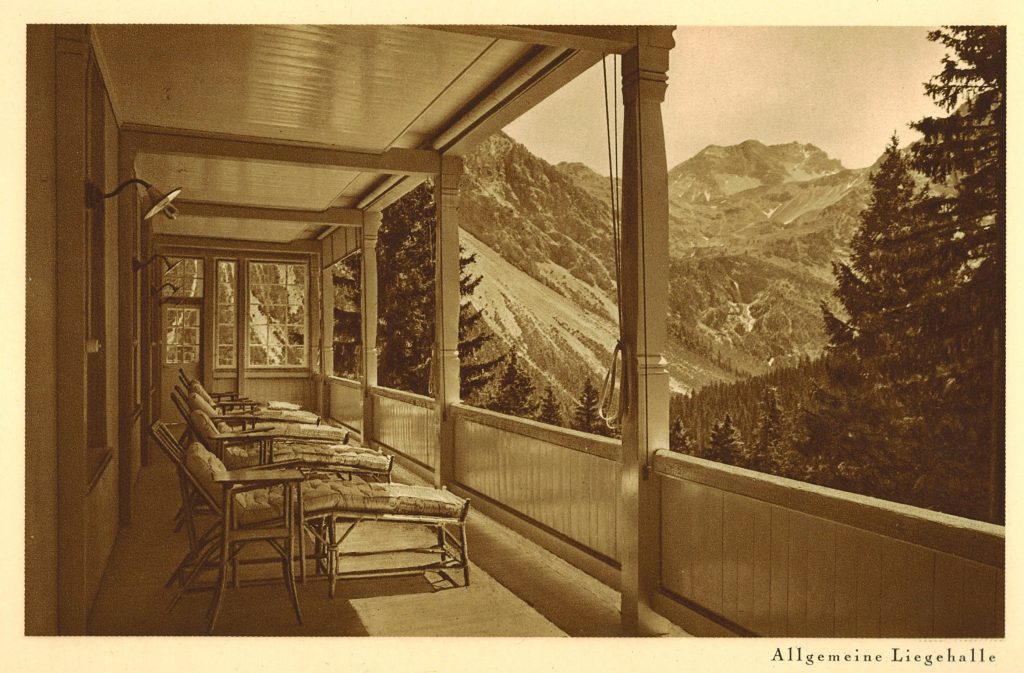
Sontag (1978, p. 5) recognised that, unlike previous epidemic diseases such as the bubonic plague, which had tended to afflict entire communities, TB ‘was understood as a disease that isolates’ an individual. For example, sanatoria, which were clinics specifically designed for patients suffering from TB, functioned both as a hospital and a place of relaxation removed from the general population.

Open-air treatment hall in the Parksanatorium Arosa

The Magic Mountain

As explored by Marjorie Hope Nicholson (1959) in her seminal work Mountain Gloom, Mountain Glory, the literary portrayal of the Alps evolved from a place of danger to a place of bliss throughout the eighteenth century. Propagated by improvements in transportation and commerce, the Alpine mountains became commercial hubs of health and spirituality (Frank, 2012, p. 197). English mountaineer Clinton Dent described the range as ‘a curious fascination for the solitary man’, providing him with the distance to meditate on his life (Dent, 1885, pp. 2-3). In Thomas Mann’s The Magic Mountain, the main character undergoes a spiritual transformation after the mountain air allows him to meditate on the true meaning of his existence (Mann, 1924). 

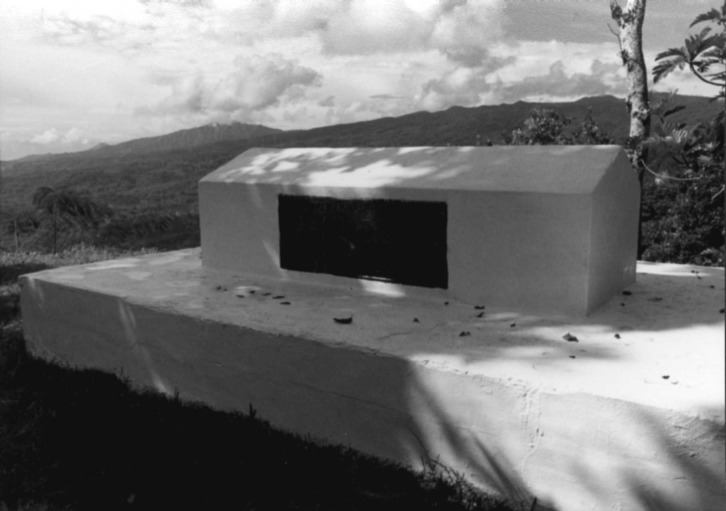
Similarly, when Scottish poet Robert Louis Stevenson began his impassioned pilgrimage before he was consumed by illness, he demanded to be buried on Mount Vaea, with the following poem as his epitaph:

‘Under the wide and starry sky,

Dig the grave and let me lie’. 

All Consuming Phthisis

Known for prematurely killing poets, such as Anton Chekov, Franz Kafka and John Keats, to name a few, consumption was romanticised, gaining the similarly mysterious and attractive allure as the Alps. Death by consumption was beautiful, a burst of spiritual passion after months of wasting. Romantic poet Lord Byron recognised the disease’s charm, declaring: ‘I should like, I think, to die of consumption’ (Byron, n.d, cited in Clarke, 2019).

To die at the hands of the mountain was similarly appealing, as Clinton Dent was one of many mountaineers to write about the ‘impulse almost controllable to throw [himself] down’ the mountain after reaching the top (Dent, 1885, p. 216). These fantasies stem from the need to apply metaphoric thinking to the fearful concepts of death and danger, imbuing sickness and peril with romantic sentiment.

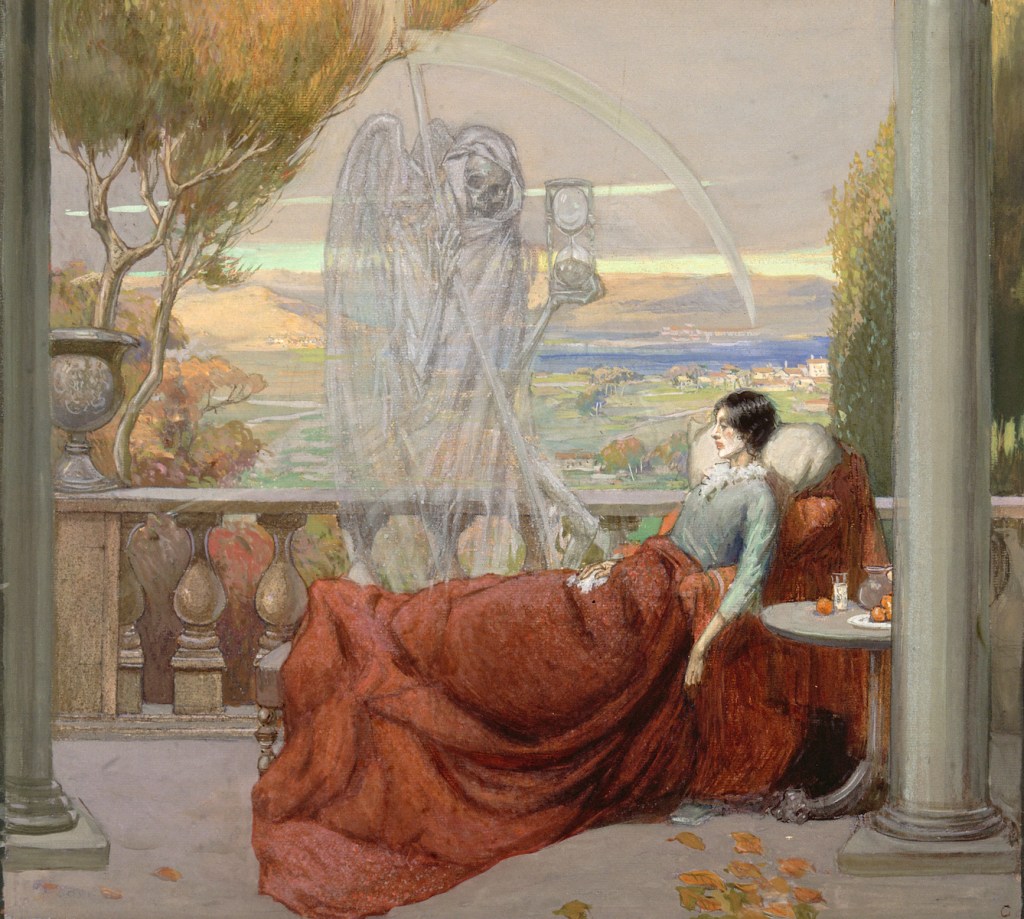
A sickly young woman sits covered up on a balcony; death (a ghostly skeleton clutching a scythe and an hourglass) is standing next to her; representing tuberculosis.

Mountaineering was seen as a rite of passage for the Romantic poet. In 1807, Lord Byron wrote that ‘the benefit of such pure air, or so elevated a residence, as might enable me to enter the lists with genuine bards’ (Byron, 1807). Here, he refers to the romantic bard, the wandering storyteller, who is spiritually impassioned to produce gifted poetry (Cusack and Norman, 2012, p. 404). 

Artist John Ruskin, famously infatuated with the Alps, noted that the mountains had made him ‘weaker, more lifeless, more effeminate, more liable to passion’ (Ruskin, 1863). Romantic poet Percy Bysshe Shelley depicted a similar portrayal of beautiful suffering in his poem Queen Mab, written whilst suffering from consumption (Shelley, 1813). 

‘Yes! She will wake again, 
Although her glowing limbs are motionless,
And silent those sweet lips,
Once breathing eloquence,
That might have soothed a tiger’s rage’.
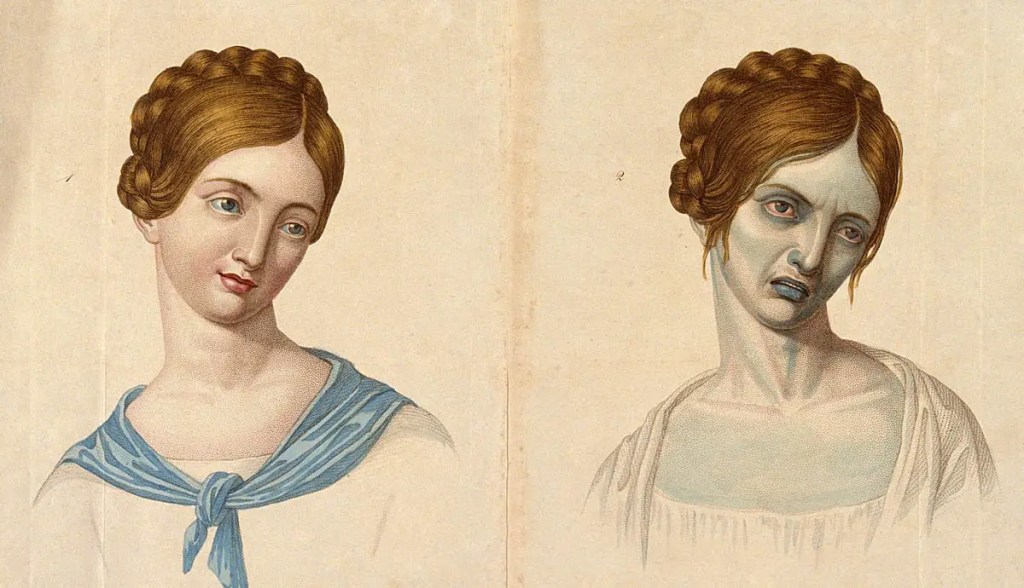
A young woman dying of cholera, 1831, Italy

The typical image of the consumptive was someone tragically young and strikingly beautiful. They were connected with ideas of passion and sexuality, noted by Sontag (1978, p. 2) as having a ‘liveliness that comes from enervation’ in the last stages of life. In her study of tuberculosis in Victorian literary imagery, Katherine Byrne (2011, p. 93) describes the consumptive as ‘dramatically pale and ethereally thin with the red cheeks and bright eyes of fever’. This was echoed by John Keats in 1819, who described death by consumption as ‘where youth grows pale, and spectre-thin, and dies’ (Keats, 1819). TB was a metamorphosis, where the childlike innocence disintegrates, leaving behind a sensual febrility.

Victorian literature not only linked consumption to images of eroticism and beauty but also depicted it as an aphrodisiac. This passion was prevalent at the high-altitude sanatoria, as in 1862 Conrad-Ahrens noted Davos’ ‘increase in the luxury of the female sex’ (Frank, 2012, p. 193). The very nature of consumption made the invalid aware of their desires.


The Great White Plague

Tuberculosis was a disease that ‘consumed’ its victims, associated with severe weight loss and malnutrition. Depictions of the consumptive’s youth and beauty were often coupled with depictions of their hunger and desire (Jones, 2016, p. 17). English writer and politician Edward Bulwer-Lytton wrote fondly of his experiences eating and drinking whilst undergoing solitary water treatment for his succession of feverish illnesses (Bulwer-Lytton, 1851, p. 16). Understandably, one of the earliest mountain sanatoriums in Silesia, established in 1859, contained two extravagant dining halls (Bryder, 1996, p. 454). This was favourable for those who could afford it, as noted in 1907 by author Joseph Conrad, who described the Davos-Platz resort as ‘where the modern dance of death goes on in expensive hotels’ (Conrad, 1988, p. 420).

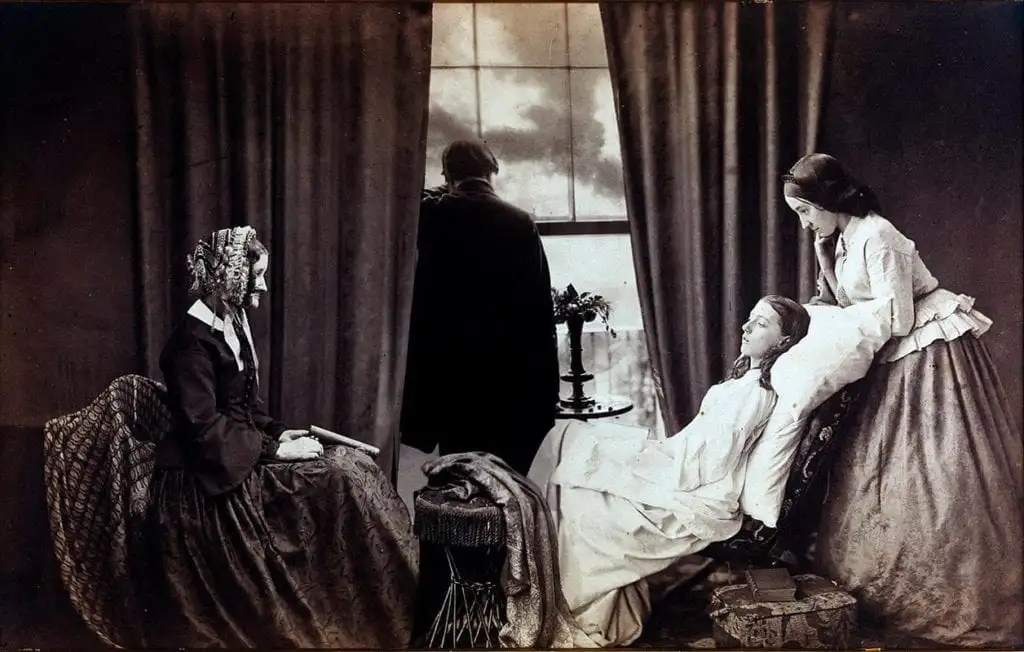
Fading Away, Henry Peach Robinson, 1858, The Met

As Romantics criticised urban cities as being blighted and deprived, it seemed natural to flee to a more comfortable landscape. Consumptives needn’t be confined to small, hot rooms, too sick to eat, languidly spreading the disease to their loved ones (Frank, 2012, p. 189).

Although many Victorian tourists travelled for health rather than pleasure, caring for the mind was often as important as caring for the body. Furthermore, as Romantics wrote fondly of the countryside and the spiritual benefits of stepping away from the growing urban industry, mental and physical health connections grew stronger (Frank, 2012, p. 197). This was noted in William Coxe’s 1801 travel writings, which explored mountaineering as a sublimation of spiritual transcendence:

‘Lifted up above the dwellings of man, we discard all grovelling and earthly passions… and as the body approaches nearer to the ethereal regions, the soul imbues a portion of their unalterable purity’ (Coxe, 1801, p. 196).

This sort of psychic crusade is indicative of the romantic ideas around travel.

When considering the painful reality of TB, it is understandable why one may wish to distort it, to see beauty in the suffering and provide death with meaning. It explains why the sufferer may be drawn towards the cool mountain summit, depicted as a place of reckless extremes where the mind and body can be fused.


Bibliography

Primary Sources

Bulwer-Lytton, E. (1851) Confessions and observations of a water-patient. [Online]. Available from: <https://wellcomecollection.org/works/s7arq9rc/items?canvas=2> [Accessed 24 February 2024]

Byron, G, G. (1807) Hours of idleness. [Online]. Available from: <https://archive.org/details/hoursofidlenesss00byro/page/n15/mode/2up> [Accessed 18 February 2024]

Conrad, J. and Karl, F, R. and Davies, L. eds. (1988) The Letters of Joseph Conrad: Volume 3, 1903-1907. Cambridge: Cambridge University Press. 
Cooper, R, T. (1912) A sickly young woman sits covered up on a balcony; death (a ghostly skeleton clutching a scythe and an hourglass) is standing next to her; representing tuberculosis. [Watercolour] Held at Wellcome Trust.

Coxe, W. (1801) A Historical Tour in Monmouthshire. London: T. Cadell and W. Davies. 

Dent, C, T. (1885) Above the Snow Line: Mountaineering Sketches Between 1870 and 1880. London: Longmans Green and Co. 

Giles, R, H. (1820) A girl reads to a convalescent while a nurse brings in the patient’s medicine. [Watercolour]. Available from: Wellcome Collection. 

Keats, J. (1819) Ode to a Nightingale. [Online]. Available from: <https://www.poetryfoundation.org/poems/44479/ode-to-a-nightingale> [Accessed 8 March 2024]

Knopf, S, A. (1854) The Brehmer Sanatorium at Goerbersorf. [Online]. Available from: <https://commons.wikimedia.org/wiki/File:Brehmer_sanatorium.jpg

Mann, T. (1924) The Magic Mountain. Berlin: S. Fischer Verlag.

Munch, E. (1907) The Sick Child. [Oil Painting]. Held at The Tate.  

Peter, S. (n.d.) Allgemeine Leigehalle. [Photograph]. Available from: University of Zurich.

Robinson, H, P. (1858) Fading Away. [Photograph]. Held at The Met.

Shelley, P, B. (1813) Queen Mab. [Online]. Available from: <https://www.marxists.org/archive/shelley/1813/queen-mab.htm> [Accessed 28 February 2023]

Stevenson, R, L. (1880) Requiem. [Online]. Available from: <https://www.scottishpoetrylibrary.org.uk/poem/requiem/> [Accessed 23 February 2024]

Wellcome Collection (1831) A young woman of Vienna who died of cholera, depicted when healthy and four hours before death. Coloured stipple engraving. Available from: <https://wellcomecollection.org/works/vt5g3jxf

Secondary Sources

Bainbridge, S. (2020) Mountaineering and British Romanticism: the literary cultures of climbing, 1770-1836. Oxford: Oxford University Press. 

Barton, S. (2008) Healthy living in the Alps: The origins of winter tourism in Switzerland, 1860-1914. Manchester: Manchester University Press.

Bryder, L. (1996) “A Health Resort for Consumptives”: Tuberculosis and Immigration to New Zealand, 1880-1914. Medical History, 40 (4) October, pp. 453-471.

Byrne, K. (2011) Tuberculosis and the Victorian Literary Imagination. Cambridge: Cambridge University Press. 

Clarke, I. (2019) Tuberculosis: A Fashionable Disease? [Online]. London: Science Museum. Available from: <https://blog.sciencemuseum.org.uk/tuberculosis-a-fashionable-disease/#:~:text=Romantic poet Lord Byron wished,’”> [Accessed 24 February]

Cusack, C, M. and Norman, A. (2012) Handbook of New Religions and Cultural Production. Leiden, Netherlands: Brill Publishers.

Dubos, J. (1952) The White Plague. New York: Little, Brown, and Company.

Frank, A, F. (2012) The Air Cure Town: Commodifying Mountain Air in Alpine Central Europe. Central European History, 45 (2) June, pp. 185-207. 

Jones, G. (2016) ‘Captain of All These Men of Death’: The History of Tuberculosis in Nineteenth and Twentieth Century Ireland. Leiden, Netherlands: Brill Publishers.

Hippocrates (1881) Hippocrates on airs, waters, and places. London: Wyman & Sons.

Jaruntowsky, A, V. (1877) The private sanatoria for consumptives and the treatment adopted within them. Rebman: London.

Nicholson, M, H. (1959) Mountain Gloom, Mountain Glory: The Development of the Aesthetics of the Infinite. Seattle: University of Washington Press.

Sakula, A. (1983) Robert Kock: Centenary of the Discovery of the Tubercle Bacillus, 1882. Can Vet J, 24 (2) April, pp. 127-131. 

Sontag, S. (1978) Illness as Metaphor. New York: Farrar, Straus and Giroux.

Egyptian excursions: The emergence of accessible package holidays: 1840-1900.

For many of you reading this blog today, I am sure some of your earliest holidaying memories likely include ice creams on the rough English coastal beaches of Scarborough, Blackpool, or Falmouth. Perhaps you may have even been fortunate enough to experience the sweltering Spanish sun over the school holidays, complete with your Mum dousing you in sun cream and lounging by the pool – far away from the doom and gloom of English weather. But in the bygone Victorian era of the nineteenth Century, this was a privilege reserved for only the most affluent. Just exactly when did we begin to see the dawn of the all-inclusive getaways we Briton’s are accustomed to today?

This blog will ultimately serve to familiarise you with the fascinating journey and historiography of the “Package holiday” (P.H) as created by Thomas Cook. The UK government defines “The package holiday” as such: “A package holiday is a holiday booking that is sold under one price and contains more than one element. These elements could be but are not limited to flights or other transport, accommodation, car hire, tourism bookings such as cooking classes, city tours, ski trips, etc.” (King’s Printer of Acts of Parliament, 2018). More to the point, historians such as Cormack, have instead highlighted that the package holiday can instead be simply boiled down to “a combination of travel tickets with accommodation”. (Cormack, 1998, p, 102).

The birth of organised travel: Thomas Cook

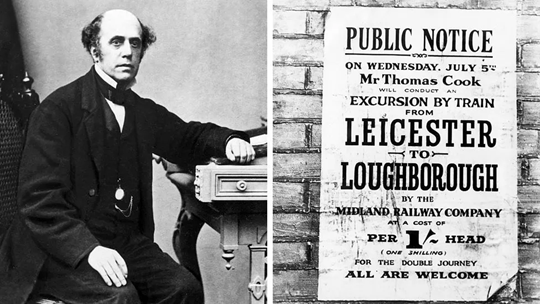
  • Figure 1: Thomas Cook alongside advertisement for his first train excursion (BBC News, 2019)

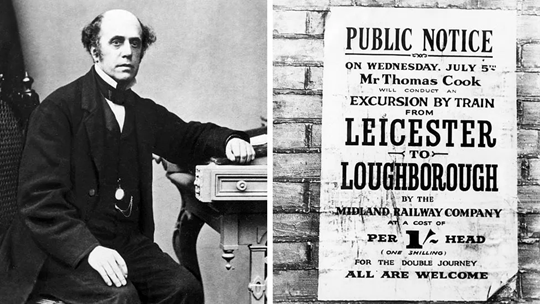
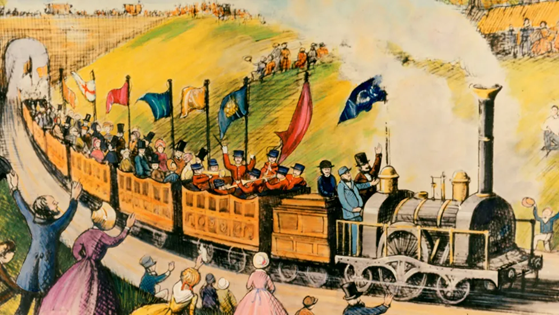
Some historians, such Richardson believe the package holiday began in the 1950s, courtesy of “Vladimir Raitz” (Richardson, D. p1. 2016) – I instead believe that it was actually in the early 19th Century that we saw the original package holiday in the UK. Organized by Thomas Cook and Sons, the excursion was a humble 22-mile train journey from Leicester to Loughborough that commanded just over a shilling (around a day’s wages at the time). It saw 500 passengers, for many of which, was their first time travelling by steam train, and upon the train’s arrival in Loughborough, the passengers were greeted by brass bands and celebratory crowds. Though this particular locomotive excursion wasn’t profitable for Cook, it ultimately demonstrated there was an untapped market for enabling tourism; as Cook stated – given the accessible opportunity people would: “Go beyond.” (Thomas Cook, 2024)

  • Figure 2: The 22-mile journey – (BBC News. 2016)

Global expansion and innovation

Over the Century, Cooks’ epiphany in tandem with the rapid Industrialisation and technological advancements taking place in Europe laid the foundations for the package holiday to bloom into the entity we recognize today. For instance, burgeoning railway networks, the widespread adoption of steam power and revolutions in telegraph capabilities facilitated Cooks package holidays to eventually reach the farthest corners of the globe. Firstly: the expansion of railways across Europe provided Cook with a continuously growing number of destinations, in a comfortable and reliable mode of transportation. Secondly: by 1850, steam power greatly accelerated nautical voyage times. Cutting the trans-Atlantic crossing from on average 40 days, to only 16 (Gourevitch, A. 2023). Finally, Morse code and the telegraph – invented in 1832 by Samuel Morse – had begun to be adopted throughout Europe and Asia by the early 1850s, enabling Cook and holidaymakers almost instantaneous communication across entire continents. This feat largely eliminated the process of letter writing, unreliable postage, and torturously long waits. (Google arts culture, 2013)

A turning point: an Egyptian expedition

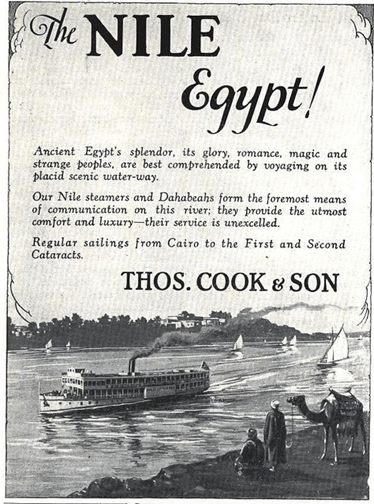
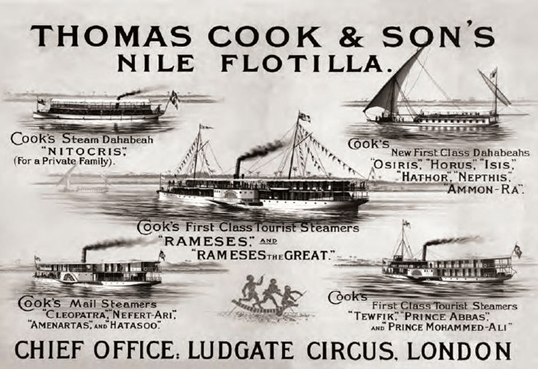
  • (Left) Figure 3 : Cooks Nile steamer advertisement. (WordPress, 2012)
  • (Right) Figure 4 : Advertisement for Cooks Nile expeditions (Agefotostock, 2024)

After nearly thirty years of establishing his footing in Europe, and working closely with the temperance anti-drinking movement, it was in 1869 that a turning point for Cook and the package holiday industry emerged. The reason being, in the same year of 1869, the Suez Canal was inaugurated, opening a sea route to the Orient and the potential for tourism. Seeing the opportunity to grow his business abroad, Cook hired two steamers from the Khedive – Ismail Pasha – and organised a three-month guided group expedition along the banks of the Nile, showcasing the ancient wonders of Egypt. (WordPress. 2012) Consequently, sparking the era that Humphreys described as: “The golden age of (Nile) travel” (Humphreys, A. 2015). The trip saw ten wealthy travelers, divided into two groups, and placed on separate Egyptian steamers, the Benisuef and the Benha, everything – food, lodging, transportation, entertainment, sightseeing – was included, for one flat price. Previously used to exploring places like Vienna and Paris the guests were instead exposed to an entirely different world. Including a completely different climate and archaeological and historical sites far from anything the travelers (some of which can be seen below in figure 5) had ever seen. (Yehia, E. p. 46. 2020)

Crucially, while Cook had enlisted the use of steamers before, he had never done so in this format. Cook showcased the abilities of steamers to serve as moderately luxurious floating hotels, allowing his passengers to explore the banks and sites of the Nile without sacrificing the comforts and commodities of inland hotels. Ultimately, demonstrating the potential of steamers as a viable options for long distance and endurance journeys, paving the way for the rise of cruise tourism in the decades to come. The immediate success of the first trip had several impacts on Cooks’ career and the tourism industry. Firstly; it served to heighten even further the esteem in which Cook was heralded as an organizer, immediately flooding him with wealthy individuals clamouring for the opportunity to escape European winters for an exotic break. And secondly; in terms of industry and infrastructure, this high demand necessitated the 1870 opening of a Cook run holiday office in the Shepheard’s hotel Cairo, expanding the network for cross continent tourism. And thirdly; it set in motion the growth of Steamers as a tool for tourism. (One could even argue as a precursor for the aviation industry.)

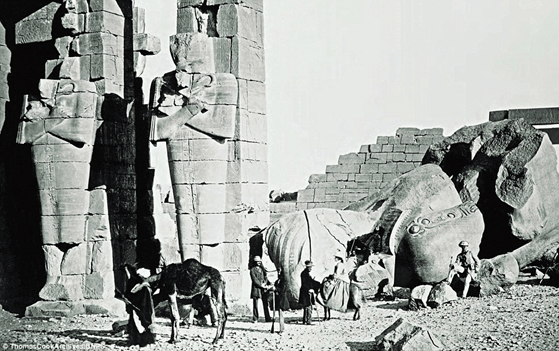
  • Figure 5: Cooks tourists pose in front of the Ramesseum, 1869. (BBC News. 2015)

Cooks Steamer dominance of the Nile.

Several years after the initial trip to Egypt that Cook obtained the initial concession from the Khedive Ismail Pashin that permitted his monumental Nile journey, two events took place up that would establish his dominance over the Nile, and set the wheels in motion that would make the exotic package holiday accessible to the middle class in Britain. Firstly, in 1875, Egypt – due to several factors, went bankrupt, and thereafter became a Franco-British protectorate. Consequently gifting Britain complete control of the Suez Canal (Which would set the stage for several conflicts with the Ottoman empire), and therefore, Britain came to establish dominance over Egypt. The impact of this was Egypt – in particular the river Nile – through the excellent reputation of Cooks tours and British troop presence found itself as an ideal, safe hotspot for eager British, and other European tourists. (Sherrin, H. 2022)

Come 1880, Cook and Sons were granted absolute concession over all river travel by the new Khedive, Tewfik Pasha the son of Ismail Pasha. Cook naturally gained access to more steamers to accommodate the increased influx tourists, however, only four years later in 1885, these would be requisitioned by the British military as troop transports in a campaign in Sudan – all of which came back severely damaged a year later in 1885. This gave Cook the opportunity to construct his very own fleet, built in Scotland, and transported to Cairo disassembled where they were later reassembled in the ports along the Nile. Consisting of “The Prince Abbas”, “Prince Mohammed Ali”, and two “Rameses” steamers; the later capable of transporting up to 80 passengers. (Steamship Sudan. n.d)

Cooks Steamer fleet and a growing middle class

  • Figure 6: Advertisement for the Thomas Cook Nile fleet. (Egypt Paddle ships. n.d)

The Cooks name had become synonymous with everything important to a would-be British tourist, safety, efficiency, luxury, and familiar British practice. This perception of Cook, and his business owning its own independent fleet (now operated by John Mason Cook), in tandem with his own hotels, ports and offices along the Nile banks and greater Egypt meant that in the closing decades of the 19th Century and the dawn of the 20th Century, his business had more control over tourism both in Egypt and worldwide. Crucially, it granted him freedom to essentially do whatever he wanted with his business. Including, challenging the established elites of society, by decreasing the high fares for his services in Egypt – opening opportunity for the growing middle classes of Britain.

The subject deserves its own article, but for this purpose, in short: the industrial revolution in Britain was facilitating vertical social class migration for workers in the country. Increased factory employment and demand for artisan and skilled workers and the establishment the Trade Unions congress in 1868, facilitated, as Carnevelli described “the rise of mass consumerism… generated by real wages after 1870…and mass literacy.” (Carnevali, F. p.30. 2014). More broadly speaking, this era is when we can begin to trace the growth of people progressing into the middle class, and the population in Britain slowly obtaining disposable income. It was that very demographic that Cook was able to target and present the opportunity over the subsequent decades, that would be survived by John Cook after Thomas Cooks death in 1892.

Legacy and impact

As the 20th Century dawned, following the death of Thomas Cook in 1892, and John Mason Cook in 1899, the company entered a new era as control passed to the three grandchildren, Frank, Ernest, and Thomas (Bert). From this point, the company would face a tumultuous journey that would see the company become synonymous with British identity and widespread accessibility as a package holiday organiser. As Morris described in 1968, Cooks became: “the booking clerk of the Empire… ‘leave it to Cook’s’ had gone into the language. Cook’s had virtually invented modern tourism, and their brown mahogany offices, with their whirring fans and brass tellers’ cages, were landmarks of every imperial city.” (Morris, J. p, 64. 1968)

From opening the package holiday up to a wide array of Britons and tourists from all social classes, 1922 guided Safari tours through Africa, their first air tour in 1927 from New York to Chicago; privatization, multiple ownerships and countless hundreds of thousands of miles travelled from all walks of life; even after their declaration of bankruptcy in 2019, Thomas Cook and their tagline “don’t just book it, Thomas Cook it!” will be forever immortalised for people all over the world – like me, that have been fortunate enough to travel with a company so rooted in British history. (Cripps, K. 2019)

Billy Stephens, 2024

References

Images

  • Figure 1

Thomas Cook: The Much-Loved Travel Brand with Humble Roots (2019) BBC News [Online], 23 September. Available from: <https://www.bbc.com/news/business-49789073&gt; [Accessed 27 March 2024]

  • Figure 2

Thomas Cook Steam Train Marks 175th Year since First Excursion (2016) BBC News [Online], 4 July. Available from: <https://www.bbc.com/news/uk-england-leicestershire-36672483&gt; [Accessed 27 March 2024].

  • Figure 3

Rehabsaad.2012. https://rehabsaadblog.wordpress.com/tag/thomas-cook/

  • Figure 4

agefotostock (n.d.) Brochure Front Cover Advertising Thomas Cook’s Tours to Egypt, the Nile and Soudan [Online]. agefotostock. Available from: <https://www.agefotostock.com/age/en/details-photo/brochure-front-cover-advertising-thomas-cook-s-tours-to-egypt-the-nile-and-soudan/MEV-10224771&gt; [Accessed 27 March 2024].

  • Figure 5

Amey, K. (2015) Fascinating Book Chronicles Rise of British Travel Agent Thomas Cook [Online]. Mail Online. Available from: <https://www.dailymail.co.uk/travel/travel_news/article-3197583/The-humble-package-holiday-s-surprisingly-upper-class-origins-New-book-chronicles-rise-travel-agent-Thomas-Cook-pioneering-jolly-Nile-alongside-Britain-s-wealthiest.html&gt; [Accessed 24th March 2024].

  • Figure 6

Egypt (n.d.) [Online]. Available from: <http://www.paddlesteamers.info/Egypt%20Historical.htm&gt; [Accessed 21st March 2024].

Information/quotations/miscellaneous

  • 1

The Package Travel and Linked Travel Arrangements Regulations (2018) [Online]. Available from: <https://www.legislation.gov.uk/ukdsi/2018/9780111168479/contents&gt; [Accessed 20 March 2024].

  • 2

Cormack B. Jemima, M. (1998). P.108. The history of tourism: Thomas Cook and the origins of leisure travel, Routledge London

  • 3

Richardson, D. p.1. (2016) Let’s go! a history of package holidays and escorted tours.

  • 4   

Thomas Cook (n.d.) About Us [Online]. Thomas Cook. Available from: <https://www.thomascook.com/about-us&gt; [Accessed 20 March 2024].

  • 5

Gourevitch, A. Discover Walks Blog (2023) Great Innovations in Travel: Steam Power [Online]. Discover Walks Blog. Available from: <https://www.discoverwalks.com/blog/columnist/alexandre-gourevitch/to-what-do-we-owe-the-pleasure-of-this-visit-great-innovations-of-all-times-in-travel-steam-power/&gt; [Accessed 20 March 2024].

  • 6

Google Arts & Culture (n.d.) A Brief History of the Telegraph [Online]. Google Arts & Culture. Available from: <https://artsandculture.google.com/story/a-brief-history-of-the-telegraph/7wVxhgrMyafyKQ&gt; [Accessed 20 March 2024].

  • 7

Word press, (2012). https://rehabsaadblog.wordpress.com/tag/thomas-cook/.com

  • 8

Humphreys, A. (2015) “On the Nile in the Golden Age of Travel”.

  • 9

Yehia, E. (2020) The Politicization of Early Egyptian Tourism. Journal of Association of Arab Universities for Tourism and Hospitality, 0 (0) June, pp. 46-49

  • 10

Sherrin H. History Hit (2022) Thomas Cook and the Invention of Mass Tourism in Victorian Britain [Online]. History Hit. Available from: <https://www.historyhit.com/thomas-cook-invention-of-tourism/&gt; [Accessed 30 March 2024].

  • 11

Steam Ship Sudan (n.d.) The Day of the Steamers [Online]. Steam Ship Sudan. Available from: <https://www.steam-ship-sudan.com/en/journal/the-day-of-the-steamers/&gt; [Accessed 30 March 2024].

  • 12

Carnevali, Francesca. (2014). P34. Twentieth Century Britain: economic, cultural, and social change. VleReader (n.d.) [Online]. Available from: <https://r1.vlereader.com/Reader?ean=9781317868378#&gt; [Accessed 22 March 2024].

  • 13

Morris, J. (1998). Pax Britannica: The Climax of an Empire. London. P.64

  • 14

Cripps, K. (2019) Thomas Cook: A History of One of the World’s Oldest Travel Firms [Online]. CNN. Available from: <https://www.cnn.com/travel/article/thomas-cook-history-timeline/index.html&gt; [Accessed 30 March 2024].

Idiots on Ibiza

By Maisie Rhia Kaye-Priestley

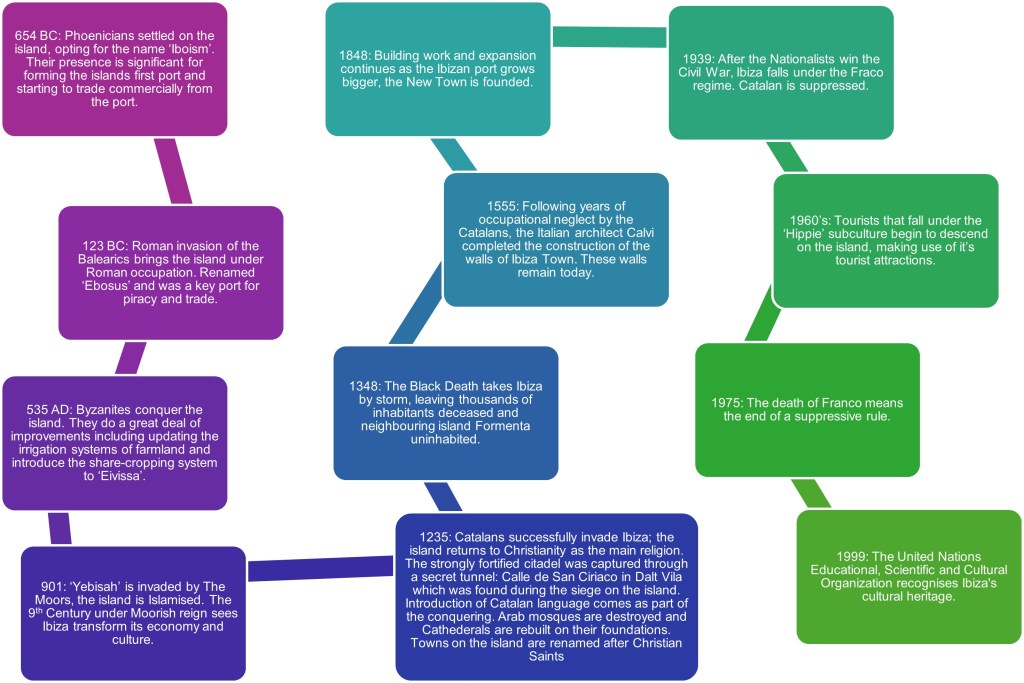
A rocky history of Ibiza: both literally and metaphorically. The thousands of years of ongoing invasions, differing settlers and reshaping of the land has changed the way in which we view the island in the 21st Century.


So, Why Ibiza?

“The party culture in Spain is about feeling the music and leaning into the captivating atmosphere.”

Maya Kachroo-Levine, 2021
We’re Going To Ibiza, Vengaboys, 1998

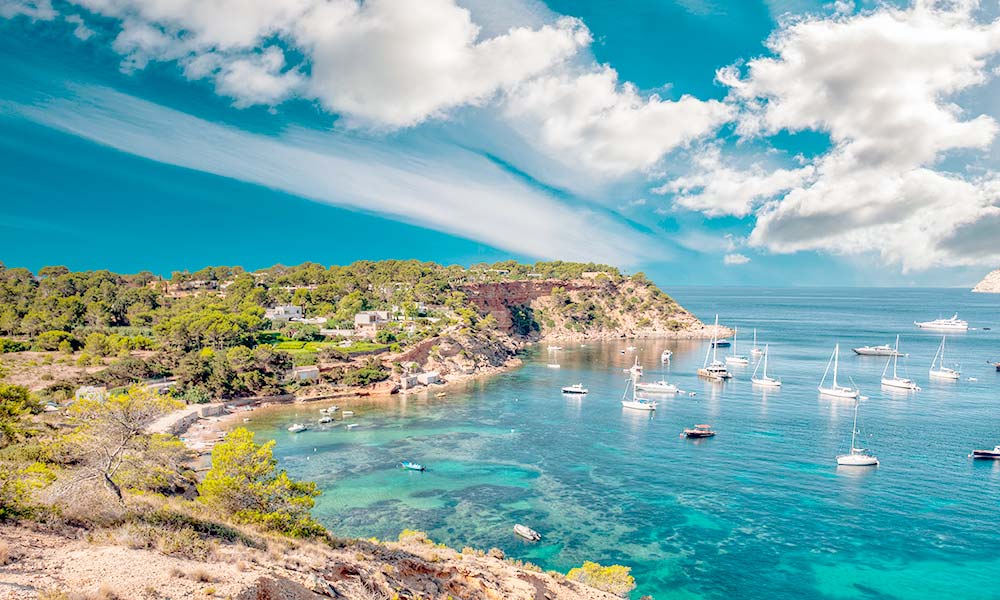
Ibiza is the third largest of the Balearic Islands, located in the picturesque Mediterranean Sea. The island is very well known for its idyllic beaches, beautiful landscapes, and welcoming local populations. The majority of Indigenous populations reside on farms scattered throughout the island. The 21st century, however, has seen a large influx of immigrants from northern European countries who have been drawn to the island due to its moderate winter climates and opportunities to supply the demand for tourist attractions and activities.

For many Britons abroad, Ibiza is an ideal location for a holiday; It has beautiful sprawling beaches with crystal blue waters and the temperature has an average of 27 °C to 31 °C in the summer months. British tourists still account for almost a quarter of tourist arrivals each year to the island.

Statistics from Statista.com, 2024

Since 1961, when the annual report on Ibiza’s economy highlighted that tourism was ‘the main source of island wealth’, Spanish inhabitants have been gearing the demand for partying and consuming alcohol towards British tourists. (Ramon, 2001)


The Med: Lure for Brits Abroad?

With the rise of party package holidays exploding in the 21st century, Ibiza has inevitably become a hotspot for this type of tourism. Well-known holiday agents have even introduced spin-off companies such as Jet2holidays introducing their new brand Vibe by Jet2holidays. Intended to cater to British tourists and established in November of 2019, the company offers a whole host of party packages in categories they label as:

  • Iconic VIBE: Collection of standout, world-renowned hotels and events.
  • Party VIBE: Great value hotels at the heart of the best party resorts.
  • Pure VIBE: Hotels with live DJ performances and pool parties on-site.
  • Chilled VIBE: For luxury lovers including sophisticated and exclusive extras.

Paraphrased distinctions from Jet2.com VIBE

Vibe by Jet2holidays Advertisement, Nov 28, 2019

The rise of package holidays catered to fun-loving, freedom and partying have encouraged young British tourists to feed into the hedonistic style of tourism in more recent years. In more recent years, the idea of a party package holiday has become somewhat a right of passage for young British tourists, enabling them to seek experiences separate from their families. Luke Iles makes a compelling argument to support this by suggesting party holidays allow young Brits to use the holiday as a excuse to ‘let loose’ and ‘unwind and de-stress from the day-to-day realities of life’. In this sense, package holidays are presented as a stress-free way to experience other cultures and lifestyles as they distract Britons from the underlying difficulties young adults may be facing at home. The package holiday also allows younger adults to have all aspects of their holiday pre-organised by a travel company, making it more accessible and popular as a choice of holiday for Brits escaping the mundane of everyday life in the UK. (Iles, 2023)

This idealistic way of viewing holidays is not a new concept. Lofgren also suggests that ‘since we construct vacations in terms of otherness, of getting away from it all, they make facets of our everyday lives and tensions more visible.’ This could be used as a suggestion as to why more young British tourists choose to use party package holidays to really let go of their responsibilities at home. The standardised party package holidays include: short flights, all-inclusive resorts and events specifically set up to encourage self-indulgence and pleasure-seeking Brits to travel abroad. (Lofgren 1999, page 7)


Booze & Brits Behaving Badly

The east coast of Ibiza is notorious for the introduction of clubs and nightclubs that host various types of party packages that Brits have at their disposal. The map details some of the most prominent clubs on the island. The clubs listed are approximately twelve miles apart and has infrastructure which means you can get a 45-minute bus from San Antonio Bay to Carrer des Molí for 6 euros or a taxi for 55 euros and only a 16-minute journey.

Image: Map from Spotlight Ibiza, 2021

‘Economic growth gave rise to a significant accumulation of physical capital that would form one of the foundations on which to sustain future tourism development.’

Ronald James Cooper Smith & Joan Carles Cirer-Costa, 2023, p. 484

Growth in infrastructures meant that ‘networks expanded and interrelated, so that almost all Ibizan locals soon had access to more than one network, thus expanding their power by incorporating bridging social capita’ and allowing them to transport tourists around the island with ease. (Wynne, 2007)

The clubs in the above image all have substantial links to package holidays and booking in advance will get British tourists discounted entry to the bars and beach clubs. Infrastructure has been developed on the island to cater to the mass tourism the locals have experienced since the arrival of the Hippies in the 1960’s. Drunkenness, drug-use, and dancing have become essential characteristics of the island. Meaning party package holidays have paved the way for the tourism industry in the Balearic Islands:

  1. In 2023, tourist spending soared to 4.5 billion euros in the first five months of the year. This is an increase of 25.1% on 2019, pre-pandemic figures.
  2. Between January and September, the average tourist spend in Ibiza was 1,168.53 euros per person during their stay on the island. That is an average of 198.51 euros per day.

Figure 1: theolivepress.es

Figure 2: maninsanan.es

Photographs: Derek Ridgers on Ibiza, 1983

Although British tourists had maintained their role of continuing the tourism industry on the island, they have also been acknowledged as problematic by locals and officials. Countless articles detail the unacceptable behaviour of British tourists on the island. That’s when we ask ourselves, has this style of party holidaying gone too far? The package holiday promising ‘sun & sand’ poses real threats to the livelihood of Ibiza’s residents and Brits have become labelled as boisterous and rowdy as a result of this.

Since the establishment of major clubs on the island, notably Pacha opening its doors in 1973, local communities have suffered from; environmental damage from enormous amounts of single use plastic, physical damage to shop fronts as a result of drunken British tourists and economic instability as the tourism sector makes up for 84% of the islands GDP. In the summer months, the population swells from around 150,000 inhabitants to nearly 500,000 dwellers, also placing strain on the island’s natural resources.


Rowdy Roamers

Thrift, 1999, p. 127

Since the 1960’s, British tourists have been known to partake in illegal activities on the island. The tourism industry in Ibiza are now taking steps towards holding themselves accountable for marketing party package holidays which encourage the unwanted behaviour. Ashling O’Connor reported on this issue for the Financial Times Newspaper. The results are astounding, presenting that even over 20 years ago police were struggling to reprimand criminals on the island, reporting that ‘two British men were arrested carrying 2,000 ecstasy tablets which they were planning to sell in a single night in a pre-club bar.’ This displays how the issue of drug-use and illegal activity has remained a problem since the early 2000’s. (O’Connor, 2000)

British Tourists, Daily Star Newspaper
British Male Tourists at Ocean Beach Ibiza, Daily Star Newspaper, 2023
Brits take on the San Antonio Strip, The Independent Newspaper, 2019

Bellos argues that the tourism industry in Ibiza has encouraged the overconsumption of alcohol on the island. He suggests that ‘tourists tend to be young and Club 18-30 channels many young tourists to Ibiza’ by promoting adult-only holiday packages that include unlimited drinking events and lists of challenges for the tourists to complete before they return to England. (Bellos, 1995, p.23)


Banning Brits Abroad?

Despite the booming economy as a result of British tourism in Ibiza, things could be heading south…

The mass tourism industry in Spain has recently been contemplating introducing restrictions on drinks in all-inclusive resorts on the island to prevent British holidaymakers from causing chaos on Ibiza. Suggestions to limit the amount of alcohol consumed by Brits have been brought into the public realm by online newspapers such as Vice and The Mirror. This presents the issues surrounding party package holidays in the present day and challenges how Ibiza is viewed by British tourists in the current climate.

Read more: Banning British Tourists… & Boozy Brits…

Bibliography

Bellos, A. (1995) “Island in a sea of E.(Social Aspects of Ibiza),” The Guardian, p. 23

Cooper-Smith, R.J. & Cirer-Costa, J.C. (2023) Social involvement and adaptation to the 1960’s tourist boom on Ibiza, Journal of Tourism and Cultural Change, Chapter 21, pp. 480-500

Iles, L. (2023) What Is a Party Holiday? Make The Most of Your Next Vacation, HandL Blogs, p. 1

Kachroo-Levine, M. (2021) How Ibiza Became the Most Sought-after Party Capital in the World, Travel & Leisure, p. 1

Lofgren, O. (1999) On Holiday: A History of Vacationing, University of California Press, p. 7 & p. 200

Obrador-Pons, P. (2016) Cultures of Mass Tourism: Doing the Mediterranean in the Age of Banal Mobilities, Taylor & Francis, Chapter 1, p. 1

O’Connor, A. (2000) ‘Ibiza faces up to its own addiction: The island has become Spain’s richest enclave on the back of its renown as a tourist resort of nightclubs and drugs, Financial Times Article, p. 1

Ramón, E. (2001) Història del turisme a Eivissa (History of tourism in Ibiza). Genial publishing, p.65

Thrift, N. (1997) The Still Point: Resistance, Expressive Embodiment and Dance, in Geographies of Resistance, London: Routledge, pp. 124-151

Wynne, B. G. (2007) Social capital and social economy in sub-national island jurisdictions, Island Studies Journal, pp. 115–132

Websites Accessed:

Images & Audio Cited:

Ibiza Coves, Amare Hotels Brochure, 2021

Ibiza Skyline: Mariusz Stanosz, GETTY IMAGES

Amnesia Nightclub Ibiza, 2016

EDEN Club Ibiza, 2022

Ocean Beach Club Ibiza, 2023

Pacha Nightclub Ibiza, 2017 Opening Ceremony

Image: Map from Spotlight Ibiza, 2021

Photographs: Derek Ridgers on Ibiza, 1983


Brits take on the San Antonio Strip, The Independent Newspaper, 2019

British Male Tourists at Ocean Beach Ibiza, Daily Star Newspaper, 2023

We’re Going To Ibiza, The Vengaboys, 1999, The Party Album (accessed via Spotify Music)

Cruisin’ With Class

Cruises in the modern context are seen as floating fortresses, self-sufficient in a variety of ways from water reclamation to the offerings of a plethora of food, drink and entertainment. However, these modern cruises could not profess such an aptitude for entertainment without first looking back at their earliest ancestors and the opulence they offered for the lucky few who could step aboard.   

Since the advent of the steamboat, many utilized them to explore the world and discover very rarely travelled locations of which they could return home to discuss with their friends and family. The earliest steamship that performed the transatlantic crossing was the Great Western in 1838, made entirely of wood and utilised sails as its main source of propulsion (Rodrigue,2020) but only had the capacity for less than two hundred passengers. This showed promise for the transatlantic liner market and proved that there would be a massive economic uptake should the service take off. Unfortunately, these early ships were not as attractive as their iron clad descendants but that was due to technological limitation as opposed to lack of interest.  The cruise ship provided luxury and homeliness that was attractive to the upper echelons as it offered the same creature comforts as their beautiful homes on the British mainland. Plus, by intentionally creating such a recognizable atmosphere it encourages passengers to relax and even mingle with people who they would have never encountered save for their journey. 

The Tattler – 1933- Depiction of the activities available on cruises in a satirical magazine 

As is the case with top of the line must haves throughout most of history, the earlier cruises were tailored to the immensely wealthy who did not have to worry about frivolous spending but there was still the opportunity to purchase a variety of tickets, each with their own benefits. In fact, the Titanics average ticket price was two and a half thousand dollars sixty-one thousand dollars today (Mcinnis,2022), an astronomical sum that ensured all the bells and whistles such as a smoking room, lavish dining, and ambient music. If we were to ask Jack how much his ticket was on the fated ship, his answer would have been a much more respectable seven pounds, this still being roughly eight hundred and forty-nine pounds today. This was deemed an affordable amount as it only amounted to seven percent of an annual skilled workers salary (The Wanderlust Project,2024). However, to compare the third-class ticket with the first is like comparing fire and water. The third-class ticket provided only basic necessities such as toilet access, basic meals and if you were a man, you were lucky enough to have access to male-only smoking area. 

Within Glanceys ‘The Journey Matters’ there is a discussion of how many amenities were present aboard the SS Normandie, and it warrants a further analysis to the true extents that people took to genuinely enjoy a cruise. From dog kennels to garages with capacities for 100 cars, it begs the question why would those who are embarking on a water bound holiday need a place to store automobiles and canine companions when neither would serve a greater purpose at sea? The answer itself is tied within the opulence that many cruise liners like the Normandie used as a selling point to entice those with money to burn and the sense to do it whilst in the presence of many of those who were members of the upper class. The lack of amenities for those who paid the least is a sure sign that the cruise liners preferred attracting the wealthy and famous people who saw the cruise as a holiday, one of many that they would be taking throughout the year. Moreover, if well-known lines such as Cunard and White Lines consistently catered towards the upper class, then the repeating customer base would mostly consist of such customers. Whilst discussing the glaring differences between the experiences of those at the top of the ship and those at the bottom, it is important to glean why they had set foot on the boat at all.  

Opportunity was becoming synonymous with the United States in the mid 19th century, with there being a presence of every tradable resource from timber and stone to precious metals like gold and silver. By becoming an economic powerhouse, it needed to sustain a workforce that would perform the back breaking labour required to see profits. Due to the country’s size, there was a geographical element to the prominent ethnicities that were a part of the workforce. The east coast had seen a constant influx of migrants from Asia, even more so when the boxer rebellion forced Chinese Christians to have their newly presented privileges revoked and forcefully expelled due to the danger and threats on their lives. However, the west coast was more visited by European nationalities, Scottish, English, Italians to name but a handful of the diverse communities that made the voyage to the ‘Land of Opportunity.’ Circling back to cruises, many of them made several stops in port towns and cities like Boston and New York and so if someone wanted to grasp the unlimited possibilities of the country, they would need to make the transatlantic journey.  

HMS Lusitania– One of the extravagant lounges aboard the Lusitania 

The cruise liners were not the floating cities with every possible enjoyable commodity at the reach of a hand for those who purchased third class tickets. They were a vehicle that was transporting them to a better life away from the turmoil of working-class life in their home countries. A prime example of this is the consistent migration of the Irish diaspora from Ireland to the states fleeing persecution at the hand of the British or the famines that caused millions to starve. With their home country collapsing in on itself due to a foreign colonial power, the USA seems the ultimate place for settling. Cruise liners provided not only an extension of wealthy living but an escape from oppressive powers that were destroying nations as well as a lifeline for the oppressed to use. As such, whilst the rich, famous, and relatively carefree got to enjoy the diverse range of hobbies and amusements abord these revolutionary vessels, there were those quite literally at the bottom, both in the boat and in terms of class , that saw them as an escape and a bountiful oppurtunity to finally establish themselves in a place that would not immediately cast them down due to their nationality. Unfortunately, the end of their journey usually held more of such hatred and bias, with terms like ‘paddy’ and ‘mick’ being used without restraint to belittle and destroy any residual pride within their nationality and even targeted bills like the drunkenness bill that provided widows of habitual drunks’ financial support should their husbands die because of drink. 

To conclude, cruise ships were a beacon of radiance and opulence that demonstrated the intertwining of top-of-the-line contemporary technology with gilded age style design. They performed their duty as modes of transportation for those who sought them out to escape from the destructive, dangerous colonial powers that were exerting control over them, but also were floating palaces that provided every home comfort that the upper echelons of society desired. These palaces of the sea were a definitive marker of the changing times as well as the development s in transportation. Moreover, they birthed a new era of exploration for all to enjoy and experience. 

Bibliography 

Glancey, J (2019), The Journey Matters: Twentieth-Century Travel in True Style, Atlantic Books, Limited, London. Available from: ProQuest Ebook Central. [22nd March 2024]. 

Khederian,R (2017), Why Gilded Age ocean liners were so luxurious. Availiable at: Why Gilded Age ocean liners were so luxurious – Curbed 

Mcinnis,K (2022) Then and Now: Cruise Ship Travel Through the Years .Availiable at :Then and Now: Cruise Ship Travel Through the Years | Far & Wide (farandwide.com) 

Rodrigue, J-P (2020), The Geography of Transport Systems, New York: Routledge. Availiable from: https://transportgeography.org/contents/chapter1/emergence-of-mechanized-transportation-systems/liner-transatlantic-crossing-time/  

Wanderlust Project, the (2024) How Much was a Ticket on The Titanic. Available at: Why Gilded Age ocean liners were so luxurious – Curbed 

From The First Blitz to Glamour: Development of British Civil Aviation.

The First World War brought with destruction and carnage, but this conflict is the one that was to turn killing machines into ones of pleasure. The Golden Age of Aviation (Pattillo, 1998, p. 11) was a period of progressive change between World War One and World War Two in which aircraft which were once dual winged wooden and slow biplanes which during the 1920s to 1030s were developed (Norton, 1921, p.3), to metal, fixed wing monoplanes, which were much faster than their predecessors. This advancement changed the direction of both military and commercial aviation. 

It was during this period that Civil air travel boomed, many aircraft were developed to fly for much longer stints and to perform agile manoeuvres such as barnstorming displays. This was a result of the now useless aircraft and aviators that now had nothing to pursue due to the end of the war, the abundancy of such recourses led to aviators pushing boundaries, stunt planes became popular in the 1920s and the emergency of the transatlantic challenge seemed to captivate aviators. In this post we will discuss the ways in which aviation changed and developed in light of the First World War. 

The World Areas Covered by Commercial Air Routes 1925. 

The World areas covered by Commercial Air Routes 1925

From embryonic beginnings, crude and unadvanced planes designed by the likes of Romanian engineer Traian Vuia and Brazilian aeronaut Santos-Dumont, were shunned by the huge technological and engineering advances World War One brought about. Leading to planes much more adaptable to passenger transportation. 

British Transatlantic Flights

In 1919 British Aviators, John Alcock and Arthur Brown made the first non-stop transatlantic flight in a modified First World War aircraft, the Vickers Vimy. This flight took place from Newfoundland, in eastern North America, to County Galway in Ireland. To further add to the list of new achievements, mail was also carried on this flight which also made it the first transatlantic mail flight, although it was only a small amount of mail. Winston Churchill, the then Secretary of state for Air awarded the two men with the Daily Mail Prize for the first transatlantic crossing by Air in “less than 72 consecutive hours” (The New Daily Mail Prize).

Alcock and Brown taking on mail 

Civil Aviation in Britain 

1919 saw the birth of civil aviation, the first international passenger plane in Britain took off on 25 August 1919 by company Aircraft Transport & travel, the route being between London and Paris (Lyth, 2000, p.866). This flight was followed by the Handley Page Transport Ltd, founded in 1919 by Frederick Handley Page, known to be a pioneer of the aviation industry (The New York Times). 

Aircraft Transport & Travels (A&T) London to Paris flights cost only £15 (today) for a fare, although the priority for goods transportation at this time was not on the passengers, George Holt Thomas, the company’s founder is quoted saying; “it is our intention in the enterprise I control to concentrate almost entirely upon the carrying of mails rather than passengers” (Thomas, 1919, p. 187). During this first year, there were many new airlines established, this was made easy with the surplus of aircraft, pilots, and engineers due to the end of the war. It wasn’t until 1920 that demand, and business seemed to boom, but a trend, that is still seen today, rooted itself in the Civil Aviation industry. Many travellers sought destinations in the summer to escape Britain. In 1920, 3,000 passengers were carried to Europe from Briton between just July and September, but the entire year only saw the travel of around 6,700 passengers total, businesses suffered during the winter months the most (Civil Aviation Department). There was not enough demand and passengers to keep businesses alive, and slowly each one began to close down. Up until this point, civil aviation had had very little government backing, with Winston Churchill quoted saying “if commercial air transport was to fly, it must fly by itself”. But with the looming idea that if all Britain’s commercial air fleet was grounded, British travellers would have to rely on foreign airline operators for transport, as well as this Britain was the largest air power militarily wise and to have no air connections in the civil aviation sphere would be embarrassing. A grant was created by the Cross-Channel Subsidies Committee to grant Hanley and Instone a subsidy that. Today would be worth around £120,000, which would later be extended to a further company. But this subsidy only covered the London-Paris link, which was recognised as a mistake later. The grant was revised to cover multiple European link routes (Higham, 1959, p. 3). Over the next decade the civil aviation industry grew but was still rocky. Facing competition from the recovering railway and suffering from losses due to the unreliable and inefficient aircraft they were using, many companies struggled to even make a profit (Birkhead, 1960, p. 133). With no vision of the British air industry becoming unsubsidized, Sir Herbert Hambling was appointed to investigate British civil Aviation by the government. The committee recommended the merging of the four British Airlines. As a result of this committee report, competition was ended, and monopoly was brought into the industry and the companies merged into ‘Imperial Airways’ in 1924.

Glamour in Civil Aviation

RAF Hendon Airport, London, 1937. Royalty arrives: King George VI, centre, and Queen Elizabeth on aircraft’s steps. 

The glamour of air travel was heightened during the 1930s, the period was marked by class and prestige. The glamour of air travel was cemented during this time period with the event of King George V flying with the British airline, Imperial Airways. As discussed previously, Imperial Airways was the dominant airline at the time, it ran both passenger and mail carrying routes throughout the empire, these routes were established in the mid 1930s outlined in a speech given by Sir Eric Geddes at the annual meeting of Imperial Airways. (see below). 

In 1936, King George V, along with the Queen Consort flew from London to Scotland aboard an Imperial Airways aircraft, marking a significant change from the usual Rail transportation favoured by the prestige, including the Royal family, for long distance travel. King George V’s choice to fly with Imperial Airways added elegance and glamour to the reputation of aviation. As well as this, the Kings choice of air travel also highlighted the “safety” of the form of transportation, which in turn increased its reputation to the public. Furthermore, given the large price tag attached to air travel at this time, it war primarily associated with officials, business individuals, the upper class and notably, Royalty (Giant British Airliner). 

Although the glamour of aviation was not without its risks. Accidents occurred within the industry such as an accident in which two members of crew lost their lives in Mozambique Harbour 1939 (British Official Accident Report). Or the Cavalier accident of 22 January 1939 in which a storm resulted in the failure of the four engines of the Cavalier as a heavy storm iced over the carburettors. At 1:12PM Captain Alderson was forced to bring the plane crashing down into the Atlantic, the impact caused the joints of the plane to crack and it began sinking, with not a single life raft aboard, three cabin crew had life jackets and the plane was not fitted out with enough life belts for all of the passengers, it was a catastrophe that caused the loss of three lives (The Bermudian).

Cabin Glamour 

Cabins upon the Imperial Airways airliners, HP. 42, were designed with elegance to mirror that of the luxurious designs of Pullman train carriages (Jackson, 1973, p. 238). 

There were also two passenger cabins, with a capacity for six in the forward cabin and twelve in the rear cabin. The aircraft offered ample luggage storage as well as large windows for viewing, after all, many saw the journey itself as a tourist pleasure, they further offered spaciousness and attentive cabin staff (Marsh, 2014).

Cabin of a Handley Page HP-42 1931. British Imperial Airways

This luxury is in drast comparison to what we see today, with the introduction of budget airlines in the late 1960s to 1970s. It was a low cost “no frills” which sacrificed traditional airline luxuries for low-cost fares. It operated a low-cost route between Gatwick Airport and New York’s John F. Kennedy Airport (The History Press). 

Laker Airways, 1966-1982

We can see the stark difference in spaciousness and luxury between the original Imperial Airways cabin and the low-cost no-frills cabin of Laker Airways. 

Take a look at the video below to see how this compares to the low budget airlines of today: 

Conclude

It is clear to see that the First World War, in combination with Britain’s imperial endeavours and need for attempted air domination fuelled the development of Civil Aviation. Had it not been for the surplus aircraft and trained pilots left in limbo after the First World War, it is unlikely we would have seen developments at the fast speed they happened. Although the industry was hit with its financial and safety drawbacks, it has developed in to a profitable, popular and advanced mode of transport in the modern day, making itself available to not only those who are wealthy, but to the average citizen too. 

Bibliography

Birkhead, E. (1960). The financial failure of British air transport companies 1919-1924. Journal of Transport History.

Higham, R. (1959). Britain’s Overseas Airlines, 1918-1939. Shell Aviation News. 

Lyth, P. (2000). The Empire’s Airway: British Civil Aviation from 1919 to 1939. London School of Economics. 

Pattillo, D. (1998). A History in the Making: 80 Turbulent Years in the American General Aviation History. McGraw-Hill

Jackson, A. (1973). British Civil Aircraft, 1919-1972, Volume 2. London Putnam.

Thomas, G. (1919). The Aeroplane in Industrial Development, a lecture to the Industrial Council, London. 

Woodley, C. (2014). Gatwick Airport: The first 50 Years. The History Press. 

Air Ministry, Civil Aviation Department. (1920-21). Civil Aviation Statistics, 1919. Annual Report of the Progress of Civil Aviation.

F. H. Norton. (1921). The Effect of Staggering a Biplane. National Advisory Committee For Aeronautics. https://ntrs.nasa.gov/api/citations/19930080864/downloads/19930080864.pdf

Radio transmitter, from Alcock and Brown’s Vimy biplane, 1919. https://collection.sciencemuseumgroup.org.uk/objects/co8636641/radio-transmitter-from-alcock-and-browns-vickers-vimy-biplane-1919-radio-transmitter

Daily Mail Aviation Prizes: https://en.wikipedia.org/wiki/Daily_Mail_aviation_prizes

M. Santos Durmont Rounds Eiffel Tower. New York Times. https://timesmachine.nytimes.com/timesmachine/1901/10/20/106920457.pdf

Sir Frederick Handley Page, Aviation Pioneer, Is Dead at 76; Invented Slotted Wing in 1921 –Built 60,000 Halifax Bombers in World War II Developed Hastings-Hermes 2 Recent Additions https://www.nytimes.com/1962/04/22/archives/sir-frederick-handley-page-aviation-pioneer-is-dead-at-76-invented.html

House of Commons Debates, 5. Series, Vol.126, 11 March 1920.https://hansard.parliament.uk/Commons/1920-03-11/debates/16ee5039-8636-44dc-9f47-2b5826f95645/CommonsChamber

The Bermudan. (2015). The Fateful Flight of The Cavalier. Retrieved 20 March 2024. https://www.thebermudian.com/heritage/heritage-heritage/the-fateful-flight-of-the-cavalier/

(1939), “British Official Accident — Report: Result of the Investigation into the Loss of the “Challenger” at Mozambique”, Aircraft Engineering and Aerospace Technology, Vol. 11 No. 9, pp. 350-350. https://doi.org/10.1108/eb030541

Handley Page HP. 42. “Giant British Airliner”. Retrieved 20 March 2024. https://planehistoria.com/handley-page-hp-42-giant-british-airliner/

Marsh, A. Huge Biplane Airliner May Fly Again. Retrieved 20 March 2024. https://www.aopa.org/news-and-media/all-news/2014/october/31/huge-biplane-airliner-to-fly-again

Images

The World Areas Covered by Commercial Air Routes 1925. https://en.m.wikipedia.org/wiki/File:The_World_areas_covered_by_Commercial_Air_Routes.jpg

Cabin of a Handley Page HP-42 1931. British Imperial Airways. https://www.dalrc.org/wp-content/uploads/2015/01/Imperial-Airways-circa-1931.pdf

Laker Airways Cabin. https://uk.style.yahoo.com/many-forgotten-airlines-remember-153500440.html?guccounter=1&guce_referrer=aHR0cHM6Ly93d3cuZ29vZ2xlLmNvbS8&guce_referrer_sig=AQAAAIGwgernQItP9sJxPpzke5UpeFgQhQBctTxoHWQh0bl2MjPwIVc1p1IEWrt-_QZA2wc5kdMRS9J-cn3hzsPUaCmJiFikdmZPnv2VVnqx-BFAToI3lgW0YXKb8xI2DrbEf0Y7RA7hV4zAEoSE-9t3r4cra0kCFZtTvpmEt8gQ77m7

Alcock and Brown taking on mail https://en.wikipedia.org/wiki/Transatlantic_flight_of_Alcock_and_Brown#/media/File:Alcockandbrown_mail.jpg

Videos

British Movietone. (2016). The Cavalier Wrecked. Retrieved 20 March 2024.

FlyWithPetr. (2017). Ryanair Cabin. Sky Interior Walk. Retrieved 20 March 2024.

RMS Olympic and the Opulence of the Transatlantic Crossing

RMS Olympic in the 1930’s. Colourised by Daryl LeBlanc.

“They [ocean liners] began to assume the character of ocean-going city states, covering a complete cross-section of modern human civilization, in all walks of life’’

(Dawson, 2005, p. 97)

Marred by Tragedy

The Olympic class liners were undoubtedly some of the most luxurious forms of travel available at the turn of the twentieth century but their story is marred by tragedy. As is well known, on the night of April fourteenth, 1912, the middle sister of the Olympic liners, the RMS Titanic struck an iceberg on her maiden voyage to New York. In just over two hours she would be on the seabed and 1,500 dead. Undoubtedly, the Titanic’s place in history is warranted with it still regarded as on of the largest peacetime maritime disasters in history along with the improvements it made to ocean liner safety systems.

The Sinking Of The Titanic Painting by Graham Coton

This was followed only three years later when only four years later, the youngest sister, HMHS Britannic, currently serving the British Royal Navy as a hospital ship for the Gallipoli campaign, would strike a German mine in the straits of Kea in Greece. Luckily, Britannic was on her way to pick up wounded troops in Gallipoli and the evacuation went somewhat smoothly, although the ship was still lost along with thirty people losing their lives. Unlike her sisters, Britannic also never got to see passenger use as she was completed after the outbreak of the First World War and was requisitioned by the navy for wartime service.

HMHS Britannic

It is the eldest sister that we are here to discuss however, the RMS Olympic. Olympic is often overshadowed by the tragic tales of her ill-fated sister ships but her story is no less as intriguing, especially given she was the only Olympic sister to fulfil her full service lifetime, ferrying passengers from her inaugural voyage in 1911 to her decommissioning in 1935, with a stint between 1915 to 1919 as HMT Olympic, bringing across Canadian and later American troops to the western front of the First World War during which she would gain the moniker ‘Old Reliable’ after attempting to ram a German U-Boat off the coast of Cherbourg, France.

HMT Olympic in wartime “dazzle” camouflage, 1918

A Floating City of Victorian Style

It is well known in our popular history of the Titanic that the Olympic class liners were the very epitome of Victorian style and elegance, being likened to floating cities due to their size and luxury. On Olympic first-class passengers would find luxury cabins with some even equipped with private bathrooms and access to the ship’s dining saloon and the À La Carte Michelin star restaurant. She also housed multiple smoking rooms, a café, a library, swimming pools, a Turkish Bath and a gymnasium, not to mention the Grand Staircase present on all Olympic Class liners. After renovations in the 1920s, this would even include the installation of a movie theatre on board playing the latest hits of the interwar period. Over the course of her lifetime, Olympic would play host to many of the early twentieth century’s celebrities; Marie Curie, Sir Arthur Conan Doyle, Charlie Chaplin, Mary Pickford and Douglas Fairbanks, and Prince Edward, then Prince of Wales.

Photograph of the Olympic‘s À La Carte restaurant, taken in 1911

Of course, just like Titanic, Olympic played into the many classist attitudes of steam liner traffic with strict class divides imposed on the ship with the decks divided between first, second and third classes, along with the disparity of the sizes of rooms. This was somewhat lifted in the interwar period with the Olympic’s shift to predominantly tourist traffic and the resulting reduced cost of fares.

Charlie Chaplin onboard RMS Olympic in New York with Mary Pickford and Douglas Fairbanks on September 3rd 1921. This was his first time going back to England since he moved to US in 1910.

Bibliography

Chirnside, Mark (2004). The Olympic-Class Ships. Stroud:

Chirnside, Mark (2015). RMS Olympic: Titanic’s Sister. Stroud:

Hawley, Brian (2012). RMS Olympic. Stroud: Amberley Publishing.

Beveridge, Bruce; Hall, Steve (2004). Olympic & Titanic. Buy Books.