The two sides of the Grand Tour- the British appreciation of Art and the real root of upper-class masculinity?

In the late eighteenth and early nineteenth century, what did young aristocrats do once they finished their education? It was in fact not much different to what happens today. Many of the wealthy upper-class children took years out to travel Europe. This kind of travelling carried on all the way until the Napoleonic wars, even then people travelled Europe, or even the UK.  There were multiple reasons for the Grand tour, the outcome sometimes varied from the intention. According to James Buzard, “the Grand tour was from start to finish an ideological exercise.” (Buzard,2002, p38) These young men were sent away to learn the skill or art appreciation, as well as political competency. The side of the Grand tour that doesn’t get discussed as much is the idea that they went away to “sow their seeds” meaning that they went away to drink, have sex, and gamble to get it all out of their system in order to go back to England and run households or start their careers. In order to be prepared for their future careers they had to learn about how to be a man, especially a man in high places. 
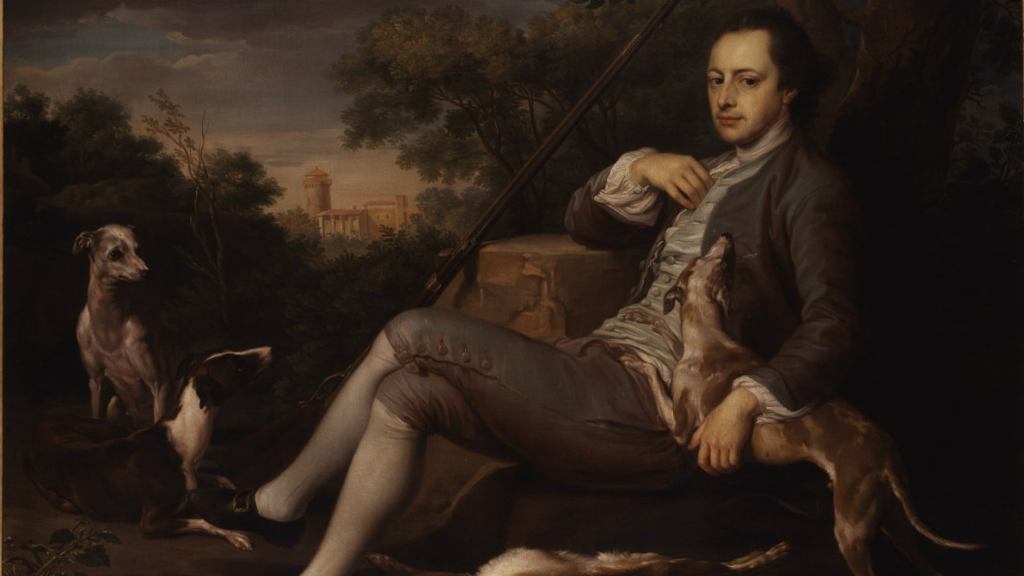
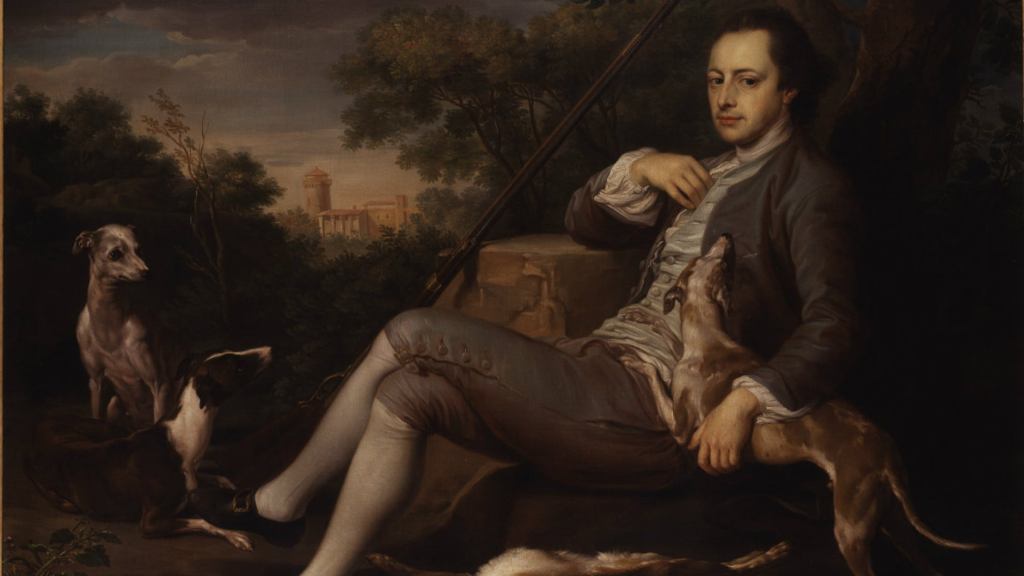
Pompeo Batoni (1708-87), Humphry Morice (1723-85), 1761-2  (de la Rosa, Gabriella (2015) Collecting the Grand Tour: Treasures of the Ford Collection Available from: The National Trust (Last Acessed: 17th February 2022)

Aristocratic families had paid large sums of money for their children to go to school and university in order to gain a sound education that resulted in a career path adequate of an upper-class individual. On completion of university education, there was a period where parents felt their children needed to apply the knowledge they learned in school and other forms of education to real life. The languages taught in schools were, again, of an importance (Lyttleton, 1728). They could practice their language skills in these areas they were visiting to further their education. Which is basically what the whole point of embarking on the grand tour was for. All of these skills were viewed as masculine, they were needed in order to make the perfect gentleman who was capable of running estates and working in high places of government. Women on the other hand would not have had the same education (Sweet, 2015, p52). They would have not been taught to the level that males were. This then became more obvious in journals. Once women began also travelling around Europe there was more information to highlight the gap between them. Men had little interest in Antiques, they were more interested in areas of historical relevance and architecture, whereas women entered into more detail about these areas describing their beauty etc (Sweet 2015, p 36). This highlights a contrast between them, women probably had little knowledge about these things therefore were basically seeing it from a blank slate. In comparison, these men knew the histories behind them, this highlights the element of masculinity that was being portrayed throughout Europe. 

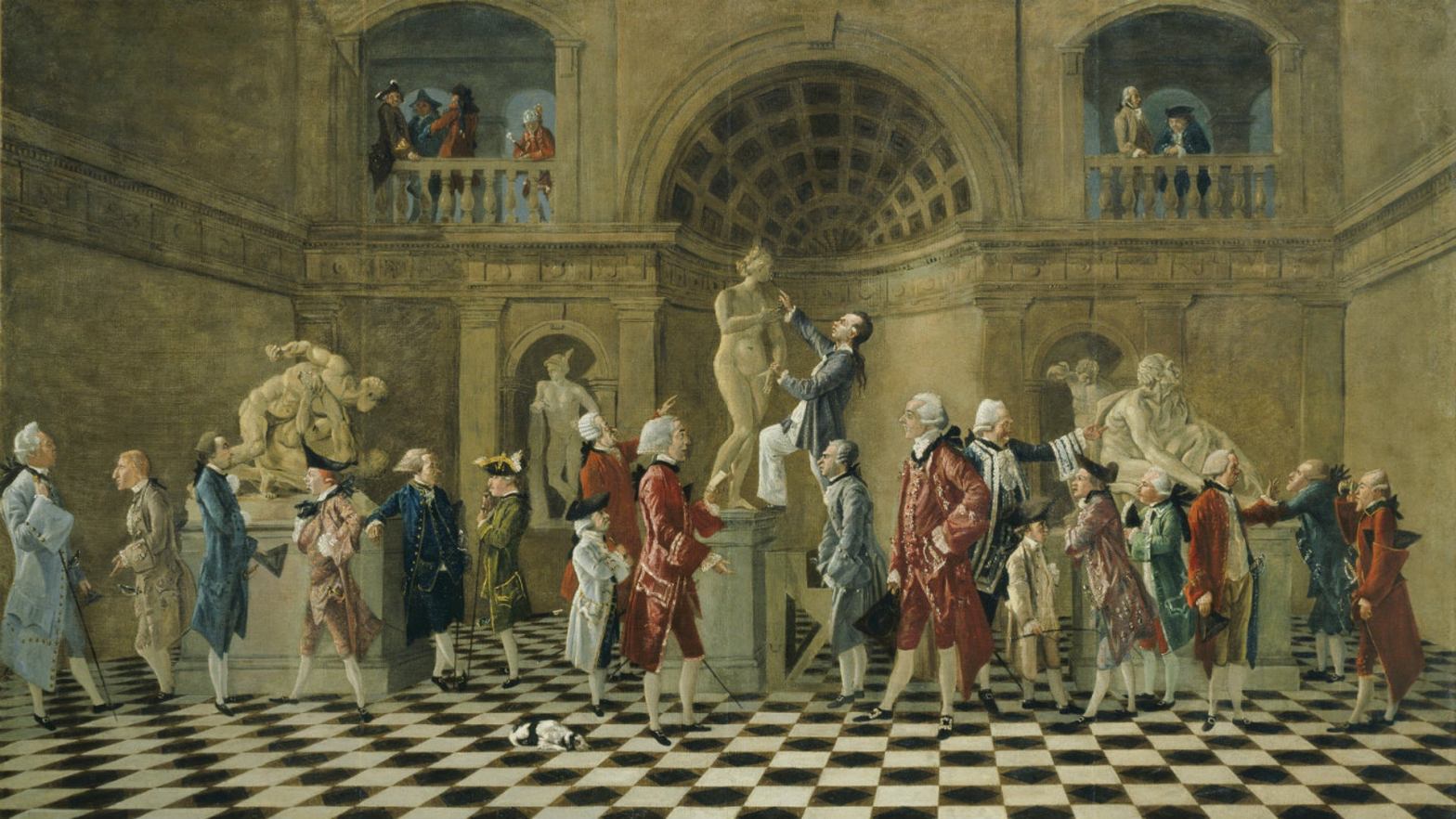
This idea of males and females having different reactions to art and places of significance highlights the pressure that develops for the need to react in a certain way. As the Grand tour became more and more popular, still within the upper classes, there was an element of making sure you were doing the right thing. There was a need to react a certain way otherwise you weren’t doing the grand tour correctly, women reacted in one way and were worried about reacting too much like a man would and men were worried they had a too feminine response. Therefore, in trying to develop and become the most educated person, there was an element that you were also trying to fit into society, to grow to fit in. There was also a need to show off your knowledge and experience at home. There are examples throughout collections in England, especially in Ford’s collection (De La Rosa, 2015) of artwork that was commissioned in order to show off the level of travel and education they had achieved. They were commissioning the art to fit in with the antiquities that they were seeing. But the underlying factor was that they were showing off their masculinity. Men wanted to show how far they had got on the Grand tour, all of the travelling and living in different conditions, all built into their idea of being masculine.

Ancient Rome (1757) Giovanni Paolo Panini Italian ( Available from: The Metropolitan museum (Last Acessed: 17th February 2022))

In order to discuss politics, which was probably one of the main lines of conversation for upper class men, they needed to mix with men in politics and experience it first-hand. The whole idea of the Grand Tour was experiencing life, practicing before they do the real thing in England. In letters home to family members there is evidence of these young men mixing with highly politicised people in European states, they would send home information about what was going on (Lyttleton, 1728). Many journals discussed the political systems they had encountered. Italy was of special interest to British because they felt that as English people they were ‘New Romans’ they felt that they had a civilised society and were interested to see how different states tackled democracy and politics in general (In Our Time, 2002). Ultimately though, these young men were not interested particularly in the people they saw, the lower classes, the peasants in these areas. It was all about the political and historical relevance of the areas they were visiting. The integration of these young upper-class men into European political circles would go as far as spending time in courts such as, German, Iberian, Scandinavian and Russian states (…), highlights the extent to which they found out information. The interest in Italian politics was due to this idea that the English were civilised, and the rest of Europe was not (Black, 1985:2010, p114). They spent a lot of time deeply interested in how Italians ran their countries. Let me highlight here, that those who were in the courts experiencing these political situations were men. These men were learning how to become ‘men’ of influence and fit into the idea of masculinity that was being developed around this period. 
PGiovanni Battista Busiri (1698-1757), The Campo Vaccino, Rome (de la Rosa, Gabriella (2015) Collecting the Grand Tour: Treasures of the Ford Collection Available from: The National Trust (Last Acessed: 17th February 2022)

However, was this all purely a front? Were these men actually living life in a completely different way than the letters sent to their parents? It is easy to see from experience that the majority of young people are not interested in history and politics therefore, how likely is it that they were in fact purely visiting these areas and socialising within political circles? They would not want to show their parents what they were actually doing however, Europe seemed to be more accepting of things. It became what was known as a ‘sin bin’; there was an element of the Grand tour that actually was parents acknowledging that their sons needed to ‘let off steam’ abroad so then they were able to come back to Britain and take over the estates. This was an element of the Grand tour that was, again, men developing their masculinity, women never had that level of freedom. Everything women did on the continent was watched and done in such a way that it eliminated any chance of her being questioned for her morality. It was unsaid that men went around drinking and having sex, but it was generally known that they did so. This highlights the masculinity that was being ‘built’ by travelling around Europe. There are many examples of English diplomats having to get involved in affairs regarding British young men in order to get them out of scrapes (In Our Time, 2002). Therefore, although the events were not in the journals because they would not be telling their parents what they were doing, it is generally known that situations like that did happen. “The tour provided a limited period of release before an adulthood in which the young man might be expected to set an example of responsibility and sobriety” (Buzard, 2002, p 41). Europe was the best place to do this because it gave them ability to let off steam with little consequence. Europe was far enough away that many rumours would not reach Britain however at the same close enough to be able to learn how to run the countries because they were similar enough to do so. Therefore, the ideal of masculinity was the mould for these young men to fit into, it was expected of them on return to the UK. 

To conclude, the whole idea that young boys went off to become men is a very valid one. The Grand tour was the final bit of training; the consolidation of everything they learned in school. This had its hidden elements however, there were parts that did fit into this idea of being moulded into the masculine man by developing skills in foreign courts and seeking out art and architecture.  There was also the element of worry, worries that their reputation would be ruined if their sons wanted to, drink and gamble and other vices. Therefore, it was in their interests to send them away to Europe to do so, however where were the women’s’ choices to do so? So, the main idea of the Grand tour was to build strong masculine men, and this is where the itineraries were probably very similar because there was a set list of what people thought ‘becoming a man was’.  

All of the images shown throughout the post are a result of the Grand tour, and show how the tour influenced British taste and style.

Bibliography

Primary sources

  1. de la Rosa, Gabriella (2015) Collecting the Grand Tour: Treasures of the Ford Collection Available from: https://www.nationaltrust.org.uk/features/collecting-the-grand-tour-treasures-of-the-ford-collection(Accessed 17th February 2022)
  2. Lyttleton (1728-71) News from abroad: Letters Written by British travellers on the Grand Tour
  3. Sterne, Laurence (1768: 2001) A Sentimental Journey Through France and Italy. 

Secondary sources

  1. BBC In Our Time (2002) The Grand Tour, 13 May. Available from: <http://www.bbc.co.uk/programmes/p00548fs &gt; [Accessed 17th February 2022].
  2. Black, Jeremy (1985: 2010) The British and the Grand Tour. London: Croom Helm. Social and political reflections 
  3. Buzard, James (2002) ‘The Grand Tour and After (1660-1840)’. In Youngs, Tim (ed.) The Cambridge Companion to travel writing.
  4. Cohen, Michele (1996) Fashioning Masculinity: national identity and language in the eighteenth century.
  5. Naddeo, Barbara (2005) ‘Cultural Capitals and cosmopolitanism in eighteenth-century Italy: the historiography on the Grand Tour.’ Journal of Modern Italian Studies
  6.  Sweet, Rosemary (2015) ‘Experiencing the Grand Tour.’ In Cities and the Grand Tour.
From Trenches to Tourism; a bird’s eye view of travel

In February 1929, Evelyn Waugh and Freya Stark documented their flight experiences, documenting their journey from London to Paris. Within the extracts, both writers have a tendency to firstly, explain the reasons for their travel and secondly, to describe their flight experience as a whole. Their narratives contain a lot of flamboyant and perhaps, exaggerated, terminology which is likely due to their feelings of excitement, exhilaration and nervousness. Waugh in particular, in the longer extract of the two, describes the whole journey; describing his belongings, itinerary for the trip, the process of check in and the flight experience itself. Waugh’s journey reflects several transport tourist theories from this decade, as ‘the air service was still very young’ (Waugh, 1982, p.187) therefore, Waugh’s descriptions support the common idea that it was not until ‘the second half of the twentieth century that jet propulsion, wide-bodied aircraft and low-cost carriers helped to create and accelerate mass tourism’, Pirie states in his  article that 1920’s air travel was not available for the masses due to its expense and most flights would have carried government officials (Pirie, 2009, p.49). Other travel tourist theories which will be discussed in relation to Waugh’s extracts will be: early desires to fly, the potential beginnings of ‘tourism’, technological advancements and commercialisation of air travel.

Brave Socialites and Uncomfortable Beginnings

Immediately after World War One, an important decision was made by the British government which essentially kept aviation alive. Planes were not advanced enough at this point to fly in winter months and therefore, as Peter Lyth states: where profits soared throughout the summer, aviation was practically non-existent at the end of the year: ‘summer boom was inevitably followed by a winter slump’ (Lyth, 2000, p.868). Imperial Airways, a government-sponsored  company, advanced the air travel industry from 1923.

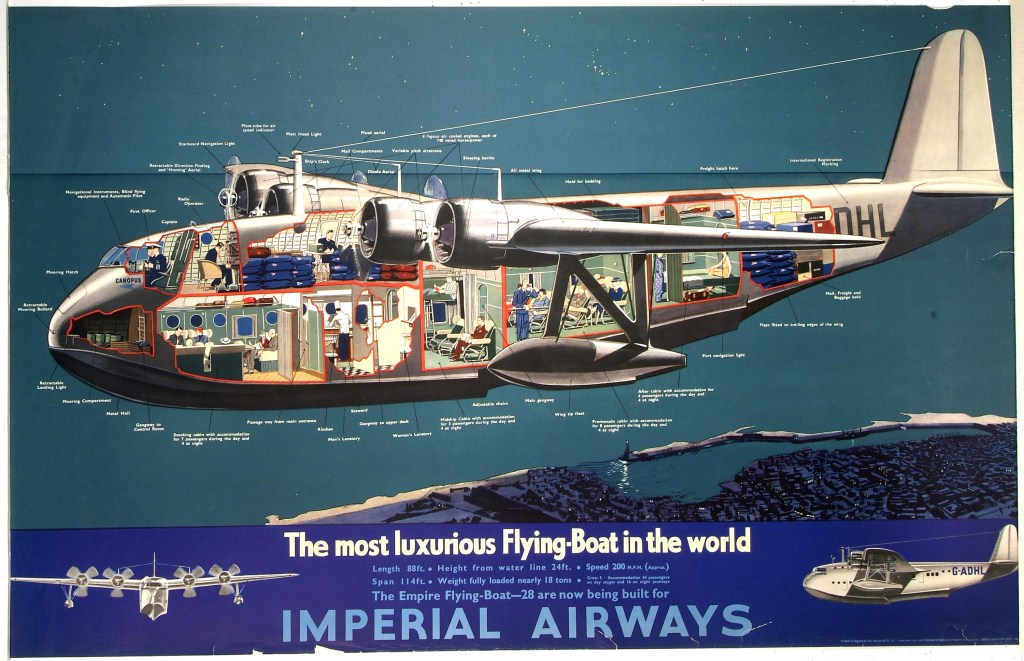
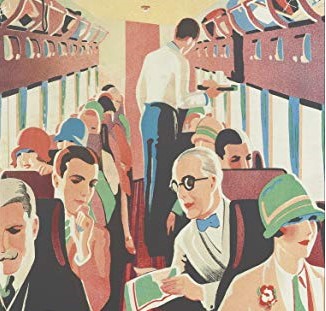
James Gardner ‘The most luxurious Flying-Boat’, Poster, National Air and Space Museum Collection

Evelyn Waugh’s extract gives a fine example of a product within a growing industry, still under a trial and error process; Waugh uses his descriptions to imply how people would try anything to get the chance to fly: ‘an ex-officer of the R.A.F. appeared in Port Meadow with a very dissolute-looking Avro biplane, and advertised passenger flights for seven and sixpence or fifteen shillings for “stunting”’ this suggests how people were willing to pay small fortunes, to fly in very inadequate post-war aircrafts (Stark & Waugh, 1982, p.188). Despite these stunt flights not particularly advancing ‘mass tourism’ as such, people in the 1920s were desperate for a taste of flying, and it was only the matter of expense of a real destination flight which stopped people from doing so.

In the context of Waugh’s writings, 1929, this was a period of quality advancement for aviation. It saw the beginnings of ‘first-class’ on-board service: The Silver Wing (BBC 4, 2009). This was a period of fortune for those who were affluent, despite the Great Depression, wealthy personnel would pay fortunes to experience the recent advancements in aviation in terms of silver-spoon styled service. The BBC documentary on post-war aviation goes into detail about this growing craze, suggesting it was a government idea to advertise British aviation with the idea of promoting their ‘modernity and technological prowess’ (BBC 4, 2009). Unfortunately, in terms of tourism for the masses, this craze was mainly used by diplomats and government officials; this knowledge is backed up by Gordon Pirie who suggests: ‘the main reason for the relatively small share of leisure air travel by air in the British Empire is probably the expense of tickets’ (Pirie, 2009, p.54). However, as in Waugh’s extract, there were less expensive options of flying: ‘it was not the newest sort because they are more expensive’ this is one of the early beginnings in mass travel and tourism; as technologies advanced, the more recent planes were left behind by the growing companies therefore, more of the masses could begin to experience flight, despite being years behind the wealthy customers (Stark & Waugh, 1982, p.191).

Reasons for Flying and Taking Risks

Evelyn Waugh, more so than Freya Stark obtains the general feeling of excitement for flight through his use of adjectives throughout the extract: ‘excited’ ‘trembling’ ‘fascinating’ ‘clean and bright’, this supports the perception of the masses at this time, Waugh’s experience is one of highs and lows, literally and mentally, he experiences moments of relaxation as they seemed to ‘float along’ opposed by feelings of ‘discomfort’ as he was sick and experienced a ‘headache’ due to testing nature of the flight (Stark & Waugh, 1982, pp.188-192). This mixture of feelings is what Pirie describes as he suggests ‘flying was not just about the balancing of savings and cost, it was about the conspicuous consumption, boasting and thrill’ despite the disastrous end to Waugh’s flight and Stark’s feeling of being ‘dishevelled’, people paid for the experience to boast and tell their friends, which was also a fast way of spreading the desire to fly (Pirie, 2009, p.55) (Stark & Waugh, 1982, p.187). In the next section, the intelligence of companies to take advantage of people’s wish to fly was part of their advertisement, alongside the travelogues of those who sought tourism for the first time.

What came first, the chicken or the egg?

A long-debated question about the symbiotic relationship between transport and tourism is which came first? Did the development of transport lead to a demand for tourism, or did a demand for tourism lead to pioneers creating better transport industries? In terms of the creation of aviation, the small demand pre 1914 was much more insignificant than post World War One, when a thirst for demand came as a result of ‘astonishing technological implications’ through combat (Zuelow, 2015, p.127).

As time progressed, so did aviation. In Waugh’s documentations, he includes the use of Imperial Airways advertisements, one of many posters which captured the imagination of the country (Stark and Waugh, 1982, p.190). Advertisements showing proud-looking, well-dressed businesswomen as the ideal model for flights demonstrated the feelings of aviation at this time. An interpretation drawn from posters such as the one shown in the extract, is that business women who chose to afford the ‘less expensive’ journeys, alike the woman on the flight with Waugh, would see these advertisements and potentially model herself on the affluent business traveller. Therefore, the cheaper and shorter flights could be used by common people like Stark and Waugh who are seeking the beginnings of their tourist life.

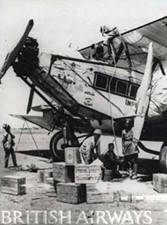
British Airways, De Havilland DH66 Hercules refuelling at Cairo, 1927
British Airways: Photographs from 1920-1929.

Furthermore, in Pirie’s article, he states that despite a complete advancement in long-distance flights, the stopping and starting nature of reaching a far destination was one of the early causes of enlightened tourism: ‘frequent stopping, and overnight halts, helped to make tourists of all air travellers, irrespective of their trip purpose’ as well as this, it is noted that whilst the travellers were on the ground, they would begin to document the places they saw and visited which became early versions of travelogues which would be circulated throughout the country, installing a mass tourist agenda (Pirie, 2009, p.56). From Waugh’s extract, you can gather the sense that he is not particularly driven on the notion of sight-seeing, ‘it was sensible on the stomach rather than the eye’ his focus on the discomforts would have been a common thought for first time passengers who would not have been able to compose themselves to focus on sightseeing (Stark & Waugh, 1982, p.191).

Conclusion

When analysing Waugh’s experience, it is important to see his extract as a whole journey. The sense of preparation, check in, meeting new people, excitement, fear and destination are all themes of what became of the travel holiday. Despite Waugh’s lack of desire for sightseeing or his disinterest in the destination, his accidental participation, in the simplest way of him documenting his experience became the makings of travelogues and spread the mass demand for travel. As aircrafts became steadier, safer and more relaxed air travellers became tourists even in the sense of them viewing the ground below. Pirie states that ‘air tourism was a product of the age before society had been saturated with aerial photography’ which is a perfect representation of the correlation between technological development and mass tourism (Pirie, 2009, p.64). As previously mentioned, the complete acceleration of mass travel did not occur until post World War Two when there was further technological developments which led to cheaper manufacturing of planes, and tourists could travel for destination at affordable prices.

Bibliography:

BBC 4 (2009) High Flyers: How Britain took to the Air. A documentary celebrating the golden age of air travel during the 1920s and 1930s. London: BBC. (DVD).

Lyth, P. (2000) ‘The Empire’s Airway: British Civil Aviation from 1919-1939’. Revue belge de philogie et d’histoire. 78 (3-4), pp.865-887.

Pirie, G. (2009) ‘Incidental Tourism: British Imperial Air Travel in the 1930s.’ Journal of Tourism History 1(1), pp.49-66.

Stark, F. & Waugh, E. (1982) ‘A Trip to Paris.’ In Kennedy, L (ed.) A Book of Air Journeys. London: Collins, pp.187-193.

Zuelow, E. (2015) ‘Bicycles, Automobiles and Aircraft’. In, A History of Modern Tourism. Basingstoke: Palgrave Macmillan, pp.112-133.

No sex please we’re British: Victorian Honeymooners

In the winter and spring of 1873 Emily and John Dearman Birchall embarked on a five-month honeymoon trip to continental Europe, which Emily recorded in a diary. Despite the private nature of Emily’s writing (her diary was not edited and published until 1985) sex is strongly absent from the newlywed’s account. Perhaps this is unsurprising. Not only was twenty-year-old Emily a product of the moral strictures of Victorian propriety, to whom overt mention of sexual encounters would have been an anathema, but reference to sexual exploits are themselves atypical in travel writing. As Ian Littlewood notes, ‘The official line rarely tells the whole truth about anything, let alone sex. The story of tourism is no exception.’ (Littlewood, 2001, p.1) That said we do not need to be so accepting of this silence on questions of sex. Edward Brewtnall’s painting ‘Where next?’, painted in the decade following the Birchall’s wedding tour, illustrates how this kind of marital intimacy during travel could be played out; the husband’s possessive arm around his spouse’s shoulder; the luncheon table in disarray; the travel guidebook in the background; and the couple planning their route, perhaps not just for the afternoon, but given the painting’s title, also the rest of their lives. That Brewtnall’s painting is more commonly called ‘The Honeymooners’ makes it an appropriate accompaniment to Emily Birchall’s account.  As with the painting’s imagery, by reading between the lines of Emily Birchall’s diary, we can reveal moments of physical desire and intimacy. I’d like to suggest that there are instances in Emily’s account which mention physical exertion, the ecstasy of particular views and scenery and her obsession with recording food and dining, which are signifiers for her sexual attraction to her new husband, even if they appear far removed from acts of sex themselves. In this discussion I will focus on one specific episode to explore how sexuality could be read into what seems like an ordinary tourist experience.

Edward Frederick Brewtnall (1880) Where Next? [Private collection, Wikipedia]

Travel, sex and intimacy

Helena Michie argues that in the nineteenth century Britons viewed mainland Europe as a terrain where pleasure and passion were to be anticipated.  In the British imagination the very notion of Europe was ‘metonymy for sexualized, if not sexual, experience.’ (Michie, 2001, p. 237) Therefore, despite the Birchalls’ travel under the sanctioned state of matrimony, their wedding tour brought with it connotations of sexual transformation, particularly for Emily, whose sexually-naïve and virginal state on marriage would have been assured as a middle-class Victorian woman. The very concept of the honeymoon was a journey of transformation in terms of status, identity and physical maturity often conducted away from the familiar and the familial environment of home. Added to this is the sense that travel can be a context and facilitator of sexual desire, indeed, Littlewood maintains that ‘the physical business of travel is itself erotically charged’ and British travellers and tourists perceived  that the further south in Europe one went the more Latin and sexually-charged the context became. (Littlewood, 2001, p. 3)

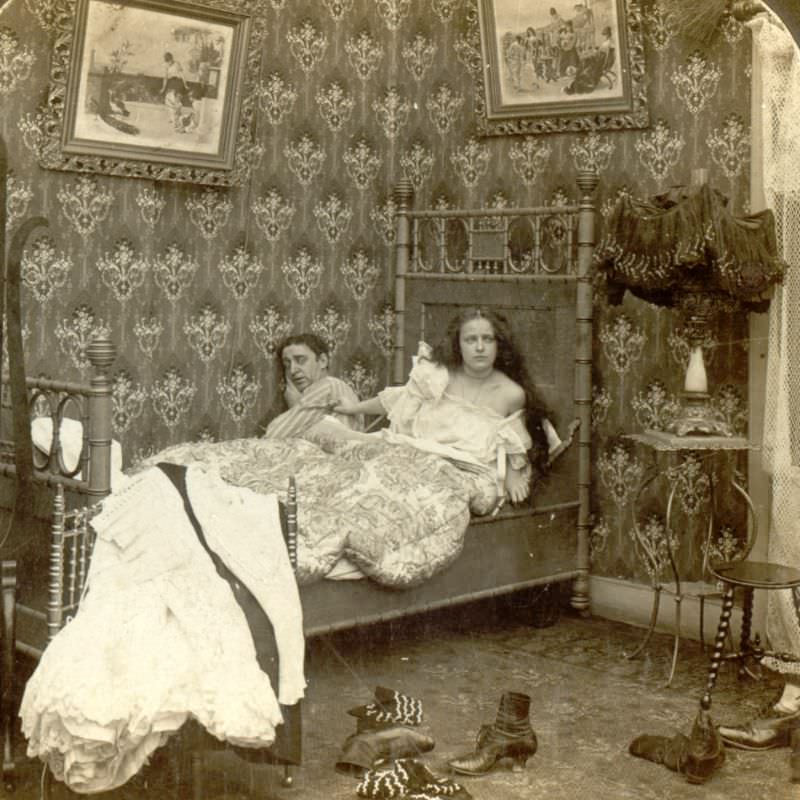
The physical consummation of marriage was couched in symbolism in Victorian writing and art. This late nineteenth-century photograph makes physical intimacy much more explicit.

Red letter days on a continental wedding tour

The impact of these southern latitudes on Emily’s inhibitions to write about her experiences can be witnessed in her account of Tuesday 4th February 1873, by which point the Birchall’s had reached the French Riviera. Unlike many of her entries which open with mentions of breakfast, transport or the weather, Emily opened this date in emphatic style; ‘This has been one of the red letter days of my life, having been signalized by a glorious walk, in magnificent scenery, on an absolutely perfect day, and with a most congenial companion. What more could be desired?’ (Birchall, 1873, p. 9) Emily’s sense of euphoria is palpable and her allusion to a ‘red letter day’ marks it as one of those transformative moments which Michie links to the honeymoon. Her choice of words in describing the attributes of her day are also worthy of note; glorious, magnificent, perfect and possibly less enthusiastically, congenial.  Congenial or pleasant seems out of sync with her other effusive descriptions and it is here that we might read Emily being coy about her new husband. Such coyness accompanies a full day alone in each other’s company as the Birchalls undertake a walk between Nice and Mentone, a twenty-mile trip on foot across spectacular costal cliff paths. Not only are they removed from the public social world of the Riviera towns frequented by most tourists, but they dispense with the assistance of their guide Perrini, who had accompanied them from London, and embark on the day’s sightseeing as unchaperoned partners.

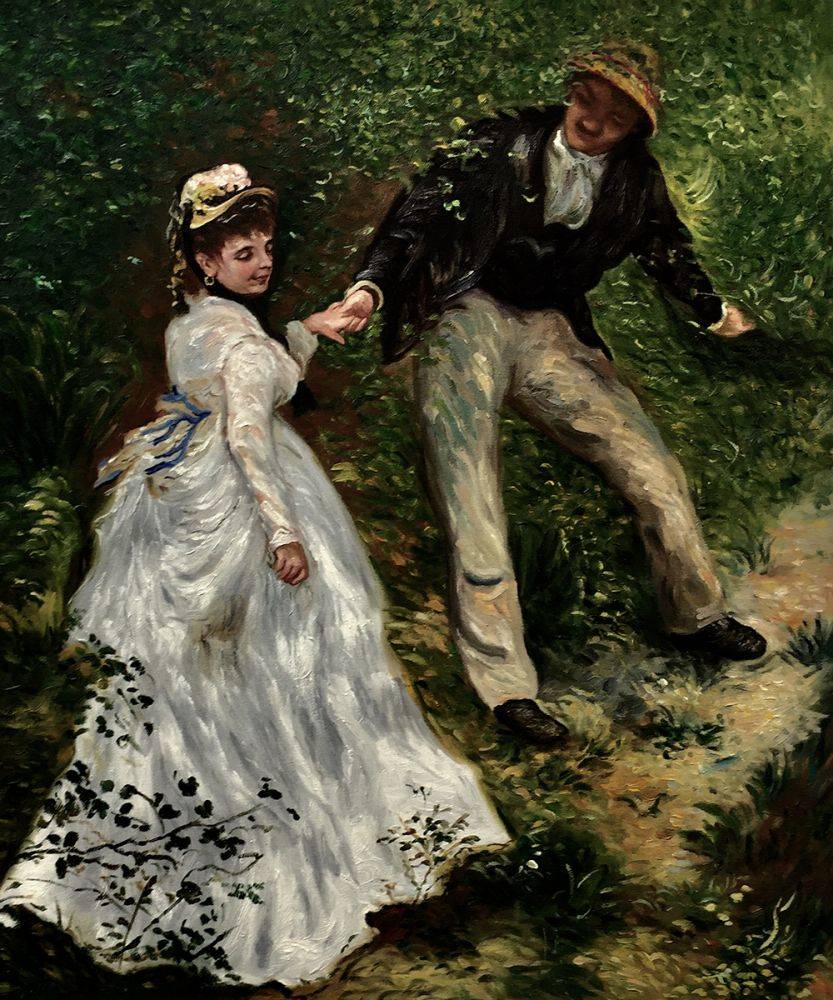
Auguste Renoir (1870) La Promenade [Getty Center, Los Angeles, Wikipedia]

Reading intimacy into the deliciousness of a delightful walk

Emily’s description of the walk builds on this sense of herself and Dearman as a unit, underscored by her persistent use of ‘we’ in relating their actions and feelings. References to ‘we started … we found … we ventured … our eyes feasted’ (Birchall, 1873, pp.9-10) reflect what Claire Langhamer describes as marriage’s ‘dynamic emotional connection where personal transformation was a shared project achieved through togetherness.’ (Langhamer, 2013, p. 6) As they follow the steep costal path the Birchall’s are treated to amazing views of blue sea, green islands, rolling hills and snow-topped Alps in the distance; the couple see these vistas not as individuals but, Michie suggests, as part of a joint ‘conjugal gaze’ which commonly appears in the accounts of honeymooners abroad in this period. (Michie, 2001, p. 240)  Moreover, in her details of such views, Emily makes special note of the olive orchards and vineyards which cover the surrounding countryside, both symbolically important in weddings and honeymoons as representations of fertility. In drawing her descriptions of this view to a close Emily pronounces that the panorama is ‘perfectly ravishing.’ (Birchall, 1873, p. 10 – italics mine) 

But the sense of connectivity and shared appreciation of their surroundings is not the only hint of intimacy revealed in this particular extract. Emily’s choice of wording is again significant; ‘delicious  … exhilarating … hot’ are adjectives which also carry connotations of romantic pleasure and arousal. (Birchall, 1873, p. 9) This is highlighted in her admission that she ‘doffed gloves and all doffable garments, and Dearman peeled to his shirt sleeves, greatly exciting my envy of his cool and airy appearance.’ (Birchall, 1873, p. 9) Whilst there’s no suggestion here that the couple removed more than jackets and accessories, even this act of casual semi-disrobing and the visual appreciation Emily pays to her husband bear witness to aspects of attraction and disregard for the sartorial expectations of the Victorian age. This sense of the couple’s playfulness is also echoed in Emily’s reference to ‘an awfully seedy looking restaurant’ in a small village where they stop for refreshment and ignore the niceties which usually accompanied their dining encounters in the best hotels amongst other rich and aristocratic tourist.  (Birchall, 1873, p. 10) Taken together, these small actions compound 4th February as a day of particular frivolity, intimacy and escape for the Birchalls, removed from the public and touristic conventions which beset British newlyweds on honeymoon on the continent.      

Robert Lopez-Cabrera’s (1895) Couple dans un compartiment de train [Musee Carnavalet, Paris] depicts the private moments during a couple’s more public travels

Assessing conjugal travel and the honeymoon period

From this discussion it would wrong to conclude that Emily and Dearman indulged in any sexual activity whilst on their long walk from Nice to Mentone, but if we read this diary extract carefully it becomes apparent that Emily’s account of the excursion is redolent with sexual connotations that are bound up with the experience of travel itself. This entry is suggestive of the ‘sustained tone of blissful intimacy’ which Emily sustains in the rest of her account. (Michie, 2001, p. 235) Once the honeymoon was over, five surviving children and an idyllic account of their home life depicted in The Dairy of a Victorian Squire (1983) point to a happy and productive marriage, founded on their five-months wedding tour in Europe.

Writing of another context in which open references to sex, even within marriage, are taboo, that of  Muslim women’s autobiographies, Siobhan Lambert-Hurley has noted that ‘To interrogate a text for silences is a task expected of every careful scholar, and yet it can be marked by serious challenges. How exactly do we identify and then write about something that is not actually there in the script.’ (Lambert-Hurley, 2014, p. 159) Lambert-Hurley suggests that one way around this is to ‘start disentangling what an autobiographer chooses to tell about herself.’ (Lambert-Hurley, 2014, p. 160) Such a task is necessarily hampered by guesswork, but be analysing Emily Birchall’s diary entry for 4th February 1873 alongside other entries, closely attending to her choice of language and situating it in the wider context of travel and the Victorian honeymoon we can come to a fuller understanding of conjugal intimacy abroad.

Bibliography

Birchall, Emily (1873: 1985) Wedding Tour: January-June 1873. Gloucester: Alan Sutton.

Lambert-Hurley, Siobhan (2014) ‘To Write of the Conjugal Act: Intimacy and Sexuality in Muslim Women’s Autobiographical Writing in South Asia.’ Journal of the History of Sexuality 23(2), pp. 155-181.

Langhamer, Claire (2013) The English in Love: The Intimate Story of an Emotional Revolution. Oxford: OUP.

Littlewood, Ian (2002) Sultry climes: travel and sex. Da Capo.

Michie, Helena (2006) Victorian Honeymoons: journeys to the conjugal. Cambridge: CUP.

Michie, Helena (2001) ‘Victorian Honeymoons: sexual reorientations and the “sights” of Europe.’ Victorian Studies 43(2), pp. 229-252.