By Jack Matthews
“Pilgrimage in the traditional sense is an inner journey manifest in exterior space”
Singh, R (2006)
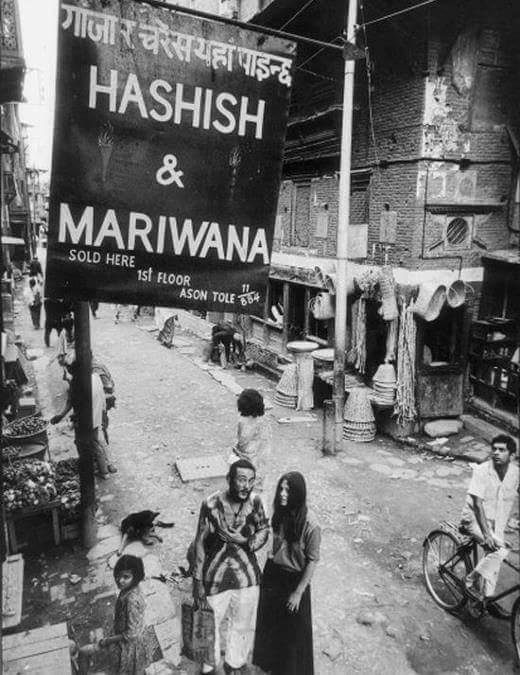
Known prior to the 1960s as ‘the overland’, a route that would connect London to Calcutta began to gain infamy among the young people of Europe, North America and Australia. More specifically the route would garner the attention of the ‘Hippies’ due to the abundance of drugs on the journey and the emphasis on passing through areas in which Hashish was readily abundant. Though it was not only the abundance of drugs that convinced the hippies to embark on a cross-continental excursion. Some wished to free themselves of the cultural confinement of the west, hearing stories of exotic cultures in the East in which the spiritual system was liberal and free. (Oliver, P. 2014) This blog will focus on the spiritual journey some undertook as well as the use of drugs such as Hashish to reach spiritualism.
Counter-Culture: The Creation of the Hippie and the Allure of Hinduism .
First, we must define and understand what is meant by ‘hippie’ and counterculture. Timothy Miller (2011) defines counter-culture as the ‘disloyal opposition to the establishment culture’. Where the establishment culture that Miller refers to is that of the standard culture in the West, which after World War Two, had become materialistic through the advent of new technology and a prosperous economy. From the perspective of the Hippies, western society had been characterised by social conformity, a lack of individual freedoms and adherence to moral constraints (Oliver, P 2014). At the heart of the counterculture belief was the idea of change; believing the society that had been created was obsolete and that a new culture had to be created which focused more on hedonism: the belief that all that is pleasurable is good. From this came the popular idea of “dropping out”, meaning to drop out of the establishment culture, those who undertook the Hippie Trail could be seen as drop outs leaving the west in search of a culture which aligned more with their beliefs.
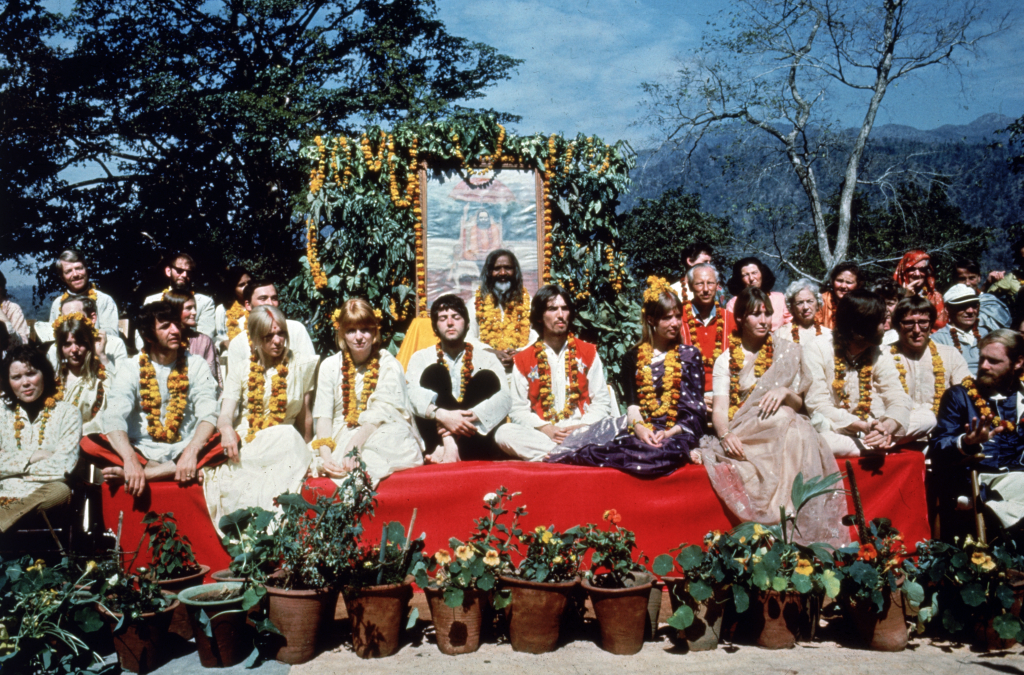
No other culture or religion aligned more with their beliefs than that of the Hindus in the east. Unlike Christianity in the west Hinduism had no single god to adhere to, the closest thing to a central god “Brahma” was less of a force to be obeyed and more of a guiding force. (P, Oliver 2014) Hinduism offered its followers a liberal framework to access spirituality, far from the 10 commandments of Christianity that many of the Hippies had been brought up on and had come to resent as being too rigid and conservative. After World War Two many Indian immigrants had moved to the west, bringing the teachings and stories of Hinduism with them, the allure of the exotic religion with its many gods had garnered a wide audience within Europe and North America. As can be seen with the ‘Bold as love’ album cover to the left by Jimi Hendrix and the Beatles visit to India in 1968, Hinduism has infiltrated music, art and pop culture. Where Richard Gregory (2008) makes clear that the Beatles trip to India was paramount in the success and popularity of the hippie trail.

Pilgrimage to Kathmandu
Some westerners that set out towards India on the hippie trail had a similar ambition to that of the Indian Pilgrims, often visiting the many holy sites across India as they went. The spiritual side of travel through India was often stressed by early travel books (Gemie and Ireland, 2017) , and thus many of those westerners who visited India often did so to experience the authentic culture and spirituality that was on display within India. It was not only the culture of India which travellers experienced, as Gemie and Ireland (2017) make clear the hippie trail east was defined by religion: passing through Christian lands in the west, through Muslim countries and eventually arriving in India which was home to Sikhs, Hindus and Buddhists. As Tim Maddrell, Avril Terry and Alan Gale (2015) account, the taking part in spiritual events such as walking with a large crowd down the Ganges gave them a feeling of togetherness, or being ‘at one’, a feeling the Hippies of sixties would have craved coming from a society that felt very much divided in the west. Furthermore, a pilgrimage in Hinduism has great transformative power (Singh, 2006), an idea that would have been greatly appealing to the hippies of the 60s, whose counter-culture was placing a great significance on the need to transform western society.
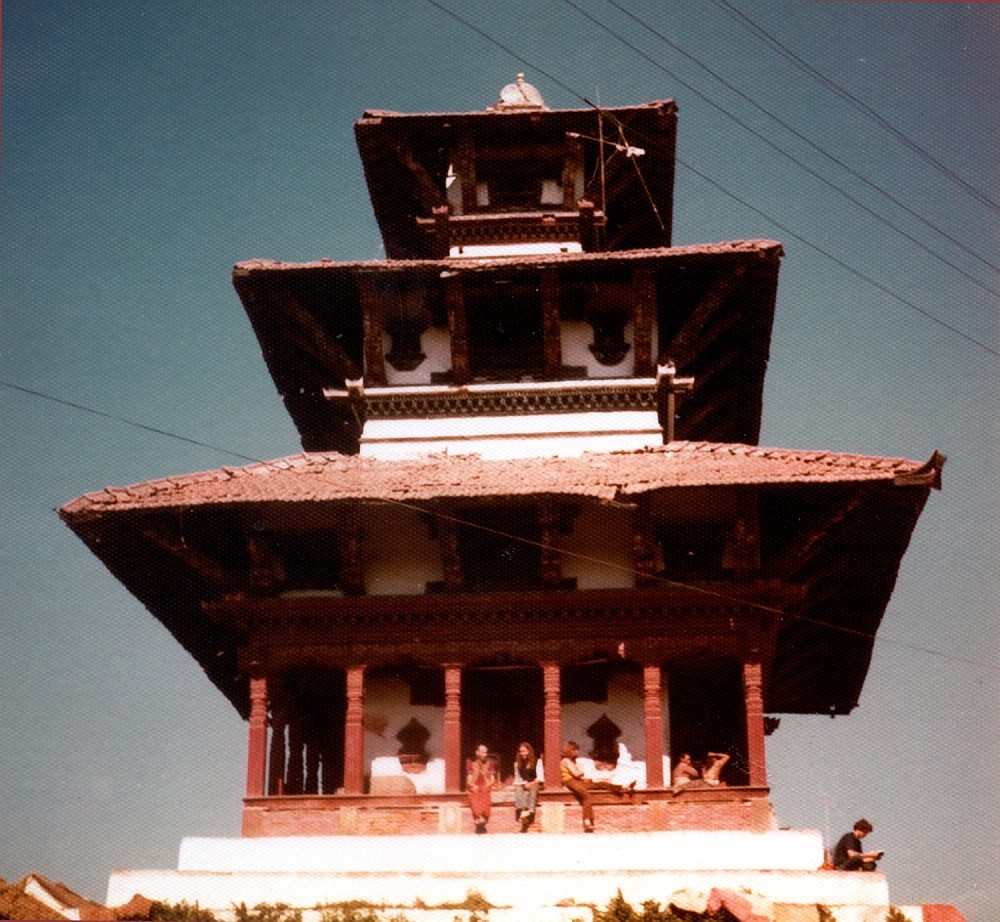
Whilst there were some who did intend the journey to be a pilgrimage, in many ways other than a complete religious one. First hand accounts from Richard Gregory published in 2008 recall that the people found on the hippie trail were wildly diverse: with some coming almost as a conventional tourist, coming across ‘the overland’ to see the world but not necessarily get lost in it. It is key to make the distinction between those who were on the trail to get lost in the various cultures along the way, what we would consider the ‘hippies’ and those who undertook the journey more as a holiday to see parts of the world they had never seen before: where the former would have been more inclined to view the journey as a pilgrimage. Though there were conventional ‘hippies’ that did not see the journey as a pilgrimage; Tony Walton (1973) recounts that the journey was more cultural than religious, with a large emphasis placed on the accessibility of various drugs along the trail, a topic that will be covered later in the blog. Though it should be said that whilst Walton’s journey did not place any emphasis on religion, the images he took whilst on the trail have a clear focus on the cultural and religious aspects of the places he visited, perhaps highlighting how much of a profound impact these different religions and cultures had on Walton.

Finding Spirituality: Drugs in Hippie and Hindu Cultures
One unifying aspect that both Hippie culture and Hindu culture shared was the use of psychedelics such as Lysergic acid diethylamide (LSD) and Cannabis or ‘dope’ as the hippies called it. ‘Dope’ or more the use of it was a defining difference between those within the counter culture and those within establishment culture (Miller, T, 2011). Cannabis being an almost constitutive element of counter culture at the time it is easy to see how the Hippie trail enticed the western youth of the 1960s. Contrary to seeing the journey as a pilgrimage it is true that many of those who undertook the journey did so due to the relative cheapness and accessibility of substances such as cannabis (Walton, T, 1973) . In Richard Gregory’s (2008) words: ‘what defined the Hippie Trail was that it led to the major hashish-producing centres of the world.’ and it was true, drugs such as cannabis and LSD had a huge draw for the hippies on the trail.
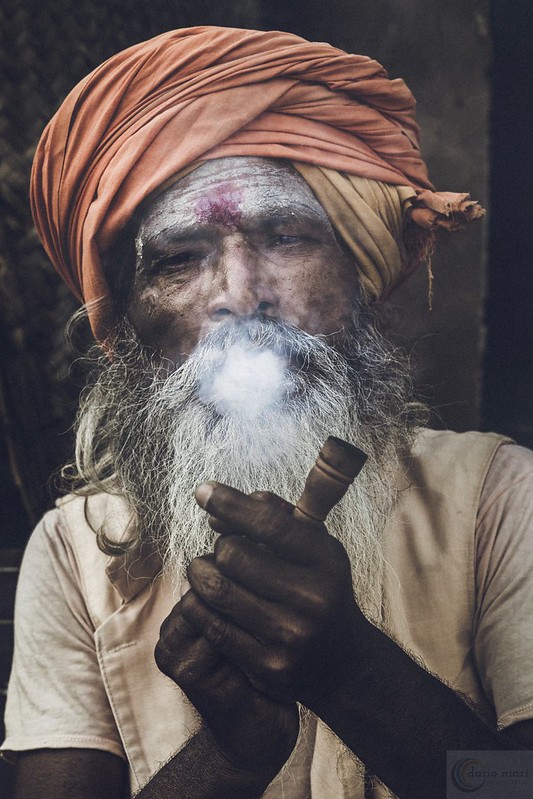
Though it is true that drugs were a primary draw for those embarking on the trail, it would be wrong to separate those who went on the trail due to the abundance of drugs and those who undertook a spiritual journey. Within both Hindu and Hippie societies the use of drugs is heavily linked with spirituality and religion. Since Veda times (500-1000BC) there are references to the use of a drug named ‘Soma’ in Hinduism for spiritual means, though it is not clear what exact drug is referred to, it is clear that Hinduism and drug use has a long and storied history (Oliver, P 2014). Similarly in counter-culture circles were setting up “Dope Churches” in the U.S such as Tim Leary’s League for spiritualism Discovery, in which psychedelics were used for the sole purpose of producing a religious experience (Miller, T, 2011). It is evident that the use of drugs within Hippie society was to a similar effect to that in Hindu society, and therefore whilst drug use on the hippie trail was extensive, it could be argued that its use was for a spiritual effect similar to that of the Hindus use of such drugs.
This is evident in David Tomary’s (1996) account of his experiences in India, prior to visiting India Tomary had no interest in India culture or Hinduism, even whilst there he felt ‘a great alienation from all but the educated and westernized Indians’. That was until his first experience with cannabis in India, after which his perception of the Indian people was changed. He felt like he had unlocked an understanding of Indian culture and could now properly experience it, although just one example it is a great example to show how the use of drugs within India and on the hippie trail was not always simply for the fun of it but it also allowed those taking them to almost ‘go native’ as Richard Gregory (2008) called it.
Summary
In conclusion, it is fair to say the spirit of the Hippie Trail was similar to that of a pilgrimage. It is interesting to see how how many similarities the hippies and the Hindus had, from basic core beliefs to the use of drugs to achieve spiritualism. Such similarities and the borderline obsession hippies had with Hindu culture is what has led me to believe that whilst the Hippie Trail was not a pilgrimage in a complete sense, and there were many on the trail who would not associate with the label of pilgrim, it did inhibit characteristics similar to that of a pilgrimage. It would seem to be more of a cultural pilgrimage if anything.
Bibliography
Primary Sources:
- David, T (1996) The Mountain: Darjeeling, Kathmandu. In: David, T ed. A season in Heaven: True tales from the road to Kathmandu. London: Harper Collins.
- Gregory, R (2008) A brief History of the Hippie Trail: Overland to Asia in search of Hashish. [Online] Available from: A Brief History of the Hippie Trail – London to Kathmandu – Expanded (richardgregory.org.uk)
- Walton, T (1973) On the Hippie Trail: Overland to India and Nepal in 1973. [Online] Available from: https://anarcholoco.wordpress.com/introduction/
Secondary Sources:
- Gale, A, Maddrell, T & Terry, A (2015) Sacred Mobilities: Journeys of belief and belonging. Farham: Ashgate
- Gemie, S & Ireland, B (2017) The Hippie Trail: A History. Manchester: Manchester university press.
- Miller, T (2011) The Hippies and American values. Knoxville: University of Tennessee press.
- Oliver, P (2014) Hinduism and the 1960s: the rise of a counter-culture. London; New York: Bloomsbury.
- Singh, R (2006) Pilgrimage In Hinduism: Historical context and Modern Perspective. In: Timothy, D & Olsen, D eds. Tourism, Religion and Spiritual Journeys. New York: Routledge.
 Britons Abroad