Arousing Interest, Promoting Awareness: Deciphering the Dichotomy Between Education and Entertainment within Sex Museums 

Over the past 500 years, travelling has become synonymous with experiencing a multitude of cultures, exploring, relaxing, and entertainment. From this, the development of sex tourism has emerged. Historically linked with the growing ideas of sexual liberation and pleasure, sex tourism has evolved to not only experience these things but also consuming the heritage and cultural significance surrounding it. 

From the Grand Tour in the 16th century to more recent times with the emergence of package holidays, changing societal norms links between travel and sexual freedom are incredibly apparent. Demonstrating a shift in indulgence to heritage around sex, encouraging consumers to dig deeper into the complexities that museums navigate- the fine line between entertaining while conveying important information and meeting the new modern-day audience needs. This blog post will explore these complexities surrounding the rise in sex tourism and its close links with heritage. Whilst also looking at the links between past and present tourism and how this has played a role in how museums navigate the tricky task of being informative vs educational. 

This blog will focus on Amsterdams Sex Museum , known for its imagined geographies, such as picturesque landscapes, but also for its liberal ideas around sex, making it a hot spot with the 18-30 demographic who want the chance to experience the rich culture and liberation, like those who undertook the Grand Tour. Another example is the New York Museum of Sex

Origins of sex tourism and heritage 

The phrase Grand Tour was first coined in The Voyage of Italy by Richard Lasses in 1670; what we now know as the grand tour occurred as far back as the 16th century. Although no set route, stops included France, Italy and Greece. Traditionally, it started as something only undertaken by noble men looking to finish their education; however, in the 1800s, women soon started to experience the cultural richness the Grand Tour had to offer. For many, they were solely independent away from traditional norms, so because of this, the trips often tended to be part education and part ‘continental booze-up, a prolonged itinerary of excessive consumption, gambling and sexual experimentation’ (Nast, 2022). Ingles states that the Grand Tour offered a ‘search for new selves down forbidden paths in paradise gardens, a giving of oneself to strangers and to suddenly discovered friendships, a stripping-off of old attire, both literal and metaphoric’ (Inglis, 2005, p.136).

Painting of the Uffizi gallery was a popular stop source for many travellers on the grand tour source: https://www.historyhit.com/what-was-the-grand-tour/.

Although accounts were written both within the Grand Tour and even in Victorian times, often scared of repercussions of breaking the social norms of the day, many require a modern audience to read between the lines. A prime example is Margaret Fountaine’s love among butterflies. A published diary of Victorian lady’s travels. She details her falling in love with her guide/translator, Khalil Neimy, in Syria. She wrote that she ‘claimed all the privileges of an accepted lover, though I did not give him all he asked.’ (Fountaine, 1980, p.125). Diaries like this had to be published retrospectively; when the diaries were given to the castle museum in 1940 following her death, there was a letter asking for them not to be put on display in 1978 showing that even in death Fountaine feared the backlash.

The creation of package holidays in 1841 by Thomas Cook also helped create a revolution. The world wars brought stagnation to the tourist industry; however, the idea of escaping from the constraints of war-torn Britain appealed to many, and in 1947, holidays continued back up. The growth in travel and economy with a new increase in disposable income coupled with the introduction of new ideas such with the introduction of contraception and an increasing urge for self-discovery. The 1970s saw the birth of the stereotypical 18-30s holiday such as Club 18-30 having the ‘catchphrase “sun, sex and sea” Club 18–30 became a go-to tour operator for people travelling without their parents for the first time.’ (Dickinson, 2018). Seemingly sharing several comparisons with the Grand Tour: away from social norms, pushing the limits, offer a sense of escapism and enjoying the sexual freedom. 
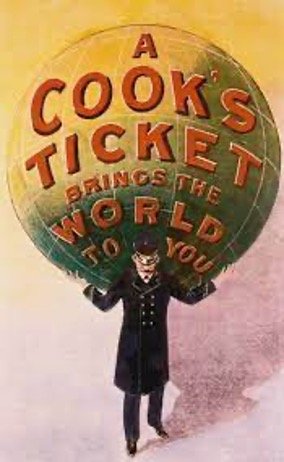
Poster advertisement for Thomas Cook source: https://www.theguardian.com/travel/2018/nov/22/thomas-cook-the-father-of-modern-tourism-archive-1958

Education vs Entertainment

One way in which museums balance entertainment and education is using technology. For example, the celestial bodies VR exhibition in 2017. A fully immersive experience where the audience were encouraged to use all senses as they were transported by VR into a different dimension. Based on the song set it off by Diplos, the VR experience allowed the audience to explore a fantasy sci-fi hallucinogenic land with exotic dancers. The use of technology such as VR in museums shows the capabilities of modern technology within museum settings drawing a modern crowd in. Other technology uses include the virtual tour run by the sex museum in Amsterdam. This is key to bringing in a new audience and allowing them to experience the various artefacts that the museum offers that they wouldn’t otherwise get to experience. 

Another technique used is the type of language. Amsterdam Sex Museum describes itself as ‘educational & funny’ (The Sex Museum, n.d). This can be seen in many novelty items amongst important artefacts, informative facts, and information. Using this language is paramount in keeping the audience engaged and entertained, which in turn will help promote education within the museums. Although sex museums are often thought-provoking, the tone and language used allows for the information to be more digestible. Another thing they have done is make sure that they appeal to a wide range of exhibitions that cater to different audiences and that they are represented, such as the whole exhibition on LGBTQ+. The exhibition hones in on the growth in pride parade, the development of gay rights worldwide and the drag queen industry. 

However, in contrast, the museum stays informative by running workshops and lectures. An example of this would be within the New York Museum of Sex running workshops on topics such as reproductive health to help destigmatise it. For example, in 2020 they ran the Laia Abril–On Abortion: And the Repercussions of Lack of Access . At a time when women’s reproductive health is a heated topic within America the exhibition highlights the importance of women’s health care and the taboo around it. In the centre of the exhibition were chairs with a TV Infront showing a clip of Todd Akin, who made remarks live on TV in 2012 that even in rape cases, abortion isn’t acceptable, and women have control over what happens. The chairs in front of the TV metaphorically and physically actively encourage discussion. Similarly, Amsterdam has also ensured to be inclusive, such as objects from various cultures, such as China and Greece. It also includes pop culture references such as Marilyn Monroe, the most recognised sex symbol and uses a broad range of exhibitions on various things, such as the BDSM exhibition. 
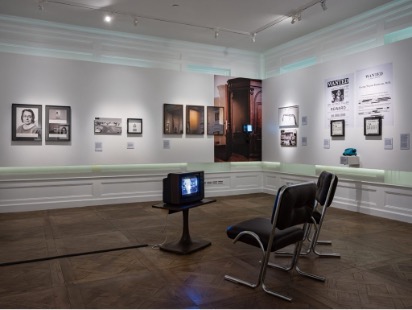
Example of how the abortion exhibition in the New York Museum of Sex has been designed to create open conversation source: https://www.laiaabril.com/exhibition/on-abortion-museum-of-sex/
 

Controversies 

Although this has not come without its challenges, the Amsterdam city council announced the discouragement of both stag and hen parties, with the deputy mayor saying that it was done to ‘keep out visitors that we do not want’ (Doyle, 2022). Showing the impact that imagined geographies have had on tourist destinations, especially the ones with more sexual connotations. This would also have impacts on places such as the sex museum being a prime place that they would often visit. Additionally, there has been reports of sexual harassment to staff working within the museums. Staff members at the Museum of sex reported to have experienced ‘constant and persistent sexual harassment’ from customers, adding that these complaints were not dealt with by management and were simply allowed to happen (Burke, 2019). The case was ultimately closed with a settlement (unreported how much), it raises the question about how much protection the staff have and goes against everything a sex museum should be- safe and welcoming for both staff and customers. 

Recently, the Museum of sex has also been in hot water for misinformation. The museum misreported that Madonna had failed to help support the AIDS crisis at an exhibition of the 1980s music videos. Claiming that ‘mainstream museums such as Madonna….failed to openly acknowledge the devastation of the movement’ (Museum of Sex, 2024). The museum faced significant backlash and released a public apology ‘we have since amended our museum signage to point out Madonna’s early steps to bring attention to the aid crisis. We regret any negative light this many have shined. It was purely unintentional’ (Museum of Sex, 2024). Undeniably these types of museums have and do face constant religious backlash  from the likes of the catholic league, who claimed the Museum of Sex to be ‘a death chamber that would acknowledge all the wretched diseases promiscuity has caused’ (Chancellor, 2002). 
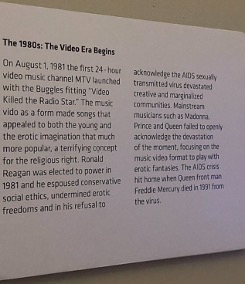
Example of the misinformation the Sex Museum in New York claimed about Madonna source: https://www.dailymail.co.uk/news/article-12948533/museum-sex-nyc-madonna-apology-aids-crisis.html#:~:text=New%20York%20City%27s%20Museum,the%20devastation%20of%20the%20moment%27.

Conclusion

To conclude, there has been a very apparent change in the need to explore sexuality over the past 500 years with tourism. Going from the need to experience sexual liberation to the more modern world wanting to experience this but to also wanting to explore the heritage that has grown because of this. The growing interest in sexual heritage, museums have had to adapt to the growth and rise in sex museums. However, there is a very fine line between education and information, and sex museums appear to dance along this very line- although some not always seeming to get it right. 

Bibliography

Burke, M. (2019). Ex-Museum of Sex tour guide sues over alleged sexual harassment. [online] NBC News. Available at: https://www.nbcnews.com/news/us-news/ex-museum-sex-tour-guide-sues-over-alleged-sexual-harassment-n1019631 [Accessed 29 Feb. 2024].

Chancellor, A. (2002). The opposite of sex. The Guardian. [online] 28 Sep. Available at: https://www.theguardian.com/world/2002/sep/28/usa.comment [Accessed 2 Mar. 2024].

Dickinson, G. (2018). Outdated and irrelevant – the demise of Club 18-30 comes as no surprise. [online] The Telegraph. Available at: https://www.telegraph.co.uk/travel/comment/club-18-30-holidays-demise/.

Doyle, E. (2022). Amsterdam campaign tells ‘nuisance’ British tourists to ‘stay away’ from capital. [online] The Independent. Available at: https://www.independent.co.uk/travel/news-and-advice/amsterdam-campaign-nuisance-british-tourists-stay-away-b2240003.html.

Fountaine, M. (1980). Love Among the Butterflies. HarperCollins.

Inglis, F. (2005). The Delicious History of the Holiday. Routledge.

Laia Abril. (2020). On Abortion, The Museum of Sex, New York, 2020. [online] Available at: https://www.laiaabril.com/exhibition/on-abortion-museum-of-sex/.

Lassels, R. (1670). The Voyage Of Italy, Or A Compleat Journey Through Italy.

Museum of Sex. (n.d.). About. [online] Available at: https://www.museumofsex.com/about [Accessed 2 Mar. 2024].

Museum of Sex. (2020). Laia Abril: On Abortion. [online] Available at: https://www.museumofsex.com/exhibitions/laia-abril-on-abortion/#:~:text=In%20her%20first%20chapter%2C%20On [Accessed 2 Mar. 2024].

Nast, C. (2022). How the Grand Tour transformed eighteenth-century culture in Britain. [online] House & Garden. Available at: https://www.houseandgarden.co.uk/gallery/the-grand-tour.

Sex Museum Amsterdam (n.d.). Sexmuseum Amsterdam – Ontdek de Venustempel van Amsterdam. [online] Available at: https://sexmuseumamsterdam.nl.

Stanley, I. (2024). Museum of Sex apologizes to Madonna for claims she ignored AIDS crisis. [online] Mail Online. Available at: https://www.dailymail.co.uk/news/article-12948533/museum-sex-nyc-madonna-apology-aids-crisis.html#:~:text=New%20York%20City%27s%20Museum [Accessed 2 Mar. 2024].

The Guardian (2018). Thomas Cook: the father of modern tourism – archive, 22 November 1958. The Guardian. [online] 22 Nov. Available at: https://www.theguardian.com/travel/2018/nov/22/thomas-cook-the-father-of-modern-tourism-archive-1958.

Zoffany, J. (n.d.). Tribuna of the Uffizi. [Painting] History Hit. Available at: https://www.historyhit.com/what-was-the-grand-tour/ [Accessed 2 Mar. 2024].
Making waves: the history of the UK’s surf culture

Nick Hounsfield (The Wave, 2020).

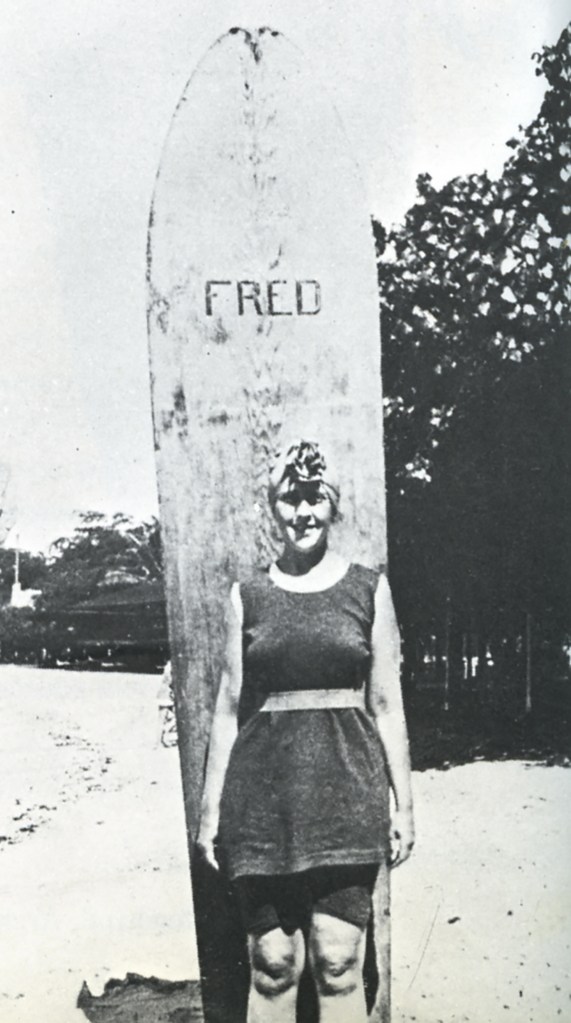
Back in the 1800s, the affluent south coast might just have been the birthplace of British surfing, with a rising trend of sea bathing. In 1890, we saw two Hawaiian Princes hitting the waves in the town of Bridlington. The chilly North Sea became the earliest confirmed wave riding in the UK, not the sunny surf hot spots like Newquay or Croyde. The birth of UK surf was in Bridlington, brought to us by Hawaiian royalty! Surfing had earned its title the ‘Sport of Kings’ thanks to its history with Hawaiian royalty. It was even dubbed ‘A Royal Sport’ in Jack London’s essay ‘Learning the Hawaiian Surfing’ because of the involvement of Kings and Queens, and yes, there were champion female surfers as well as male! Surfing even had some UK royal connections, with Edward Albert, Prince of Wales, dipping his toes in the sport. Under the guidance of Duke Kahanamoku, the Prince entered a royal jaunt to Hawaii in April 1920. Prince Edward fell in love with the sport and was often hailed as the father of modern surfing (Robinson, 2019).

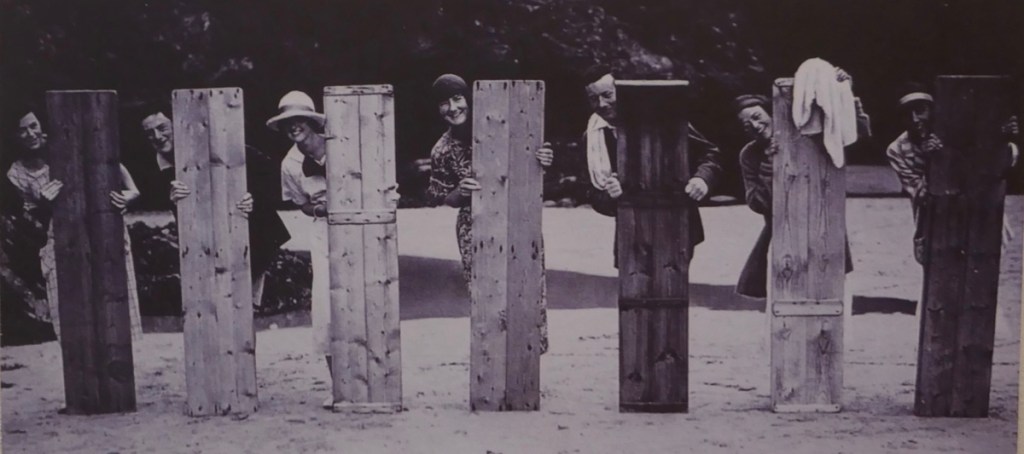
The year is 1929, and a tight-knit group of Jewish immigrants set about building their own longboard, travelling from London, where they rode the waves of the West Country and the Channel Islands, to Newquay. Not only did they try their hand-or should I say feet- at standing up on their boards, but they also filmed their fun. And thanks to Sue Clamp, we all get a front row seat to this rare footage of history. Peter Robinson got the chance to chat with three of the OG surf gang in their mid-90s. Sure, their attempts at standing tall on their boards might not have been Olympic-worthy, but they paved the way for European surf culture (Surfer Today, n.d.).

reference:

(Surfer Today, n.d.)

We’re used to seeing sleek surf boards today. But those early boards? In 1934, they were  four-foot smooth plywood planks, sporting a funky upturned nose. And the surfers bible of that year was Ronald Funnell’s ‘The Art of Surf Riding’-a roadmap to wave riding glory. It was full of tips on how to shred waves and pointed out all the best Surf spots across Britain (Robinson, 2019).

1934 wasn’t just about guidebooks, it was also the year Britain’s first wave pool for surfing was made. The Duke of Gloucester cut the ribbon at the Empire swimming pool in Wembley, London (the ‘Sport of Kings’ indeed). As the years rolled on, coastal towns like Newquay in Cornwall and Woolacombe in Devon started cashing in on the surfing trend, plastering images of surfers on their guidebook covers to lure in the beach-loving crowds. The late 1950s saw things heating up on the surf front. After a spike in drowning incidents, Cornwall councils hired professional lifeguards to patrol the beaches. So along came the Australians and Americans to lend a helping hand. Their expertise birthed a whole new surf culture in the UK (Robinson, 2019).

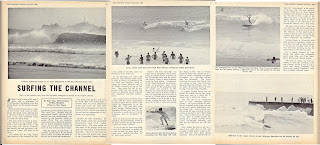
Both these snippets are articles from ‘Surfing World’

In the 2000s, stars like Russell Winter, Robyn Davies, and Sam Bleakley started touring the world. But it wasn’t just the pros catching waves: tens of thousands of us regular people were hitting up every coast across the seas (Robinson, 2019). From the sandy shores of Australia, British surfers have, and continue to, embark on sunnier adventures to seek out the perfect waves to ride and eagerly compete in international surfing competitions. Recently, surfing has made its debut in the 2020 Tokyo Olympics (Barwick, 2023). Now, many British surfers like to dip their toes in the French waves (Elliott, 2022).

(Newquay on the Cornish Coast, 1936)

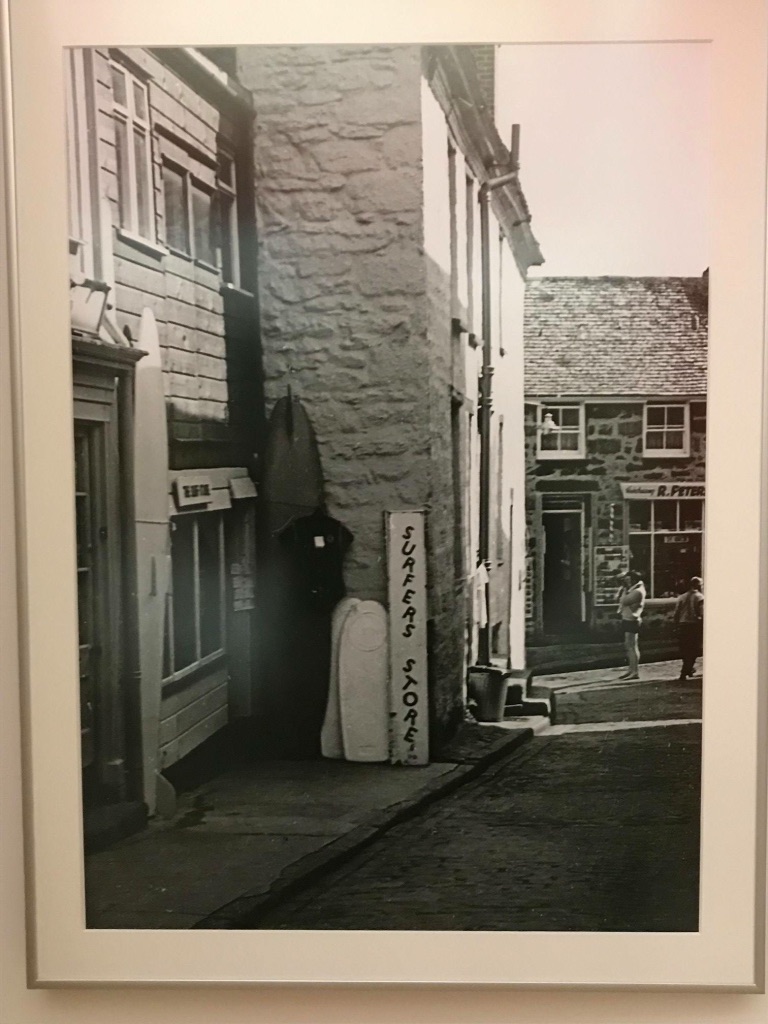
As you drive into Newquay you are greeted by signs boasting ‘Coast of Dreams’, road signs are plastered with surf stickers and the streets are teeming with surfers. Especially in the summer months, this town is the epicentre of British Surf culture. But before 1962, you’d hardly spot a surfer on the beaches. It wasn’t until April 1962, when Australian lifeguards rolled into Newquay with fibreglass surfboards and The Beach Boys blared from radios, that surfing became popular. The demand for boards skyrocketed and Bob Head, Bill Bailey and Doug Wilson created European surf company Bilbo surfboards. But you had to prove yourself in the water before earning the right to own a surfboard. And to get yourself a board in Newquay, you had to track down Bill Bailey. It was sort of a rite of passage (Barber, 2017). The Brits were absolutely spellbound by the surfing scene. Before you knew it, more and more Brits were flocking to the beaches, ready to ride the wave (Wave, 2017). The Australians caught the surfing bug from a demo team from Hawaii and California in the 1956 Olympics. When they brought their skills to Cornwall’s shores, gone were the days of wooden belly boards (Booth, 2012).

The 90s had the entire globe catching onto the surfing craze. It wasn’t just a sport anymore-it was a lifestyle, complete with its own booming industry. Seaside towns were bursting with people sporting vibrant surf gear. Surfing also had made its mark in the competitive arena too, turning this relaxing pastime into a full-blown sport. And with this, Newquay and other Cornish resorts quickly became every surfer’s dream playground (Wave, 2017). In the past decade, the town’s population practically explodes during the summer months, ballooning from 22,000 in the winter to 80,000 visitors per week when the sun’s shining (Barber, 2017).

(The Wave, 2020)

Surfing isn’t about catching waves anymore. Over the past decade, it has become a form of therapy for both the mind and body. In the UK, the NHS has recognised surf therapy as a tool to support children and young people facing mental health challenges. Even the police and Blue Light services have hopped on board. The Wave Project charity supports around 1,200 children and young people every year and they’re the only surf therapy charity in the world to be funded by a government health service (www.rmg.co.uk, n.d.). You don’t need to gain the benefits of surf therapy. ‘The best surfer is the one having the most fun.’ It’s not just about the skill, it’s about soaking up the fun that comes with it. Surf Therapy has shown huge success in helping people tackle PTSD and depression, while also aiding in physical recovery. Now, let’s get a little scientific. Biologist E. O. Wilson suggested in 1984 that humans have this innate bond with nature and water. It triggers positivity and reduces stress levels. Surfing combines physical activity with the soothing water. Surfing isn’t just a sport (The Wave, 2020).


Bibliography

Images:

Lindsay, A. (2013). vintage surfboard collector UK: Who said there’s no surf in Britain ? [online] vintage surfboard collector UK. Available at: http://vintagesurfboardcollectoruk.blogspot.com/2013/02/who-said-theres-no-surf-in-britain.html [Accessed 29 Feb. 2024].
Robinson, P. (2019). UK Surf History – Interactive Timeline. [online] Museum of British Surfing. Available at: https://www.museumofbritishsurfing.org.uk/discover/uk-surf-history-interactive-timeline/.

Primary sources:

Museum of British Surfing (2020). Lewis Rosenberg surfing 1929. [online] http://www.youtube.com. Available at: https://www.youtube.com/watch?v=B9wJpzIu1aA [Accessed 29 Feb. 2024].
Newquay on the Cornish Coast. (1936).

The Wave (2020). Into The Blue: Blue Health and Surfing in the 21st Century.

Secondary sources:

Anon, (n.d.). The history of UK surfing started in 1929. [online] Available at: https://www.surfertoday.com/surfing/uk-surfing-history-started-in-1929.

Barber, R. (2017). Newquay Surfing: A History Of Britains Surf City From 1960 To Present! [online] newquayactivitycentre.co.uk. Available at: https://newquayactivitycentre.co.uk/blog/newquay-surfing-history/ [Accessed 28 Feb. 2024].
Barwick, T. (2023). GB SURFING: A NEW ERA ON THE WAVES. [online] Sport Industry Group. Available at: https://www.sportindustry.biz/news-categories/features/gb-surfing-a-new-era-on-the-waves/ [Accessed 29 Feb. 2024].

Booth, R. (2012). Wave hello: the birth of British surfing. [online] the Guardian. Available at: https://www.theguardian.com/sport/2012/aug/24/surfing-anniversary-cornwall-devon.

Elliott, J. (2022). An Idiot Abroad. [online] Longboarder Magazine. Available at: https://longboardermagazine.com/2022/08/an-idiot-abroad/ [Accessed 29 Feb. 2024].

Lindsay, A. (2013). vintage surfboard collector UK: Who said there’s no surf in Britain ? [online] vintage surfboard collector UK. Available at: http://vintagesurfboardcollectoruk.blogspot.com/2013/02/who-said-theres-no-surf-in-britain.html [Accessed 29 Feb. 2024].

Museum of British Surfing. (2019). Surf Spots – Interactive Map – Museum of British Surfing. [online] Available at: https://www.museumofbritishsurfing.org.uk/discover/surf-spots-interactive-map/ [Accessed 28 Feb. 2024].
Robinson, P. (2019). UK Surf History – Interactive Timeline. [online] Museum of British Surfing. Available at: https://www.museumofbritishsurfing.org.uk/discover/uk-surf-history-interactive-timeline/.
The Independent. (2005). Surfing: Making waves in the magazine market. [online] Available at: https://www.independent.co.uk/news/media/surfing-making-waves-in-the-magazine-market-517272.html [Accessed 29 Feb. 2024].

Wave, C. (2017). The History of Surfing in Newquay, Cornwall. [online] Cornish Wave. Available at: https://cornishwave.com/surfing-in-newquay-the-history/#:~:text=It%20all%20started%20in%201929.www.rmg.co.uk. (n.d.). 

Surf’s Up – Surfing as therapy | Royal Museums Greenwich. [online] Available at: https://www.rmg.co.uk/whats-on/online/surfs-surfing-therapy [Accessed 29 Feb. 2024].

Mutiny Memoirs: Exploring India’s Dark Tourism Trail

“For the individual who wishes to journey and gaze upon real or recreated death, a plethora of sites, attractions and exhibitions are now emerging across the world to cater to the darker side of travel”

(Sharpley & Stone, 2009a)

Dark tourism: An Emerging Phenomenon

Setting off on an exploration of dark tourism is one that many people do, year after year, and are completely encaptulated by the things they see. Wether it’s to world war battlefields or the sites of Pompii or Auschwitz, dark tourism is widely regarded as an eye opening journey. Dark tourists’ visit places that can’t help but be linked to suffering and tradgedy. Globalisation and 21st century technology has made it as easy as the clicking a button and booking a ticket. Dark tourists see these sites as a a way to remind themselves of the intricacy and difficulty of human history that many people may not want or get to expiernce in their lifetimes. And for holiday companies and trip organisers, it is a brilliant way to combine the curiosity for suffering and tragedy with an enjoyable holiday. ‘Consequently, the fundamental question is whether these types of product items should be offered for sale and should you purchase them? Yes’ (Hartmann, Seaton, Sharpley, White. 2018) The common market of dark tourism is worth a staggering £30 billion world wide, making it one of the largest growing industries in 2022 

Imperial expansion: The origins of a colonial past 

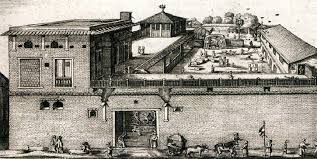
  • The English east India company’s first trading post, Surat, India. Source: India today

“But Company documents from Surat (and elsewhere in India) consistently depict local officials as manipulating for their own profit their control over European trade, often in flagrant disregard of trading privileges carefully negotiated with the Mughal court.” 

 Journal of Early Modern History
Author: James D. Tracy

The story of the Indian mutiny begins far earlier than 1857, but 1612 when the British east India company established a post in surat . Although it only started as as a means for trade, the world would see it evolve into a massive empire that engulphed the whole of india and caused a large appitite for commerse, ambition and power to engulph the british east india company. “Colonial conquests were multifaceted endeavors, driven by a complex interplay of economic interests, political ambitions, and cultural ideologies. Despite the rhetoric of benevolent intervention, these conquests often led to profound disruptions in the social fabric of indigenous societies, perpetuating cycles of exploitation and marginalization.” (Cooper, 2009)

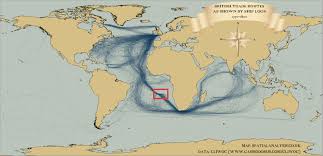
  • Indias strateigic importance to british trade from 1750 to 1800 source: the guardian

The beginning of the 19th centuray sparked an even deeper level of dominance in india with the british Raj extending its reach The foothold in the Indian sub-continent allowed the British to spread out across Bengal and by 1803, the British had managed to settle disputes between land and local leaders establishing a secure area. Pridominatly through military force, the british waged a number of wars that slowly but effectively subdued the indian states and princely territories. The most bllody being the Carnatic Wars.

The Indian mutiny, often referred to as the sepoy rebellion or the first war of independence is a time in history they may be overlooked by the average holiday maker, but not to dark tourists. On the surface the Indian mutiny may seem like just another example of uprising against colonial powers, something that was frequent throughout the 18th and 19th cenutries; but look a bit deeper and we can understand why the Indian mutiny is so prominent when focusing on dark tourism. Clear clashes of cultures, ideologies, and power dynamics are what leads this time in history to being a darek touriusm hot spot.

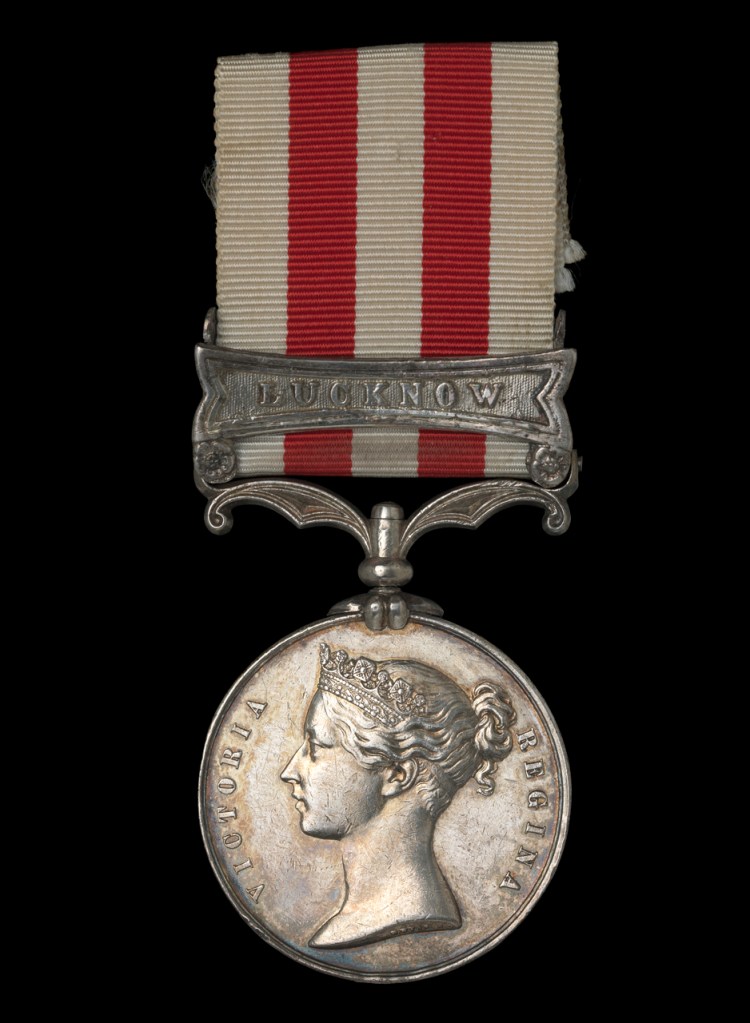
  • Indian Mutiny Medal 1857-58. Awarded to Thomas Young VC. Obverse: Head of Queen Victoria with a diadem, hair tied in a knot. source: Royal museums Greenwich

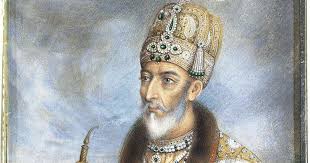
The Indian mutiny was triggered by a difference in beleifs, as the hindu sepoy soldiers found it offence that they were made to use rifle cartrages that had been coated in animal fat, this caused the soldiers to refuse to use them as the tips of the cartages had to be bitten off. Due to their refusal, the british arrested and punished a number the soldiers. This caused the majority of the sepoys to rebell against the british officers that were in command, they stored the meerut jail and marched towards the capital of dheli with the aim of joining forces with already rebellios soldiers. These soldiers besieged and ultimately captured Dehli and declared Bahadur Shah ll as their leader and took proclaimed the restoration of Mughal rule . 

After the resteration of the Mughal rule, the rebellion spread to other parts of northern and central india, to places such as Kanpur, lucknow, Jhansi and Allahabad. It was in June of 1857 that the british forces besieged Lucknow and Kanpur, this lead to the massacre of British men, women and children at Bibghar and Kanpur. Sir henry Havelock and Sir James outram lead the relief of the city of lucknow and the british recaptured Cawpore and supressed the rebellion in Jhansi. The rebellion is deemed over in June of 1858 with the recapture of Gwalior by the british, this lead to the capture and exise of Bahadur Shah ll.

Revisiting rebellion: Exploring the Dark Tourism of India’s Mutiny 

“nothing lasts, not even a great city, whether Pompeii, New Orleans, or Los Angeles. Musicians and artists know this, and so do scientists and Mardi Gras revelers. But too many of the rest of us don’t even want to look. Death is everywhere, always, and the deal we make with it determine the course of our lives. The deals are all different, and they are our stories, but make no mistake: there is always a deal” (Zakin, 2006: 69).

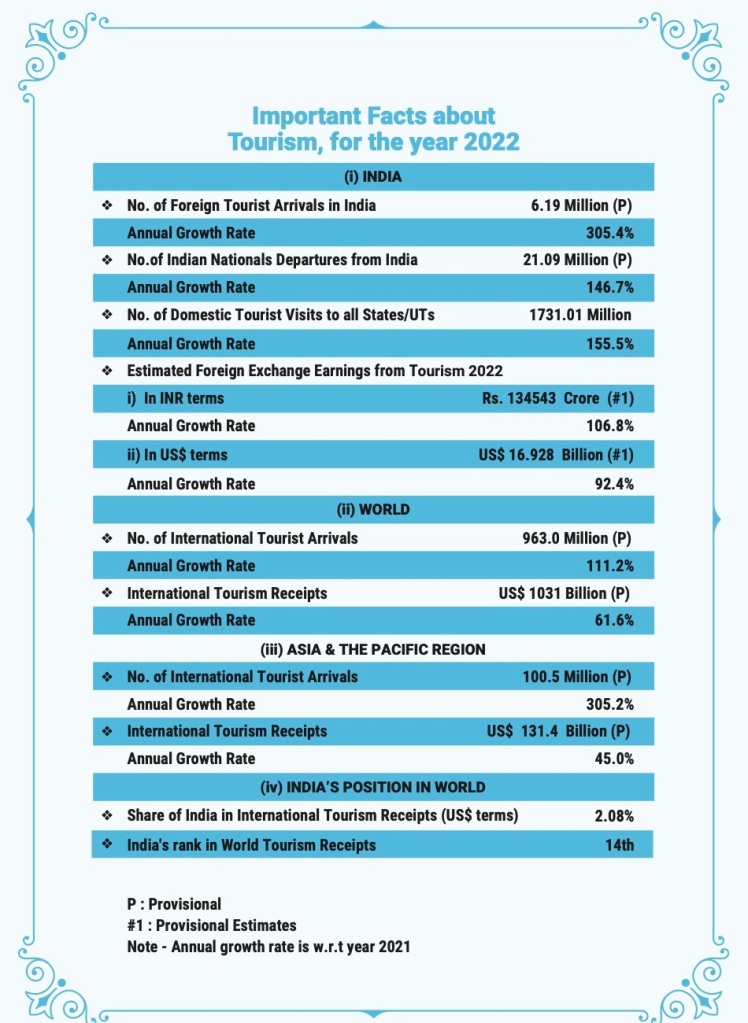
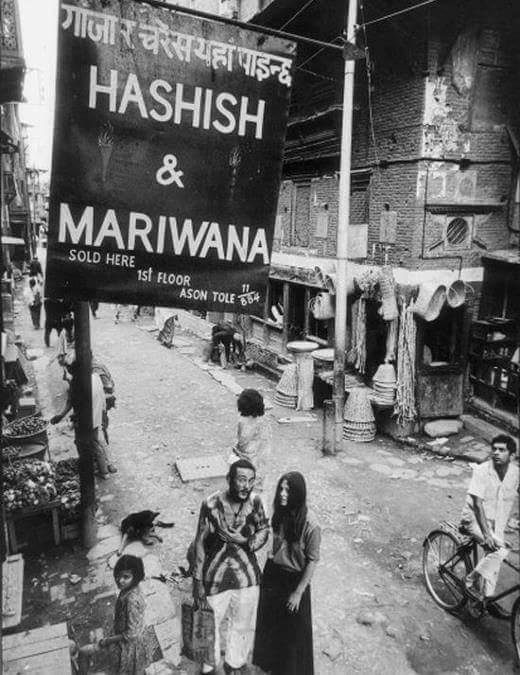
Due to the events of the Indian mutiy, tourists have flocked to the sights of where the grousome events took place for melenia. The widespread violence, atrocities and loss of life on both sides, the events have been commemorated with a number of statues, museums and heritage sites. This, combined with other aspects of tousim in india, such as the hippy trail and the tourism associated with land marks such as the taj mahal, makes india one ofthe leading countries for toursm in east Asia. “India offers almost every sort of tourism. Although India has made significant headway in promoting specialty tourism, one market remains untapped: “Dark Tourism”. It has become extremely popular all across the world in the twenty-first century.” (Jayashree Das, 2021)

Tourism statistics for India during the year 2022. source: tourism in Asia 

Lots of the sides associate with the mutiy have been presereved as historical landmarks that are open to all visitors year round, making the dark tourism business luctritive and easily accesable for the majority of people interested. The sides feature a wide range of exibittions and desp;ays that aim to capture the history of what happened during the Indian mutily and to to remember all the lives that were lost. The Residency in Lucknow is one of the most popular places associated with the Indian mutiny. It served as a residence and a stronghold for the British Officals during the siege of the city in 1857 and today it stands, preserved, as a museum and a memorial that conveys the memory and events that took place during the Indian mutiny.

People who visit the site can expect to experience and explore the ruins of the grounds and see the gardens, main buildings and courtyards that display lots of battle damage from the colonial past surrounding the property. It is no wonder that dark tourists flock here year after year. The historical attributes the buildings host is segnificsnt. The city itself became the administritve centre of the brtish empires Indian subcontinent and the residency was partly destried by cannon and bullet fire, showcasing the death and destruction that makes the Indian mutiny so popular for dark tourists.

“The affective experiences of dark tourism are often negative. Experiences may include feelings of grief, mourning and sympathy for the victims” Lili Qian

“The grave of the Hale family stands close to the entrance of the churchyard. The monument is broken, their names lost.” 

Source – reflections of the Lucknow Residency

it is important to undertand that when places that have been subject ot death and distruction are used as a places of remeberance, it is not uncommon to see greif intertwined with amusment in the form of historical intruige. As dark tourists have done for years, they will travel to sights that are the subject of battles, featuring tombs and graveyards. This distorts the line betweenthe public and the private for some people, as people who are in mourning may find this insensitive, it is important to try and not and not allow modern commercial pressures to create an unsettling juxtaposition. This can be seen within almost all of the dark tourism sites in India. especially the Memorial in Cawnpore. the Memorial was erected to remember the 73 women and 124 children that were brutally massacred by the British during the uprising. many people who flock to the memorial have relatives who were killed or who’s relatives knew the people killed in this massacre, making it a delicate subject to understand when faced with foreign tourists.

Embracing Shadows: India’s Dark Tourism Landscape and Its Promising Future

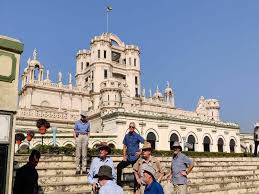
tourists outside La Martiniere School, India. 2021. Source: the cultural experience

The phenomenon of dark tourism in India is one that is set to continue growing. the rich social and cultural ties that be found in India, as well as its affordability provide lots of opportunities for travellers looking to explore the darker aspects of Indian history. yes, some aspects of the Indian mutiny may deter some travellers, but others are attracted to the opportunity to engage themselves with the challenging narrative of Indias colonial past. the growing infrastructure and improved accessibility and preservation of historic sites are meaning it is only getting easier to explore India and everything it has to offer historically, with the Indian mutiny standing as a significant focal point in this exploration of dark tourism.

Reference list

Cooper, F. (2009). Colonialism in Question: Theory, Knowledge, History. Berkeley, California: University of California Press.

Dalrymple, W. (2015). The East India Company: The original corporate raiders | William Dalrymple. [online] the Guardian. Available at: https://www.theguardian.com/world/2015/mar/04/east-india-company-original-corporate-raiders.

Das, J. (2021). Scope of Dark Tourism as a Revival Strategy for the Industry- A Study with Special Reference to Rajasthan.

get your guide (2016). Krakow and Auschwitz-Birkenau. [online] Available at: https://www.getyourguide.co.uk/krakow-l40/auschwitz-birkenau-salt-mine-guided-tour-in-english-t92097/.

India Today (2019). When and why did the British first choose to invade India? [online] India Today. Available at: https://www.indiatoday.in/education-today/gk-current-affairs/story/when-and-why-british-first-came-to-india-1591166-2019-08-24.

Kidron, C.A. (2013). BEING THERE TOGETHER: DARK FAMILY TOURISM AND THE EMOTIVE EXPERIENCE OF CO-PRESENCE IN THE HOLOCAUST PAST. Annals of Tourism Research, 41, pp.175–194. doi:https://doi.org/10.1016/j.annals.2012.12.009.

Ltd, F.M.I.G. and C.P. (2022). Dark Tourism Market is Estimated to Attain a Revenue of US$ 36.5 Bn at an Impressive CAGR between the Forecast Period of 2022-32 | Future Market Insights, Inc. [online] GlobeNewswire News Room. Available at: https://www.globenewswire.com/news-release/2022/10/24/2539757/0/en/Dark-Tourism-Market-is-Estimated-to-Attain-a-Revenue-of-US-36-5-Bn-at-an-Impressive-CAGR-between-the-Forecast-Period-of-2022-32-Future-Market-Insights-Inc.html.

Olsen, D.H. and C.A.B. International (2019). Dark tourism and pilgrimage. Boston, Massachusetts: Cabi, [] © Cab International.

Schawohl, E. (2011). The Lucknow Residency: Silent Stones. [online] The Lucknow Residency. Available at: http://reflectionsonthelucknowresidency.blogspot.com/2011/09/silent-stones.html [Accessed 28 Feb. 2024].

Sharpley, R. and Stone, P.R. (2009). The darker side of travel : the theory and practice of dark tourism. Bristol, Uk ; Buffalo, Ny: Channel View Publications.

Tracy, J.D. (2006). Europe’s Reformations, 1450-1650. Rowman & Littlefield.

victorianweb.org. (n.d.). ‘An Icon of Empire. The Angel at the Cawnpore Memorial,’ by Baron Marochetti (1805-1867). [online] Available at: https://victorianweb.org/sculpture/marochetti/30.html.

http://www.rct.uk. (n.d.). India – Crown of the Emperor Bahadur Shah II. [online] Available at: https://www.rct.uk/collection/67236/crown-of-the-emperor-bahadur-shah-ii.

http://www.rmg.co.uk. (n.d.). Indian Mutiny Medal 1857-58 | Royal Museums Greenwich. [online] Available at: https://www.rmg.co.uk/collections/objects/rmgc-object-207694 [Accessed 28 Feb. 2024].

http://www.theculturalexperience.com. (n.d.). 12 Day Indian Mutiny Tour | Wake Up Call For The British. [online] Available at: https://www.theculturalexperience.com/tours/the-indian-mutiny-battlefield-tour/ [Accessed 28 Feb. 2024].

http://www.theculturalexperience.com. (n.d.). The Indian Mutiny Tour Images. [online] Available at: https://www.theculturalexperience.com/tour-reviews/the-indian-mutiny-tour-images-november-2019/ [Accessed 28 Feb. 2024].

BREATHE IN THE AIR AND SOAK UP THE RAYS: THE BENEFITS OF A RESTORATIVE HOLIDAY TO THE ALPS.

‘The knowledge of Davos will be a blessing to many’ (Morland, 1878)

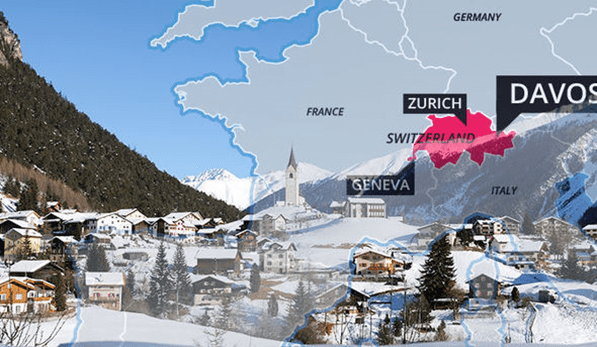
Source: Location of Davos

For centuries people have been travelling abroad to improve their health. Industrialization and poor quality from factory smoke led to cities being a ‘breeding ground for diseases’ (Barton,2009). Thus, leading to many people in Victorian Britain being affected by Tuberculosis (TB) this was a disease that caused its victims to have ‘fever, night sweats and coughing up blood’ (Barton,2009). And so, those who could, travelled to lands with sun exposure and better air quality. Heliotherapy is the ‘use of natural sunlight for treatment’ (Chung, 2015) for a variety of diseases and skin conditions.

The idea of travelling to another country to restore one’s health is a practice that has been around all throughout history. There is evidence to suggest that many ancient civilizations such as the Egyptians also believed in the suns powers and attempted to ‘harness it to cure diseases’ (Brodie, 2015.P8). Indicating that this practice has been around a lot longer than many realise. And so those who were partaking in this practice in the Victorian period were not illogical.

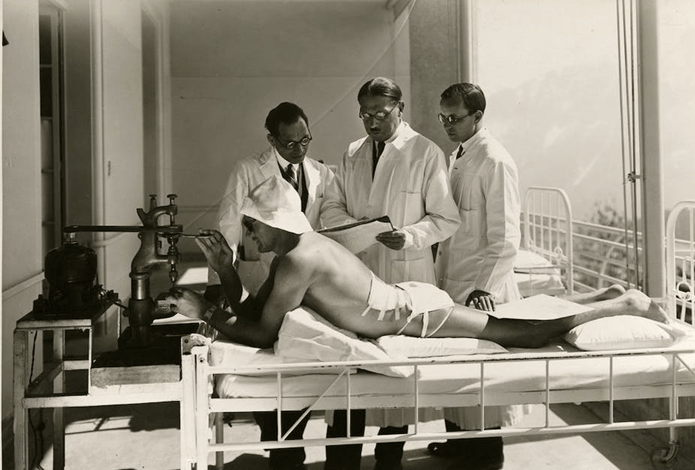
Dr Rollier produced work on heliotherapy. His work concluded that patients should ‘sunbathe for health’ (Collins, 2007). He designed buildings to ‘optimize exposure to the sun’s rays’ (Collins, 2007), these often had south-facing balconies in order to gain the most sunlight. He suggests that it can provide enough help so that they can now ‘condemn surgical intervention’ (Rollier, 1927. P815), suggesting that the air exposure and the other elements of the treatment helped enough that surgery was no longer needed to try and help those suffering. It suggests that the sun exposure causes a ‘flow of blood the depth to the surface’ (Rollier, 1927. P817) which then causes a regulation of circulation around the body. He concludes that this is more beneficial than the ‘best massages’ (Rollier, 1927. P.817) and it helps restore the muscles. All this exposure to the sun and the fresh alpine air helps ‘revive the appetite’ (Rollier, 1927. P817) and then ‘gives new life’ (Rollier, 1927. P817). Those who have undergone this treatment can now leave feeling stronger and in better health than when they arrived.

An industrial town in Victorian Britain. Source: Victorian Britain  

SAFE HAVEN:

An example of a popular destination for this is called Davos, located in southeast Switzerland. This place became a ‘haven for tuberculosis sufferers’ (Fahy, 2016) throughout the 19th and 20th centuries. Alexander Spengler, a German doctor, travelled to Davos in the 19th century and was impressed by the ‘clean, healthy air’ (Zimmerman, ND). He was convinced this would help people with lung disease.

While in Davos people began to ‘believe the mountain air could cure them’ (Fahy, 2016) and so many sufferers of TB began to travel there in hopes of leaving with their health restored. BY 1940 Davos had around ’40 such medical institutions’ (Fahy, 2016) that all began to appear since the 1860s, they came about following Dr Alexander Spengler developed a TB treatment of ‘hours lying on sun loungers’ (Fahy, 2016) while breathing in the fresh alpine air.

People have been visiting Davos to help heal them for centuries. Davos was exposed to ‘many hours of sunshine’ even in winter (Morland, 1878), and so Davos was often favoured by many. People believed that time spent in Davos would ‘patch and mend’ (Morland, 1878) the ill. However, it still important to remember that it cannot ‘perform impossibilities’ (Morland, 1878) some that attended may not have been treated. However, it is noted that during their time here many believed the ‘invalid may live as the healthy do elsewhere’ (Morland, 1878) they weren’t held back by their disease.

In the middle is Dr Rollier, he is examining a patient undergoing treatment. Source: Treatment  

HELIOTHERAPY AND ITS POWERS

It is important to realise that Tuberculosis had no cure and so heliotherapy would not heal those who contracted it. Prior to the treatment those who contracted TB often died at home where they may have ‘infected their carers and families’ (Barton, 2009. P). And so being in these facilities will have lessened the spread of the disease.

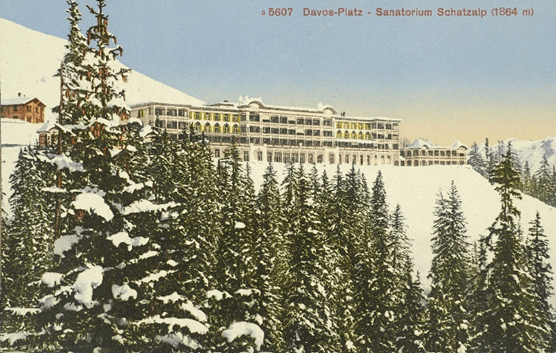
Typical place of treatment. Source: Davos treatment centre

DAILY LIFE IN DAVOS:

While in Davos people had a very strict daily schedule to follow. There days were very organised and how people spent their time all depended on the stage they were in of treatment. They often ate a lot of food while in treatment as TB made people lose weight and so doctors during this time believed that eating in ‘large quantities would help’ (Fahy, 2016) and so this was interpreted in their daily tasks. It is regarded that during the treatment the patient ‘eats the malady away’ (Morland, 1878). This is important as during their stay there is a big emphasis placed on eating and drinking fresh milk. People had to fit in ‘two litres of cows milk’ (Fahy, 2016) per day, while also eating between ‘seven and thirteen courses’ (Fahy. 2016).

When they first arrived the patients were required to acclimate themselves to the conditions such as ‘the cold air and the intense sunlight’ (Brodie, 2015. P10). in order to do this they often stayed In ‘open porch rooms’ and as time went on they were ‘moved closer to open windows’ (Brodie, 2015.P10). This was done in order for them to be exposed indirectly to the sunlight prior to direct exposure. This was done so any open wounds would have had time to heal. So, once this had been done the children were then slowly exposed to the direct sunlight. Throughout their time their patients became ‘physically and emotionally stronger’ (Brodie, 2015) and once they were strong enough they were out of bed and were sent outdoors. This was done so they could engage with a ‘wide variety of physical exercise’ (Brodie, 2015). This was to further the exposure to direct sunlight while also getting movement and exercise.  Patients followed the rules ‘to the book if they wanted to get better’ (Brodie, 2015).

PRESENT DAY

Nowadays Davos is used for a different purpose. It is well known for hosting the annual meeting of ‘World Economic Forum’ (Fahy, 2016). Many rich people such as ‘CEO’s, politician, celebrities’ (Fahy, 2016) attend this. They stay in the towns hotels. The locations many patients would have stayed in. In simple terms the meeting is held for those who are invited to discuss ‘global political and economic challenges’ (Franks, 2013) However, the country has not lost it’s medical ties.

Since the COVID-19 pandemic the amount of people ‘concerned about their health and wellbeing has rocketed’ (Barrell, 2023). The pandemic saw people confined to the house for months on end, this created a huge impact on people’s mental and physical health’ (Barrell, 2023). People are increasingly more worried and more aware of their own health, they’re taking more time to look after themselves. Many people were reporting as wanting to ‘change their lifestyle in 2021’ (Barrell, 2023), whether this be more exercise, better eating or travelling abroad to something such as a spa. It has been estimated that just over one fifth of people travelling are ‘currently travelling for health’ (Barrell, 2023). This has resulted in a ‘30% increase in demand for wellness breaks’ (Barrell, 2023). In todays age, wellness travel is not ‘confined to the spa’ (Barrell, 2023). Those who are taking part in the travels take part in a range of activities to increase ‘mental and physical health’. Wellness travel is now associated with enhancing a ‘healthy lifestyle’ (Barrell, 2023) unlike in the past when people went to help with diseases such as TB. It is now more likely that wellness travel is now more associated with ‘fitness holidays and adventure travel’ (Barrell, 2023). Many travel companies are advertising wellness breaks, they are advertising for people to ‘find your happy’ (Barrell, 2023) by booking holidays to get away from reality and relax.

Bibliography:

Primary Sources: Images

ENG236B (ND) ‘Features of the Victorian Period’ [Online Image] Available from: https://www.google.com/url?sa=i&url=http%3A%2F%2Fbritlit-romantictopost-modern.weebly.com%2Ffeatures–historical-events2.html&psig=AOvVaw0qavyFCqaowWBgAOq-W_QT&ust=1709038271284000&source=images&cd=vfe&opi=89978449&ved=0CBUQjhxqFwoTCJCH5eiFyYQDFQAAAAAdAAAAABAJ  [Accessed on 16th February 2024]

Express (2018) ‘Map of Davos’ [Online Image] Available from https://www.google.com/url?sa=i&url=https%3A%2F%2Fwww.express.co.uk%2Fnews%2Fworld%2F906612%2FDavos-where-Switzerland-town-map-what-happens-at-World-Economic-Forum&psig=AOvVaw1iRx30gioXLA0cpyFfe_rg&ust=1709038158467000&source=images&cd=vfe&opi=89978449&ved=2ahUKEwir4oG0hcmEAxWkUqQEHc95BiEQr4kDegQIARBO [Accessed on 26th February 2024]

Dr A Rollier (2020) ‘TB Treatment’ [Online Image] Available from: https://www.google.com/url?sa=i&url=https%3A%2F%2Ftheconversation.com%2Fit-cant-cure-covid-19-but-sunlight-was-long-seen-as-having-healing-powers-137542&psig=AOvVaw3CoMpYKU5zNU-ZPfi94FD9&ust=1709034771457000&source=images&cd=vfe&opi=89978449&ved=0CBQQjhxqFwoTCLDjj_aDyYQDFQAAAAAdAAAAABAE  Accessed on: 26th February 2024]

Swissinfo.ch (2016) ‘A breath of fresh air for an alpine village’ Available from: https://www.swissinfo.ch/eng/society/tuberculosis-and-davos_a-breath-of-fresh-air-for-an-alpine-village/41896580#:~:text=By%201940%20Davos%20had%20around,milk%20and%20generally%20eating%20well. [Accessed on: 26th February 2024]

Primary sources:

Mrs Morland (1878) ‘For individuals. In Davos Platz: A New Alpine Resort for Sick and Sound by One who Knows it Well.’ London

Rollier A, (1927). ‘Heliotherapy: Its Therapeutic, Prophylactic and social Value’. The American Journal of Nursing. 27 (10). Pp 815-817

Secondary Sources:

Barrell, S (2023) ‘The rise of wellness travel, from rewilding to yoga and pilgrimages’ [Online] Available from: https://www.nationalgeographic.com/travel/article/wellness-travel-rewilding-yoga-pilgrimages  [Accessed on: 26th February 2024]

Barton, S. (2009) ‘Healthy Living in The Alps’. Manchester University Press. pp

Brodie, B (2015) ‘Children of the sun’. University of Virginia Nursing School. PP 8-12.

Collins, E (2007) ‘The rise and fall of sunlight therapy’. [Online] Available from: [Accessed on: 25th February 2024]

Chung, J (2015) ‘Heliotherapy’. [Online] Available from: https://dermnetnz.org/topics/heliotherapy  [Accessed on: 15th February]

Fahy J (2016) ‘A breath of fresh air for an alpine village’ [Online] Available from https://www.swissinfo.ch/eng/society/tuberculosis-and-davos_a-breath-of-fresh-air-for-an-alpine-village/41896580 [Accessed on: 20th February 2024]

Franks, J (2013) ‘What is Davos and what happens at the World Economic Forum meeting?’ [Online] Available from https://news.sky.com/story/what-is-davos-and-what-happens-at-the-world-economic-forum-meeting-12784281  [Accessed on: 26th February 2023]

Zimmerman, K (ND) ‘Top 10 reasons to choose Switzerland for medical treatment.’ [Online] Available from https://www.myswitzerland.com/en-gb/planning/about-switzerland/health/health-blog/top-10-reasons-for-switzerland/  [Accessed on: 27th February 2024]

Bombs, Bullets, and Bragioli

Dark Tourism: War and the Maltese Archipelago

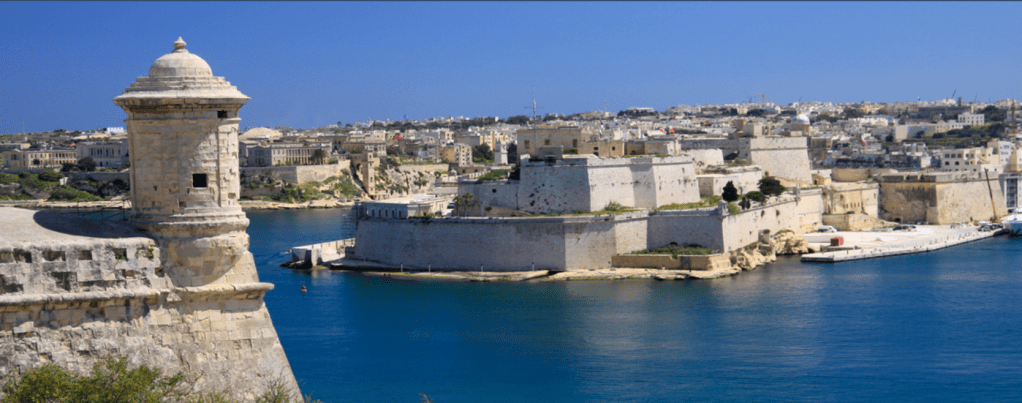
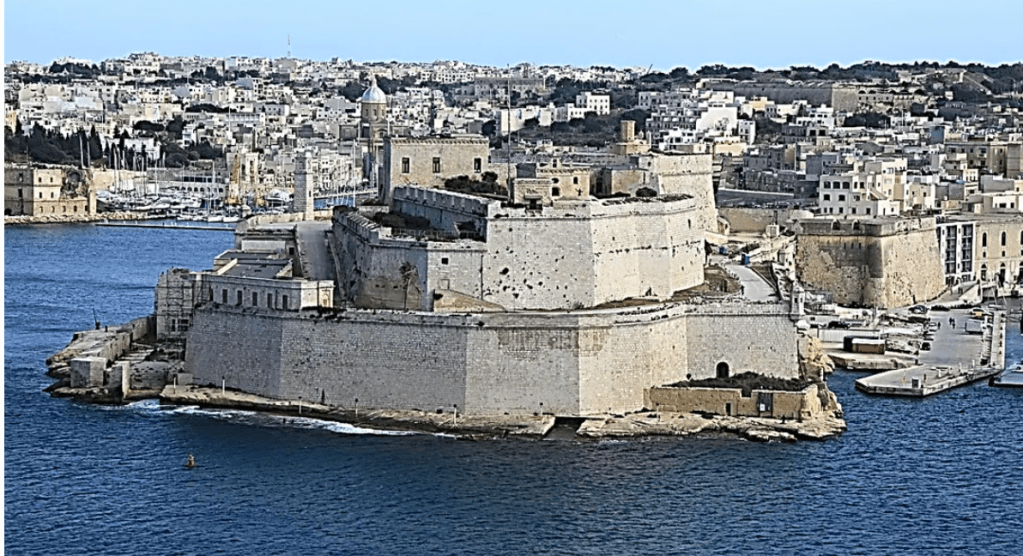
A picture of the grand harbour in Malta.
The Grand Harbour, Valetta. Source: The Cultural Experience.

“Death is the one heritage that everyone shares. It has been an element of tourism longer than any other form of heritage.”

(Seaton, 1996).

Strange Bedfellows

Theoretical frameworks describe dark tourism as travel to sites related to tragedy, death, or suffering, such as natural disasters, genocides, or conflict zones (Seaton, 2009; Cohen 2018), and, although scholarly interest in the topic is relatively recent, the practice is certainly not.  While it’s not always easy to see how violence and atrocity might be connected to pleasurable holidays, its growth in popularity and potential to generate income suggest that dark tourism, more latterly described as ‘orchestrated remembrance’ (Seaton, 2018), has a bright future as part of an evolving travel landscape.

Considered a significant agent in the creation of modern mass travel, the Second World War itself provides a rich vein of dark tourist sites, its concentration camps, battlefields, and artefacts remaining popular amongst those with an interest in death, suffering, and destruction (Kasimoglu, 2012; Butcher, 2020).

Malta, a Mediterranean archipelago with a long and turbulent history, is filled with reminders of a past scarred by conflict, and its wealth of wartime sites provide a heady mix of tragedy, history, and heroism, where echoes of the war can be felt.  Importantly, rather than mere reconstructions or re-imaginings of dark events, its locations are all genuine ‘primary’ sites (Robb, 2009), created “within the memories of those still alive to validate them”, enjoying an air of authenticity (Lennon and Foley, 2000, p.485).  Recognising the uniqueness of its legacy, Heritage Malta, the body responsible for the preservation of all historical sites, has begun to exploit their economic potential.  In promoting Malta as an important ‘conflict’ tourist destination (Tunbridge, 2009), it appears that war and tourism might not be such strange bedfellows after all.

A Crossroads of Conflict

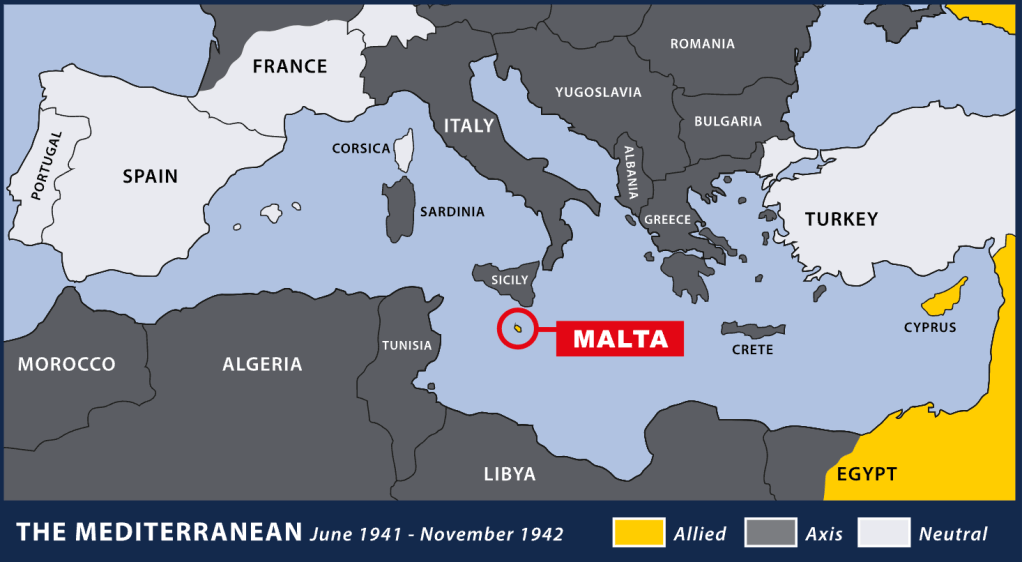
Playing pivotal roles in struggles across the centuries, Malta has always been central to the historical interplay between Europe, Africa, and the Middle East.  Part of the British empire since 1814, it gained independence in 1964, and was declared a republic ten years later. 

Malta’s Strategic Importance. Source: Commonwealth War Graves

During the war, its position at the heart of the Mediterranean meant Malta had critical strategic importance for both sides.  Had the Axis powers succeeded in overpowering the islands, they would have taken control of the North African theatre, including access to the Suez Canal, and the outcome of the war might have been different.  Recognising its importance, the Italians and Germans bombed Malta relentlessly, launching 3,343 separate raids, in what become known as ‘The Siege of Malta’, granting it the unenviable record as the most bombed place on Earth during the war. 

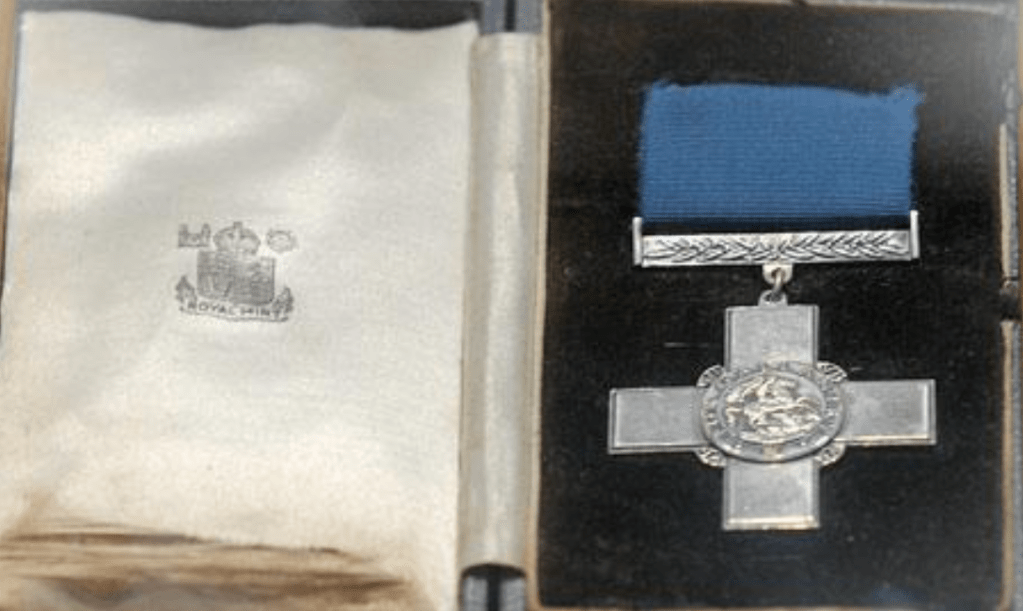
The George Cross, established by George VI in 1940, “for acts of the greatest heroism”, is the civilian equivalent of the Victoria Cross.  Awarded to the islands in 1943 recognising the suffering and resilience of their people, Malta remains the only country to hold this honour, incorporating it into the national flag.
Source: Times of Malta

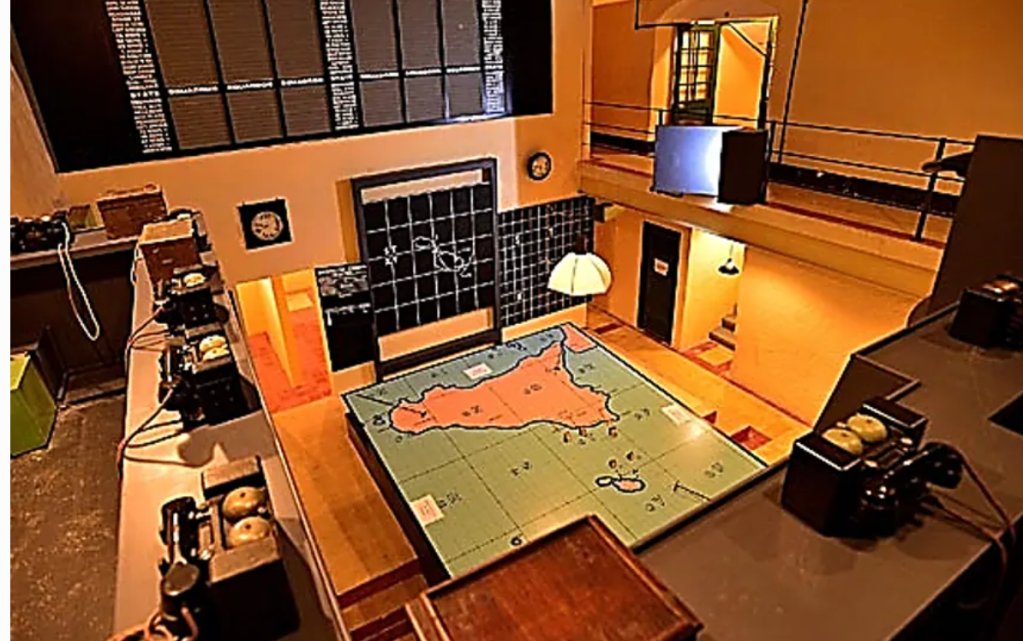
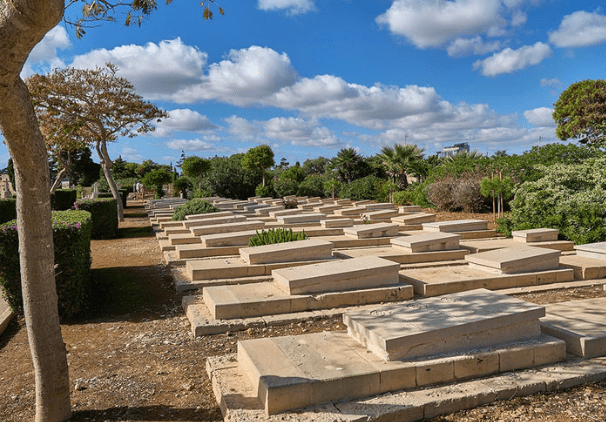
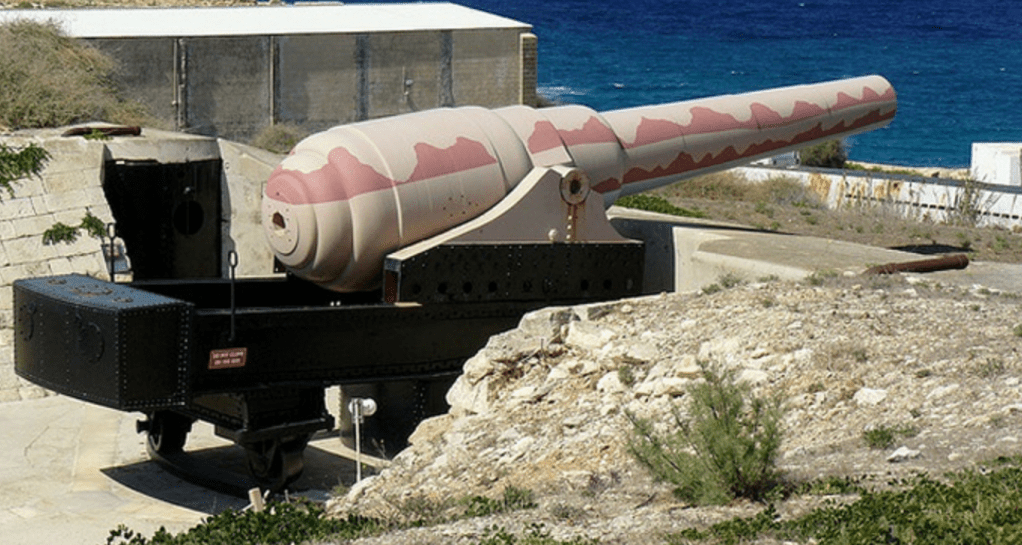
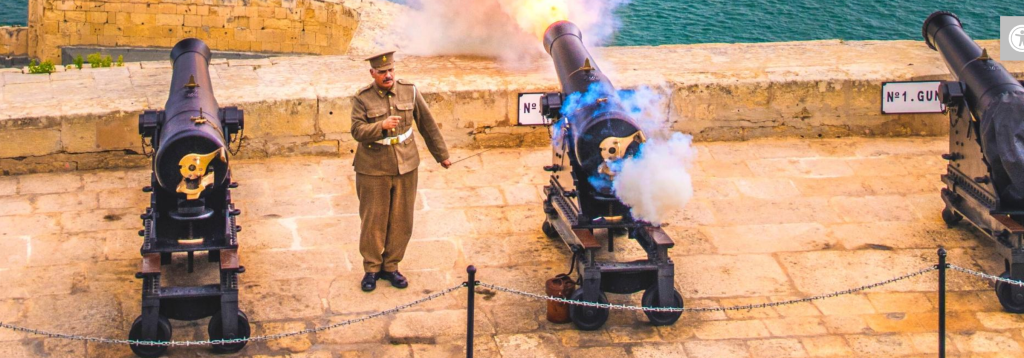
With cemeteries dotting the islands, bomb shelters at Mellieħa, Mġarr, and Ċirkewwa, the Lascaris War Rooms, St. Elmo’s naval fortress, and an unexploded German bomb (albeit a replica) sitting in a Mosta church, remnants of the war form a central plank of Malta’s tourist offering which welcomes over 2.3 million visitors every year, many anxious to explore the darker side of history.

Darkness, Death, and Dearly Departed

The motives driving those interested in visiting war graves, or examining instruments of death are as varied and nuanced as the histories revealed, ranging from acts of solemn remembrance to unashamed voyeurism.  Lennon and Foley (1996, p.195) identify primary motivators as some combination of remembrance, education, and entertainment, while Bigley et al. (2010), offer a binary typology comprising intrinsic or extrinsic motivators, the former involving the visitor taking a personal interest in the site, using it as a vehicle for identification, commemoration, or grieving, while the latter being pedagogical in nature, involving a fascination with the macabre, an interest in modern warfare, or its destructive effect on society.  However, Seaton (2018, p.13-27) contests that these dark encounters are symbolic, concerned with the remembrance of death and the dead, rather than with death itself, suggesting that research is unable to locate any group of tourists which accepts that death is its prime motivation.

Britons abroad certainly visit sites like the Pieta cemetery, Fort St Elmo, or Fort St Angelo for various reasons, many to establish or maintain familial ties with those who served, or are buried on the islands.  The currency of these locations imbues them with an extra level of importance, enabling visitors to pay their respects in person in what is often a deeply emotional activity.  Whether personally connected or not, graveyards in particular can also act as mediating spaces, bridging the gap between the living and the dead, allowing visitors to contemplate life, mortality, and death.  However, neither of these performative, intrinsically-motivated encounters are driven by the ‘darkness’ of the location, but rather by deep emotional ties which transcend any classification (Sharpley and Stone, 2009).

“A privilege to visit my
great uncle’s grave.”

Source: Lifenek

The sites also present important pedagogical opportunities, because while there is a temptation to objectify, the tacit expectation nonetheless exists that by visiting challenging locations, visitors might reflect on how history guides the future, achieve a greater appreciation of suffering, or create a desire for lasting peace.  

Commonwealth War Graves. Source: CWGC

Though the experience of dark sites are neither uniform or objective (Robb, 2009), it’s important to differentiate between the ‘premeditated’ dark tourist who seeks out the macabre for entertainment or gratification, from the ‘accidental’ visitor who has personal links to locations classified as ‘dark’ (Bowman and Pezzullo, 2010).

“Travellers have different reasons for being interested in such sites: for some it’s catharsis, the search for answers, for others it’s about facing a heritage that hurts, and for others it’s mere curiosity.”

(Chetkuti, 2015).

Nevertheless, when memorials, tombs, and graveyards also become visitor attractions, grieving and entertainment are forced to take place at the same time, in the same space, blurring the line separating public and private, and creating an uneasy juxtaposition.  It is the contradiction surrounding usage and intent which makes the narratives, and the manner in which they are presented, so challenging if antagonism is to be avoided.  Fundamental to any curatorial decision-making is whether a moral equivalence is granted to all visitors irrespective of motivation, a dilemma compounded by the reality of modern commercial pressures.

Europe, Empire, and Britons Abroad

For Britons abroad, who account for almost a third of all visitors, the highest of any nation by far, the islands hold a special significance, their national pasts being inextricably linked.  With echoes of empire and triumph against adversity, Malta’s wartime heritage allows these ‘modern antiquarians’ to bring idealised stories with them, connecting the suffering and ultimate triumph of both.  Yet as Cassia (1999) warns, while an expected narrative of Allied heroism against a backdrop of Axis oppression might appeal to some, it tells only part of the story.  Malta’s cemeteries, war rooms, and material artefacts therefore raise issues as to what exactly is being remembered and for whom.  The dark sites have become places for the creation and consumption not only of Malta’s wartime memory, but of Britain’s, Italy’s, and Germany’s too.  Yet in emphasising violence and brutality for the titillation of the visitor, the narratives presented risk misrepresenting, manipulating, or invalidating certain pasts, particularly those of non-Britons. 

“I like to pay my
respectsto the brave
people who fought
for my freedom”

Surprisingly, while the suffering of the Maltese is well chronicled, it is often used to create a backdrop against which British heroism can shine.  In addition, dissonant heritages for German and Italian visitors have been created, portrayed universally as simply ‘the enemy’, in a strict victim-perpetrator binary.  For Rui and Hung (2022), this requires negotiations which, given the economic importance of visitors from both of these nations, are now underway between the Maltese state, for Seaton (2018, p.14) the most important agent in creating more nuanced engineered remembrances, curators, acting as ‘memory makers’, and visitors as ‘memory consumers’ (Kansteiner, 2002). 

“We went for remembrance and felt it was appropriate to come here [as] it is such a significant part of history.  It was quite emotional.”

Source: Lydia C.

More prosaically, because Heritage Malta must pay for the upkeep of its wartime sites, as the older generations with personal links to the war die off, it is able to gradually deemphasise narratives tied to national identity, focusing instead on commemoration, shared suffering, and collective responses to conflict, narratives better aligned with European unity.

Relax, Respect, and Remember

Though an increasingly popular and important part of Malta’s tourist landscape, the presentation of its conflict sites remains controversial.  While some consider their commercialisation a particularly crass and cynical form of entertainment, lacking the dignity and reverence demanded by such delicate subject matter, others see opportunities to learn, share, and face the horrors of collective pasts. 

“What is crucial is that when people visit these places, there is great respect to the site.
Dark tourism has to be ethical.”

(Chetkuti, 2015).

A Bright Future for Dark Tourism

Conflict tourism can certainly be educational, cathartic, and deeply moving, a means of ensuring that victims are never forgotten, while the events are never repeated.  The best sites clearly explain their past and the poignancy of the events that took place.  Done sensitively and coherently, the impact on the visitor can be significant and lasting.  However, done badly, conflicts can either be presented as sanitised, anodyne commodities, or descend into dramatized, exploitative voyeurism.  A fine line must therefore be trodden between historical accuracy, solemn remembrance, and economic reality.

A recent study of European travel habits showed that destinations with a cultural heritage related to dark events are becoming increasingly popular (Juranović et al, 2021), and with a current worldwide value of almost £24 Billion, predicted to grow to nearly £29 Billion by 2032, dark tourism has a bright future.  Malta’s centrality in a continent ravaged by war gifted it a unique legacy.  If it is to take advantage of current trends, it must now re-engineer and re-balance its dark offerings to reflect a changed 21st Century audience.

Bibliography

Primary Sources – Images

123EF Images (2024) Unexploded bomb from the Second World War on the Church of the Assumption of Our Lady at Mosta. [Online Image]. Available from:  https://www.123rf.com/photo_96171156_unexploded-bomb-from-the-second-world-war-on-the-church-of-the-assumption-of-our-lady-at-mosta-malta.html [Accessed 16 February 2024].

Air Malta (2023) Fort Rinella’s 100-ton gun. [Online]. Available from: <https://airmalta.com/en/blog/malta/fort-rinella> Available from: <https://www.cwgc.org/visit-us/visit-malta/> [Accessed 16 February 2024].

Commonwealth War Graves Commission (2024) Map of the Mediterranean 1941. [Online Image]. Available from: <https://www.cwgc.org/visit-us/visit-malta/> [Accessed 6 February 2024].

Commonwealth War Graves Commission (2024) War Memorial, Valetta. [Online Image]. Available from: <https://www.cwgc.org/find-records/&gt; [Accessed 6 February 2024].

The Cultural Experience (2024) Grand Harbour Malta. [Online Image]. Available from: <https://www.theculturalexperience.com/tours/fortress-malta-battlefield-tour/> [Accessed 6 February 2024].

Times of Malta (2012) Malta’s George Cross. [Online Image] Available from: <https://timesofmalta.com/articles/view/the-true-story-of-malta-and-the-george-cross.415417> [Accessed 18 February 2024].

Times of Malta (2019) Behind the closed doors of Fort St Angelo. [Online Image] Available from: <https://timesofmalta.com/articles/view/behind-the-closed-doors-of-fort-st-angelo.711840> [Accessed 18 February 2024].

Visit Malta (2024) Firing the harbour battery. [Online Image]. Available from:  <https://www.visitmalta.com/en/info/world-war-2-tourism-malta/&gt; [Accessed 6 February 2024].

Visit Malta (2024) Lascaris war rooms. [Online Image]. Available from:  https://www.visitmalta.com/en/attraction/lascaris-war-rooms-malta/ [Accessed 16 February 2024].

Primary Sources – Websites

Camilleri, M. (2020) ‘The World War Two siege of Malta in numbers.’ The Malta Independent. [Online]. 31 May 2020. Available from: <The Malta independent Archive> [Accessed 7 February 2024].

Chetcuti, K. (2015) ‘Dark side of tourism that fascinates holidaymakers.’ The Times Malta. [Online]. 10 February 2015. Available from: <The Times Malta Archive> [Accessed 7 February 2024].

Commonwealth War Graves Commission (2024) Discover Malta’s world war history. [Online]. Available from: <Commonwealth War Graves Commission>  [Accessed 11 February 2024].

Future Marketing Insights (2024) Dark tourism market overview (2022 to 2032). [Online]. Available from: <https://www.futuremarketinsights.com/reports/dark-tourism-sector-overview> [Accessed 11 February 2024].

Reports and Insights (2024) Dark tourism market report. [Online]. Available from: https://www.reportsandinsights.com/report/dark-tourism-market [Accessed 18 February 2024].

Statista (2024) Number of international tourists in Malta from 2001 to 2022. [Online]. Available from: <https://www.statista.com/statistics/444781/number-of-overnight-inbound-visitors-to-malta/> [Accessed 7 February 2024].

Secondary Sources

Bigley, J. D. et al. (2010) ‘Motivations for war-related tourism: A case of DMZ visitors in Korea’. Tourism Geographies, 12(3), pp. 371-394.

Bowman, M. and Pezzullo, P. (2010) ‘What’s so dark about dark tourism?: Death, tours, and performance’. Tourist Studies. 9(3), pp. 187-202.

Butcher, J. (2020) ‘Constructing mass tourism’. International Journal of Cultural Studies. 23(6). pp.898-915.

Cassia, P. S. (1999) ‘Tradition, tourism and memory in Malta’. The Journal of the Royal Anthropological Institute, 5(2), pp. 247–263.

Cochrane, F. (2015) ‘The paradox of conflict tourism: The commodification of war or conflict transformation in practice’? The Brown Journal of World Affairs, 22(1), pp. 51–69.

Cohen, E. (2018) ‘Thanatourism: A comparative approach’. In: The Palgrave handbook of dark tourism Studies. London: Palgrave Macmillan UK, pp. 157–71.

Freiderich, M. (2018) ‘Dark tourism, difficult heritage, and memorialisation: A case study of the Rwandan genocide’. in: Stone, P. R. et al. (eds). The Palgrave handbook of dark tourism studies. London, United Kingdom: Palgrave Macmillan. pp. 261-290.

Juranović, N. et al. (2021) ‘Dark tourism in the EU: Are we aware of taking part in It’? Open Journal for Research in Economics 4: pp. 19–30.

Kansteiner, W. (2002) ‘Finding meaning in memory: A methodological critique of collective memory studies’, History and Theory, 41(2), pp. 179–97.

Kasimoglu M (2012) Visions for global tourism industry: Creating and sustaining competitive strategies. InTech.

Lennon, J. and Foley, M. (2000) Dark Tourism: The attraction of death and disaster. Continuum, London and New York,

Robb, E. M. (2009) ‘Violence and recreation: Vacationing in the realm of dark tourism. Anthropology and Humanism, 34, pp.51-60.

Rui Su & Hyung Yu Park (2022) ‘Negotiating cultural trauma in tourism’. Current Issues in Tourism, [Online]. Available from: <Current Issues in Tourism Archive> [Accessed 11 February 2024].

Seaton, A. V. (1996) ‘Guided by the dark: From thanatopsis to thanatourism’, International Journal of Heritage Studies, 2(4), pp. 234-244.

Seaton, A. V. (2018) ‘Encountering engineered and orchestrated remembrance. A situation model of dark tourism and its history’. in: Stone, P. R. et al. (eds). The Palgrave handbook of dark tourism studies. London, United Kingdom: Palgrave Macmillan. pp.9–32.

Sharpley, R. and Stone, P. R. (2009) The darker side of travel: The theory and practice of dark tourism. Bristol, UK: Channel View Publications.

Stone, P. R. et al. (eds) (2018) The Palgrave handbook of dark tourism studies. London, United Kingdom: Palgrave Macmillan.

Tunbridge, J. E. (2009) ‘Forging a European heritage: The role of Malta’. Geographische Zeitschrift, 97(1), pp. 12–23.

by Simon Boon.

Risking Radiation: Chernobyl as a Dark Tourism Site.  

There is a history of Dark Tourism amongst British travellers dating back hundreds of years, for example, the journey made to Scandinavia and the Nordic regions, which was often a popular spot for those travelling for the purpose of health and wellbeing, but alongside it ran a darker discourse, in which visitors often took trips to sites of famous battles and burials. The focus on Chernobyl as a site of Dark Tourism in todays day and age is arguably the opposite of a health and wellbeing trip, to an abandoned city and exclusion zone, still seeped in radiation from the 1986 disaster. 

Dark Tourism is argued by some to be a recent phenomenon, for example Lennon and Foley who suggest that ‘tourist interest in recent death, disaster and atrocity is a growing phenomenon in the late twentieth and early twenty-first centuries’ (Lennon and Foley 2000, pp. 3). There could be other explanations however for why this seems to be the case. Firstly, the late 20th and early 21st century have seen rapid and vast technological advancements in terms of transportation. Low budget airlines allowed travellers to get around at a lesser expense. Ryanair relaunched as Europes ‘first low budget airline’ in 1990, running more flights at a lower cost to the consumer (Mark Tungate, 2017). The impact of media and the technological revolution that we have lived through also play a major role with the creation of the internet, mobile phones and the online media boom. There is a plethora of information available at our fingertips, be it via online articles or blog posts, film, television series, documentaries or gaming for people to engross themselves in things that they find intriguing. Chernobyl is a prime example of how the internet can create mass attraction in dark tourism.  

Chernobyl certainly meets the label of a dark tourist spot defined by Seaton as ‘the desire to visit places inherently associated with death’ as the worst nuclear disaster in human history contaminating large areas of Ukraine, Belarus and Russia. (Seaton, 2009, p522). The official death toll directly linked to Chernobyl sits at just 31, which recognises the 31 first responders who died on the night of the disaster. Greenpeace infact put the real death toll at closer to 100,000 (Olivia Alabaster, 2019). The negative health impacts (cancer, leukaemia, circulatory diseases, and other chronic diseases) have so far claimed 600,000 lives of people in the contaminated zones (International Atomic Energy Agency 2006). It is no wonder that fans of the macabre are eager to visit. In 2013, some 8,000 tourists visited the Chernobyl exclusion zone. This rose to 65,000 by 2018, and as of 2019 the organisers expect up to 100,000 visitors following the launch of HBO’s ‘Chernobyl’. Currently, the Chernobyl tour is closed as a result of the Russo-Ukranian War, the site was even seized by the Russians at one point for just over a month, from the 24th of February until the 31st of March 2022. I am sure that if it was accessible to the public, there would still be some dark tourists that thrive off danger and thrill, who would still be more than willing to go and visit. This blog will discuss what sparks such popularity of a place like Chernobyl amongst dark tourists.  

Inserting image...

Statue dedicated to the official 31 first responders who lost their lives. Accessed via: https://www.insider.com/visiting-chernobyl-after-the-nuclear-disaster-2019-4#we-also-made-a-stop-by-the-fire-department-in-chernobyl-11  

What makes Chernobyl unique as a tourist attraction?

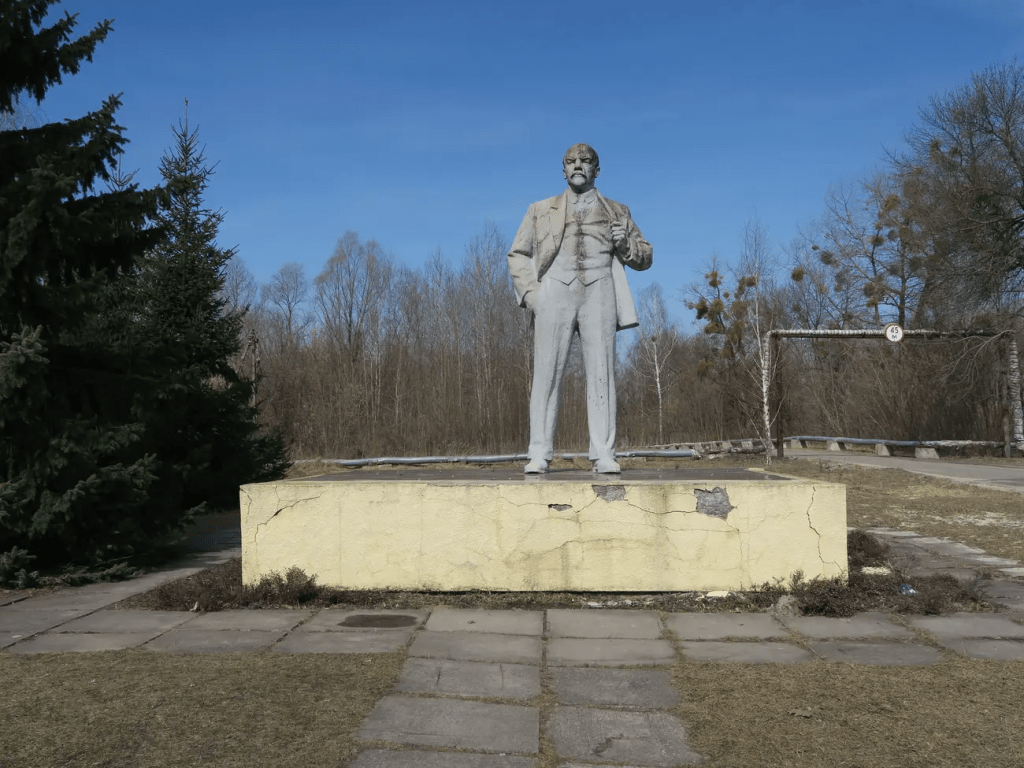
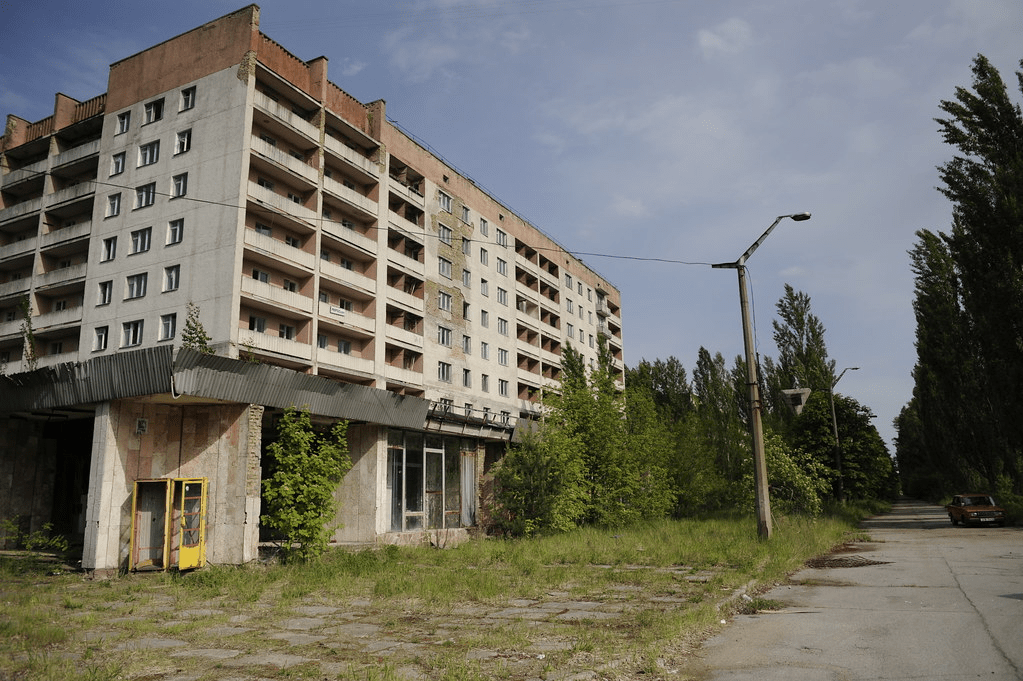
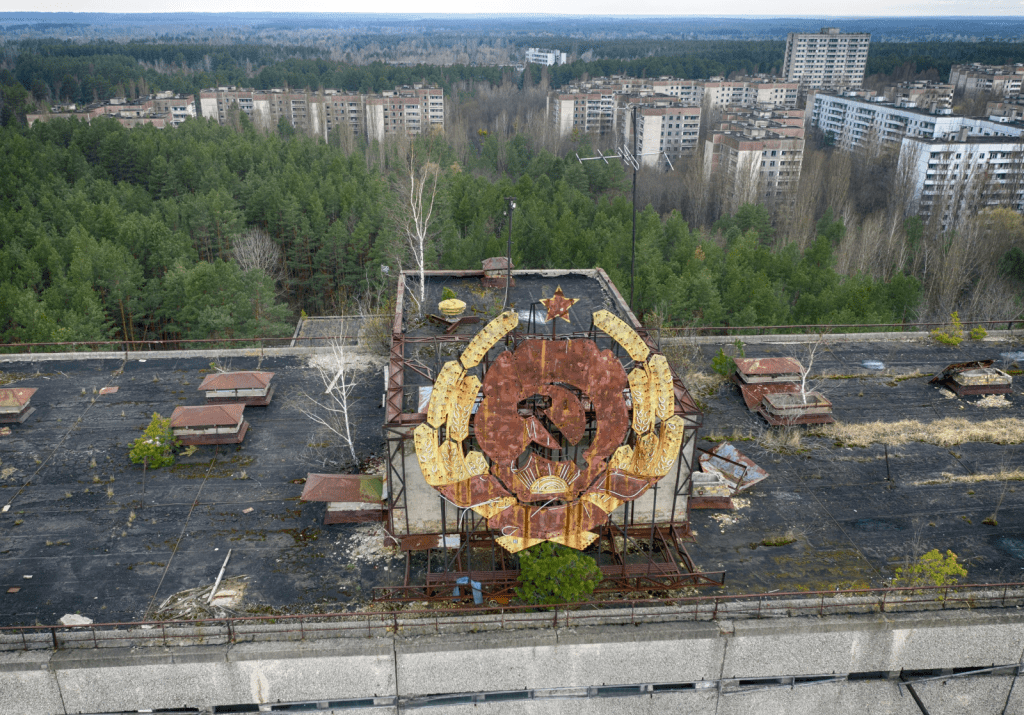
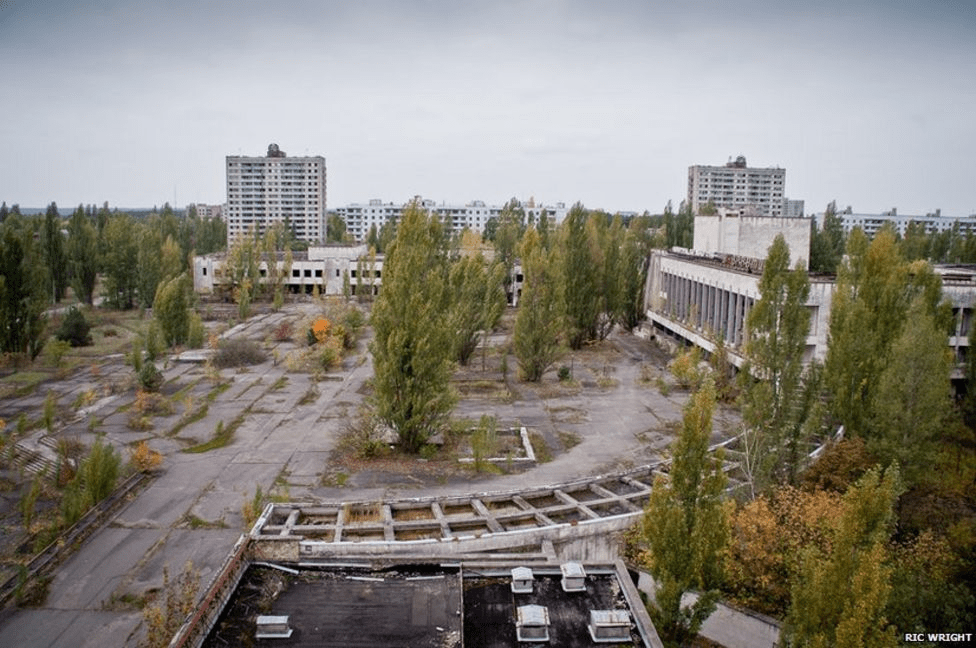
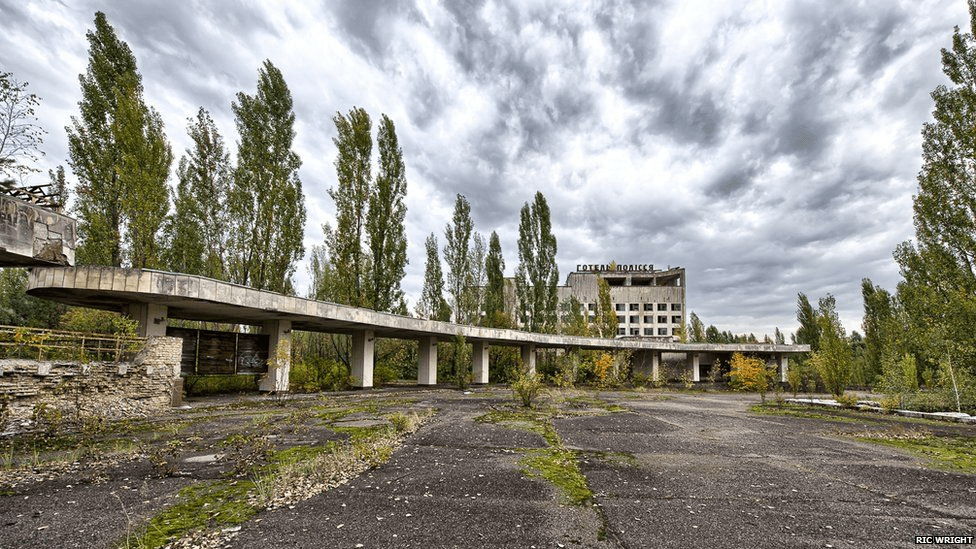
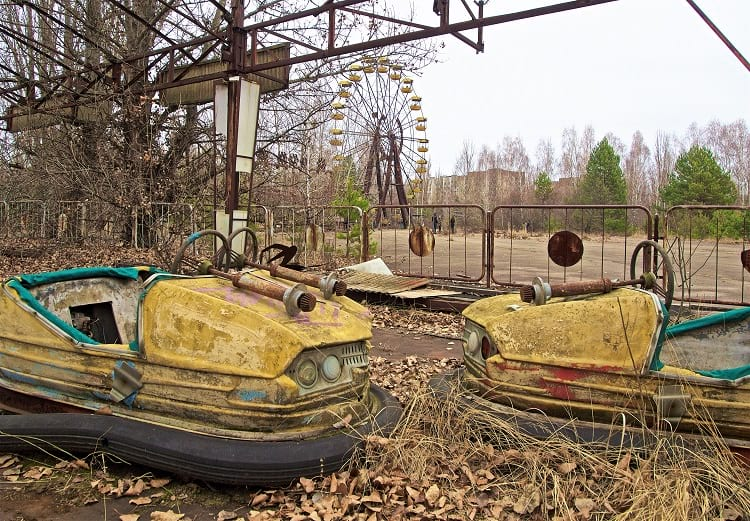
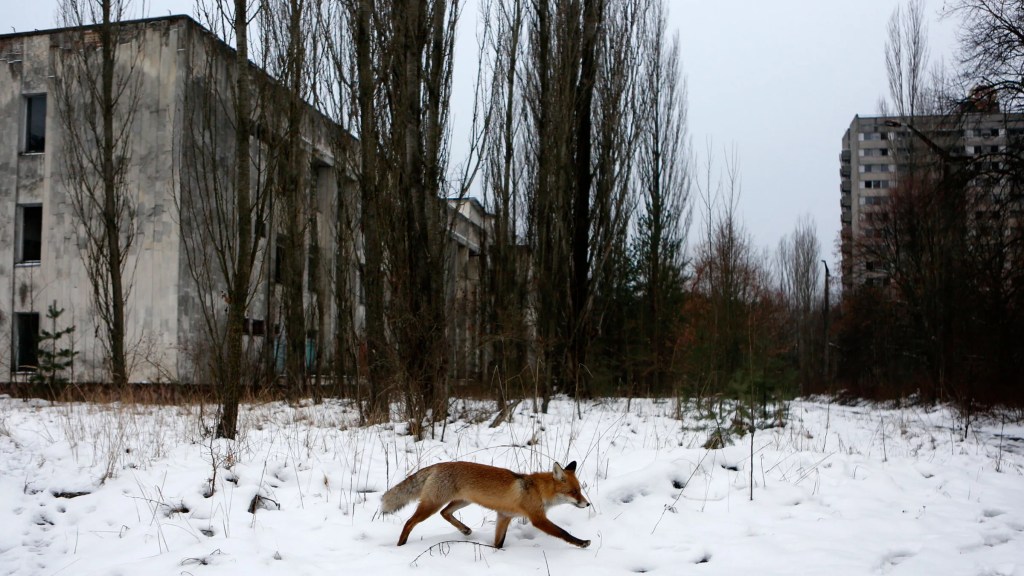
Chernobyl as a dark tourism attraction is certainly unique. Frozen in time, the town of Pripyat is like stepping into a time machine back to the Soviet Era. The town reflects the communist way of life under the Soviet Union as it housed thousands of plant workers and their families (Olivia Alabaster 2019).  It gives the tourists the opportunity to be immersed in history and also see the accumulation of nature over time whilst being at the site of the worlds worst nuclear disaster. For history fanatics, Pripyat provides the opportunity to visit a Cold War relic, suspended in time exactly as it was in 1986. It shows the Soviet Era in its final years of being… a haunting reflection of a superpower of the 20th century before it eventually crumbled.  

Image 1: ‘I saw a statue of Lenin.’  Accessed via: https://www.insider.com/visiting-chernobyl-after-the-nuclear-disaster-2019-4#the-architecture-and-monuments-of-the-area-were-a-step-back-in-time-10  

Image 2: The deserted town of Pripyat, Chernobyl. 20th May 2008. Accessed via: https://www.flickr.com/photos/ebrd/9678672877  

Image 3: The rusty emblem of the Soviet Union is seen over the ghost town of Pripyat close to the Chernobyl plant, Ukraine, 15 April 2021. (AP Photo). https://www.dailysabah.com/world/europe/more-than-3-decades-later-chernobyl-a-place-of-tragedy-and-hope  

Image 4: Here you can see the Cultural Palace on the right, various other shops and restaurants and the 17-storey buildings in which most people lived. Each one is topped with a Soviet symbol. Available at: https://www.bbc.co.uk/news/in-pictures-22246328

Image 5: “Another way of looking at the desolation of Pripyat is how things could be in 27 years at other sites around the world, such as the area around Fukushima in Japan, as well as how the world would look after more than 25 years without human intervention, when nature reclaims cities”, said Wright. Available at: https://www.bbc.co.uk/news/in-pictures-22246328 

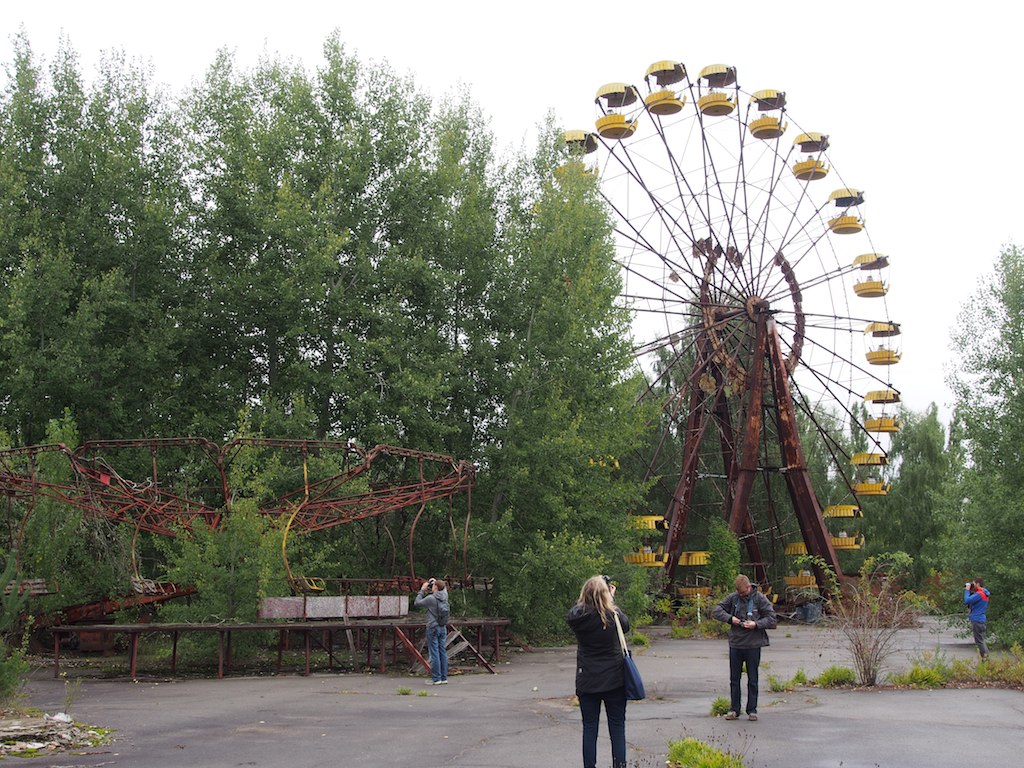
Image 6: An abandoned amusement park in Pripyat. November 15, 2014. Accessed via: https://www.ststworld.com/pripyat-ukraine

Chernobyl could be seen as a reflection of anxieties that we have about the modern day world, as Stone describes Chernobyl as ‘a heterotopia that allows us to gaze upon a post-apocalyptic world, in which the familiar and uncanny collide’ (Stone, 2013, pp.91). Chernobyl is certainly a place where the familiar and uncanny collide, with the familiarity of a city structure, but the absence of bustling life and creativity you would expect. A heterotopia describes a space which has more layers of meaning or relationships that meets the eye. Chernobyl certainly fits the bill of a heterotopic place as its health implications spread out of Ukraine and into Belarus and Russia and still have impacts on the lives of people in this area of Eastern Europe 30 years later. Among residents of these countries, as of 2015 there were almost 20,000 cases of Thyroid cancer reported in children and adolescents exposed at the time of the accident. Approximately 5000 of these cases can be attributed to drinking milk from cows who ate grass contaminated with radiation in the weeks after the accident (Canadian Nuclear Safety Commission, 2022) This reflects anxieties that are apparent in 2023, with threats of Nuclear aggression often apparent in the news and media and also the crisis surrounding climate change. Chernobyl demonstrates to us what our planet would look like if Nuclear War materialised and the human race was wiped out, or if we do not act in time to save our planet from ourselves, putting into perspective how dangerous human beings are to our own existence. This is eerie even just to think about, let alone to walk around and experience for yourself. Although Chernobyl is perceived as a dark tourist site associated with death and disaster, it is fascinating to observe the way that nature had been able to flourish despite against the odds and take back the land, so it is possible to take away from the experience not only the tragic events that occurred at Chernobyl, but also a slither of hope for the future of our planet as nature defies all odds that humans cannot survive. 

A classroom at one of the 21 schools in town. Accessed via https://www.bbc.co.uk/news/in-pictures-22246328  

Pripyat’s concert hall now lies abandoned. Available via: https://www.bbc.co.uk/news/in-pictures-22246328 

A public pool. November 4, 2017. Accessed via: https://www.ststworld.com/pripyat-ukraine/  

The Chernobyl Disaster May Have Also Built a Paradise. Accessed via: https://www.wired.com/story/the-chernobyl-disaster-might-have-also-built-a-paradise

The first tourists who had a desire to visit Chernobyl first began to arrive in the mid-1990s, once the radiation levels had fallen significantly, travelling mainly from the USA and Western Europe to visit the site (Hannam, K. and Yankovska, G, 2018, pp.207). Since this time the interest in tourism to Chernobyl has kept on growing. A trigger of interest in visiting the site which reflects the technological age we live in was ‘S.T.A.L.K.E.R: The Shadow of Chernobyl’, a 2007 first person survival shooter video game so it is no wonder this drew attention as gamers were able to experience the place they had seen in virtual reality, bringing it to life. The 2019 HBO series ‘Chernobyl’ was bound to have a similar effect. After watching the series, I found that it reflects the heartbreak of so many families whilst also delving into where the responsibility for the disaster lies and the legal proceedings that followed, it certainly made me eager to one day visit the site myself. It was reported that tourism companies experienced a 35-40% uptake in visitors (Katie Meller, 2019). This demonstrates the impact of technology and media on dark tourism in the modern day.  

So how safe is it to visit Chernobyl? 

Thrillseekers may enjoy the dangers associated with radiation when visiting Chernobyl, but how safe really is it to visit the site? In an interview with the Ukraines main radiation research hospital courtesy of Vice News, Larya Yanovych head of research analysis and planning department suggests that tourists who venture walk and go into buildings with vegetation, risk contamination of clothes and shoes and the danger of inhaling radioactive dust explaining that exposure to radiation can cause cell mutation and stimulate diseases your body is predisposed to. Generally though it is establised as safe to visit Chernobyl so long as tourists are respectful and the guidelines and stay on designated paths (Vice News, 2016, 6:06).  

Summary:

Overall, Chernobyl is arguably the most famous and most popular Dark Tourism site in the Western World, and it is no wonder as it is extremely unique and like no other place on earth, like stepping into a time machine back to a day of disaster. It is clear that modern day technology and media has had a huge influence on the expansion of the Dark Tourism demographic, through film, TV and gaming in this instance, as well as the increased ease of travel in our modern day world.

Bibliography:

Primary Sources:

Canadian Nuclear Safety Commission (2022). Health Effects of the Chernobyl Accident – Canadian Nuclear Safety Commission. [online] Nuclearsafety.gc.ca. Available at: https://nuclearsafety.gc.ca/eng/resources/health/health-effects-chernobyl-accident.cfm

https://www.bbc.co.uk/news/in-pictures-22246328

https://www.dailysabah.com/world/europe/more-than-3-decades-later-chernobyl-a-place-of-tragedy-and-hope

https://www.flickr.com/photos/ebrd/9678672877  

https://www.insider.com/visiting-chernobyl-after-the-nuclear-disaster-2019-4#the-architecture-and-monuments-of-the-area-were-a-step-back-in-time-10  

https://www.insider.com/visiting-chernobyl-after-the-nuclear-disaster-2019-4#we-also-made-a-stop-by-the-fire-department-in-chernobyl-11

https://www.ststworld.com/pripyat-ukraine/  

https://www.wired.com/story/the-chernobyl-disaster-might-have-also-built-a-paradise

HBO (2019) Chernobyl (2019) | Official Trailer | HBO [Online Video]. 28th March. Available at: https://www.youtube.com/watch?v=s9APLXM9Ei8

International Atomic Energy Agency. (2006). Chernobyl’s legacy: Health, environmental and Socio-economic impacts and recommendation to the governments of Belarus, the Russian Federation and Ukraine. The Chernobyl forum 2003–2005. Vienna: International Atomic Energy Agency. Available at: http:// www.iaea.org/Publications/Booklets/Chernobyl/chernobyl.  

Olivia Alabaster (2019) Dark Tourism: What is drawing thousands to Chernobyl and Cambodias killing fields? The Independent [Online], 03 July. Available from: https://www.independent.co.uk/news/long_reads/chernobyl-hbo-show-dark-tourism-auschwitz-killing-fields-cambodia-a8969611.html.

Vice News (2016) Holiday in Chernobyl: Tourism in the Exclusion Zone. [Online Video], 26th April. Available at: Holiday in Chernobyl: Tourism in the Exclusion Zone

Secondary Sources:

Hannam, K. and Yankovska, G. (2018) Tourism Mobilies, Spectralities, and the Hauntings of Chernobyl. In: Stone, P. R. et al. (eds) The palgrave handbook of dark tourism studies. London, United Kingdom: Palgrave Macmillan. doi: 10.1057/978-1-137-47566-4.  

Katie Mettler (2019) Ukraine wants Chernobyl to be a tourist trap. But scientists warn: don’t kick up the dust. Washington Post [Online], 12 July. Available at: https://www.washingtonpost.com/travel/2019/07/12/ukraine-wants-chernobyl-be-tourist-trap-scientists-warn-dont-kick-up-dust/

Lennon, J. and M. Foley (2000) Dark Tourism: The Attraction of Death and Disaster. London: Continuum. Cited in: Bowman, M. and Pezzullo, P. (2009) “What’s so `dark’ About `dark Tourism’?: Death, Tours, and Performance,” Tourist Studies, 9(3), pp. 187–202. 

Mark Tungate (2017) A brief history of Ryanair. Management Today. [Online], 9th November. Available from: https://www.managementtoday.co.uk/brief-history-ryanair/food-for-thought/article/1449458#:~:text=In%201990%2C%20Ryanair%20re%2Dlaunched,section%20of%20its%20own%20website.

Stone, P. R. (2013). Dark tourism, heterotopias and post-apocalyptic places: The case of Chernobyl. In L. White & E. Frew (Eds.), Dark tourism and place identity: Managing and interpreting dark places (pp. 79–93). London: Routledge.  

Hinduism, Hippies and Hashish: The Hippie Trail as a Spiritual Pilgrimage

By Jack Matthews

“Pilgrimage in the traditional sense is an inner journey manifest in exterior space”

Singh, R (2006)

Known prior to the 1960s as ‘the overland’, a route that would connect London to Calcutta began to gain infamy among the young people of Europe, North America and Australia. More specifically the route would garner the attention of the ‘Hippies’ due to the abundance of drugs on the journey and the emphasis on passing through areas in which Hashish was readily abundant. Though it was not only the abundance of drugs that convinced the hippies to embark on a cross-continental excursion. Some wished to free themselves of the cultural confinement of the west, hearing stories of exotic cultures in the East in which the spiritual system was liberal and free. (Oliver, P. 2014) This blog will focus on the spiritual journey some undertook as well as the use of drugs such as Hashish to reach spiritualism.

Counter-Culture: The Creation of the Hippie and the Allure of Hinduism .

First, we must define and understand what is meant by ‘hippie’ and counterculture. Timothy Miller (2011) defines counter-culture as the ‘disloyal opposition to the establishment culture’. Where the establishment culture that Miller refers to is that of the standard culture in the West, which after World War Two, had become materialistic through the advent of new technology and a prosperous economy. From the perspective of the Hippies, western society had been characterised by social conformity, a lack of individual freedoms and adherence to moral constraints (Oliver, P 2014). At the heart of the counterculture belief was the idea of change; believing the society that had been created was obsolete and that a new culture had to be created which focused more on hedonism: the belief that all that is pleasurable is good. From this came the popular idea of “dropping out”, meaning to drop out of the establishment culture, those who undertook the Hippie Trail could be seen as drop outs leaving the west in search of a culture which aligned more with their beliefs.

No other culture or religion aligned more with their beliefs than that of the Hindus in the east. Unlike Christianity in the west Hinduism had no single god to adhere to, the closest thing to a central god “Brahma” was less of a force to be obeyed and more of a guiding force. (P, Oliver 2014) Hinduism offered its followers a liberal framework to access spirituality, far from the 10 commandments of Christianity that many of the Hippies had been brought up on and had come to resent as being too rigid and conservative. After World War Two many Indian immigrants had moved to the west, bringing the teachings and stories of Hinduism with them, the allure of the exotic religion with its many gods had garnered a wide audience within Europe and North America. As can be seen with the ‘Bold as love’ album cover to the left by Jimi Hendrix and the Beatles visit to India in 1968, Hinduism has infiltrated music, art and pop culture. Where Richard Gregory (2008) makes clear that the Beatles trip to India was paramount in the success and popularity of the hippie trail.

Img 2: Jimi Hendrix ‘Bold as love’ album cover

Img 3: Beatles in India. Accessed: https://www.rollingstone.com/culture/culture-features/how-the-beatles-in-india-changed-america-201531/

Pilgrimage to Kathmandu

Some westerners that set out towards India on the hippie trail had a similar ambition to that of the Indian Pilgrims, often visiting the many holy sites across India as they went. The spiritual side of travel through India was often stressed by early travel books (Gemie and Ireland, 2017) , and thus many of those westerners who visited India often did so to experience the authentic culture and spirituality that was on display within India. It was not only the culture of India which travellers experienced, as Gemie and Ireland (2017) make clear the hippie trail east was defined by religion: passing through Christian lands in the west, through Muslim countries and eventually arriving in India which was home to Sikhs, Hindus and Buddhists. As Tim Maddrell, Avril Terry and Alan Gale (2015) account, the taking part in spiritual events such as walking with a large crowd down the Ganges gave them a feeling of togetherness, or being ‘at one’, a feeling the Hippies of sixties would have craved coming from a society that felt very much divided in the west. Furthermore, a pilgrimage in Hinduism has great transformative power (Singh, 2006), an idea that would have been greatly appealing to the hippies of the 60s, whose counter-culture was placing a great significance on the need to transform western society.

Whilst there were some who did intend the journey to be a pilgrimage, in many ways other than a complete religious one. First hand accounts from Richard Gregory published in 2008 recall that the people found on the hippie trail were wildly diverse: with some coming almost as a conventional tourist, coming across ‘the overland’ to see the world but not necessarily get lost in it. It is key to make the distinction between those who were on the trail to get lost in the various cultures along the way, what we would consider the ‘hippies’ and those who undertook the journey more as a holiday to see parts of the world they had never seen before: where the former would have been more inclined to view the journey as a pilgrimage. Though there were conventional ‘hippies’ that did not see the journey as a pilgrimage; Tony Walton (1973) recounts that the journey was more cultural than religious, with a large emphasis placed on the accessibility of various drugs along the trail, a topic that will be covered later in the blog. Though it should be said that whilst Walton’s journey did not place any emphasis on religion, the images he took whilst on the trail have a clear focus on the cultural and religious aspects of the places he visited, perhaps highlighting how much of a profound impact these different religions and cultures had on Walton.

Img 4: Richard Gregory in Kabul 1974 Accessed: https://www.richardgregory.org.uk/history/hippie-trail.htm
Img 5: Picture taken by Tony Walton of a temple in Kathmandu. Accessed: https://anarcholoco.wordpress.com/kathmandu-rats-the-size-of-cats/

Finding Spirituality: Drugs in Hippie and Hindu Cultures

One unifying aspect that both Hippie culture and Hindu culture shared was the use of psychedelics such as Lysergic acid diethylamide (LSD) and Cannabis or ‘dope’ as the hippies called it. ‘Dope’ or more the use of it was a defining difference between those within the counter culture and those within establishment culture (Miller, T, 2011). Cannabis being an almost constitutive element of counter culture at the time it is easy to see how the Hippie trail enticed the western youth of the 1960s. Contrary to seeing the journey as a pilgrimage it is true that many of those who undertook the journey did so due to the relative cheapness and accessibility of substances such as cannabis (Walton, T, 1973) . In Richard Gregory’s (2008) words:  ‘what defined the Hippie Trail was that it led to the major hashish-producing centres of the world.’ and it was true, drugs such as cannabis and LSD had a huge draw for the hippies on the trail.

Img 6: Indian man smoking cannabis through a Chillum pipe. Accessed: https://www.flickr.com/photos/dario_m87/36621562921/in/photostream/

Though it is true that drugs were a primary draw for those embarking on the trail, it would be wrong to separate those who went on the trail due to the abundance of drugs and those who undertook a spiritual journey. Within both Hindu and Hippie societies the use of drugs is heavily linked with spirituality and religion. Since Veda times (500-1000BC) there are references to the use of a drug named ‘Soma’ in Hinduism for spiritual means, though it is not clear what exact drug is referred to, it is clear that Hinduism and drug use has a long and storied history (Oliver, P 2014). Similarly in counter-culture circles were setting up “Dope Churches” in the U.S such as Tim Leary’s League for spiritualism Discovery, in which psychedelics were used for the sole purpose of producing a religious experience (Miller, T, 2011). It is evident that the use of drugs within Hippie society was to a similar effect to that in Hindu society, and therefore whilst drug use on the hippie trail was extensive, it could be argued that its use was for a spiritual effect similar to that of the Hindus use of such drugs.

This is evident in David Tomary’s (1996) account of his experiences in India, prior to visiting India Tomary had no interest in India culture or Hinduism, even whilst there he felt ‘a great alienation from all but the educated and westernized Indians’. That was until his first experience with cannabis in India, after which his perception of the Indian people was changed. He felt like he had unlocked an understanding of Indian culture and could now properly experience it, although just one example it is a great example to show how the use of drugs within India and on the hippie trail was not always simply for the fun of it but it also allowed those taking them to almost ‘go native’ as Richard Gregory (2008) called it.

Summary

In conclusion, it is fair to say the spirit of the Hippie Trail was similar to that of a pilgrimage. It is interesting to see how how many similarities the hippies and the Hindus had, from basic core beliefs to the use of drugs to achieve spiritualism. Such similarities and the borderline obsession hippies had with Hindu culture is what has led me to believe that whilst the Hippie Trail was not a pilgrimage in a complete sense, and there were many on the trail who would not associate with the label of pilgrim, it did inhibit characteristics similar to that of a pilgrimage. It would seem to be more of a cultural pilgrimage if anything.

Bibliography

Primary Sources:

Secondary Sources:

  • Gale, A, Maddrell, T & Terry, A (2015) Sacred Mobilities: Journeys of belief and belonging. Farham: Ashgate
  • Gemie, S & Ireland, B (2017) The Hippie Trail: A History. Manchester: Manchester university press. 
  • Miller, T (2011) The Hippies and American values. Knoxville: University of Tennessee press. 
  • Oliver, P (2014) Hinduism and the 1960s: the rise of a counter-culture. London; New York: Bloomsbury. 
  • Singh, R (2006) Pilgrimage In Hinduism: Historical context and Modern Perspective. In: Timothy, D & Olsen, D eds. Tourism, Religion and Spiritual Journeys. New York: Routledge. 

Pack your bags, we are going on a package holiday!

When you are booking a holiday, you may embark on a cruise, a cultural holiday, or even a city break. However, the late 1930’s saw the package holiday take centre stage to become one of the most popular holiday options in Britain. A package holiday can be defined as a holiday that is organised by a travel agent and includes accommodation, transport arrangements and sometimes tickets to attractions or events. There are many factors in post-war Britain which caused the rise of the package holiday. The first is the harsh weather conditions that the British public were faced with as ‘the winter of 1946-7 in Britain had been the coldest on record’ (Spellman, 2020, n.p.) Consequently, there were electricity shortages, the government encountered problems importing coal and newspaper printing came to a halt. It is understandable that the British wanted to escape the cold and war-torn conditions that they were experiencing at home and with travel becoming more accessible allowed them to do just that. A move away from scheduled flights in favour of chartered flights gave people more freedom and choice, while ‘the Second World War had left even remote islands with a new asset: airstrips’(Lofgren, 1999, pp.173,) thus opening up new destinations for people to visit. Moreover, attitudes towards holidays themselves changed as they became more accessible to the masses.

Previously, the long 18th century saw holidays to be associated with young, male elites with the educational expectations of acquiring new skills and broadening their knowledge. In post-war Britain, this was no longer the case because package holidays made them no longer a luxury, but something anyone could embark on regardless of their gender or class. The package holiday was able to offer the British a holiday in Spain, for example, ‘at a far less cost […] than dreary and cold vacations in their own homeland’ (Seth, 2006, 313.) Value for money was important to Britons going abroad which is shown through a British Europen Airways promoting package holidays for the summer of 1959. From the beginning of the brochure, readers are told that the holidays available are ‘cheaper than ever before’ (BEA, 1959) and this is a theme that is repeated throughout, showing that this was a predominant concern amongst British holidaymakers.

Don’t worry, you’re on holiday!

Picture your stereotypical Briton abroad, frantically searching for anywhere that serves a Full English breakfast and making no attempt to indulge in the local language or culture. According to Gavin Jack and Alison Phipps, when we are abroad, we ‘play the role of alienated moderns’ (Jack and Phipps, 2005, n.p) and this ultimately led to the package holiday to be standardised to create a sense that British holidaymakers were at home away from home. Orvar Lofgren explains the way in which the package holiday were designed was ‘meant to eliminate much of the anxiety-ridden skills of mastering foreign language proficiency, or the etiquette of public behaviour in hotels and restaurants.’ (Logfren, 1999, pp.205) which was reflected by Harry Ritchie’s account of his 1993 holiday to Fuengirola as he highlights that ‘you do not have to worry about how to work a foreign country […] because it’s all taken care of’ (Ritchie, 1993, pp.15.) It is true that this standardisation ran from the beginning of the package holiday to the very end. This is evident as soon as Ritchie stepped off his flight as ‘the Thomson woman pointed me through the door to another Thomson woman who pointed me to a bus ten yards away’ (Ritchie, 1993, pp.15) This shows just how regimented the package holiday was from the minute is began. The conformity continued as you would encounter the same tour guides and activities throughout the course of your stay. Ranging from the food and drink available, to claiming your sun lounger by the pool side, daily routines were important and a pattern which emerged due to a rise in the popularity of the package holiday.

Outside of the direct standardisation of the package holiday itself there were more ways to fulfil the need to make the surroundings feel familiar to the British people. British people seeking the feeling of Britishness played a huge role in shaping the package holiday. Figure 1 was taken in Majorca in the 1980s and if it wasn’t for the sun, it could be mistaken for being in Britain. After all, what gets more British than a pub named after a member of the royal family? Every detail of the image, including the use of the colours red, white and blue, are representative of a British audience. The fact that the takeaway, pub and shops are all positioned together emphasises how Britain was almost condensed to allow people to continue to experience their own country while on a package holiday. If that was not enough, British holiday makers could get their hands on ‘essential’ British products. Nowadays, your average Briton abroad would not survive a few hours without a tea bag and going back a few decades, the same can be said for British cigarettes and the daily newspaper. Luckily, the BEA travel brochure promoting package holidays informs readers that ‘English newspapers are on sale at most bookstalls. English cigarettes are obtainable too’ (BEA, 1959.) The availability of everyday British products introduced another layer of comfort to the package holiday. As British cigarettes in particular were on the more costly side, this was further achieved through the British taking their own products to use while on holiday.

Sykes, H. (1980s) Photograph taken in Majorca, Spain [Online image] Available from: https://www.alamy.com/1980s-tourism-spain-magaluf-majorca-english-owned-bars-restaurants-image4114638.html
Figure 1. Homer Sykes (1980s.) Photograph taken in Majorca, Spain.

Package holidays were not all filled with sunshine and sand

Perhaps it is easy for us to presume that the formulaic approach to the package holiday led to Britons abroad to have the same experiences. However, this was not the case as people could add their own meanings to their package holiday. While abroad, the British applied their beliefs and expectations to degrade what they saw. This is evident in comparisons made between the travel brochure and what they actually experienced while on their package holiday. The BEA travel brochure used descriptive language such as ‘Spain- where the sun blazes down all day, and the nights are balmy and star-studded’ (BEA, 1959,) presenting a utopian view of a package holiday. This is reinforced through the images used on the BEA travel brochure which show the idea of a paradise contrived brochure zone (Dann, 1996) which was done to show off the natural beauty and architecture of the countries. Figure 2 highlights the picturesque landscape of Austria with greenery and mountains which were romanticised in British literature at the time and by visitors. Similarly, Figure 3 gives readers a taste of the sunlit beaches and deep blue sea that British holidaymakers had the opportunity of visiting. On the other hand, Ritchie’s hotel that had ‘looked intriguing in the brochure’ (Ritchie, 1993, pp.19,) but upon arrival it was ‘ghastly’ (Ritchie, 1993, pp.19.) In his account, Ritchie continues to express his discontent of the conditions he was presented with. As a result, the contrast of the appealing imagery on the travel brochure and what people experienced   creates a division between the expectation versus reality. There was an element of risk to embarking on a holiday overseas which Richie exemplifies. If expectations were not met, the meaning that the package holiday had to the holidaymaker could change.

British European Airways (1959), The Happiest Holiday of All.
Figure 2. British European Airways (1959.) The Happiest Holiday of All.
British European Airways (1959), The Happiest Holiday of All.
Figure 3. British European Airways (1959.) The Happiest Holiday of All

In addition, there are many instances in which British people presented themselves as superior to the locals. This is a criticism identified by Martin Farr who argues that package holidays results in a feeling of ‘moral superiority’ (Farr, 2013, pp.118.) While on a coach, Richie identifies that there is ‘obviously, on the left, another hotel and some very badly parked cars’ (Richie, 1993, pp.17) and it was the ‘badly parked cars that was our eventual undoing’ (Richie, 1993, pp.17) which led to complaints from fellow passengers. The use of the term ‘obviously’ is conveyed in a disapproving tone which suggests the locals were hindering his holiday experience by, as he presents them, being careless and inconsiderate. As representations of locals were missed in favour of promoting the British aspect of the package holiday, it suggests the way local life was imagined was artificial and unrealistic, resulting in a self-centred approach from Britons abroad.

The rise of the package holiday is important when assessing how travel has evolved. Although the standardization of this type of holiday created a sense of package holidays being a shared experience, they marked a transition towards independence and British people using them for purposes specific to the individual. Also, the feeling of Britishness became characterised by stereotypes, some of which we still see today while on a holiday outside of Britain. The package holiday becoming mainstream in British society due to it becoming affordable to people outside of the upper class, combined with the impact of the Second World War created conditions for the transformation of travel.

Bibliography

Primary sources

Sykes, H. (1980s) Photograph taken in Majorca, Spain [Online image] Available from: https://www.alamy.com/1980s-tourism-spain-magaluf-majorca-english-owned-bars-restaurants-image4114638.html [Accessed 26 March 2022]

Ritchie, H. (1993) Here we Go: a summer on the Costa Del Sol. London: Penguin.

British European Airways (1959), The Happiest Holiday of All.

Secondary sources

Dann, G. (1996) The People of Tourist Brochures. In Selwyn, The Tourist Image: Myths and Myth Making in Tourism. Chichester: Wiley, pp. 61-103.

Gavin, J, Phipps, A. (2005). Tourism and Intercultural Exchange: Why Tourism Matters. Channel View Publications.

Farr, M. (2013) The Lacunae of Heliosis: Package Holidays and the long 1970s. In Farr, Martin & Guegan, Xavier (eds) The British Abroad Since the Eighteenth Century, Vol. 1: Travellers and Tourists. Basingstoke: Palgrave Macmillan, pp.117-138.

Lofgren, O. (1999). On Holiday: A History of Vacationing. University of California Press.

Seth, P. (2006). Successful Tourism Volume II: Tourism Practices. Sterling Publishers.

Spellman, W. (2020). A Concise History of the World Since 1945: States and Peoples. Bloomsbury Publishing.

The Purpose of Dark Tourism- Acts of commemoration or tourist locations being used to make a profit?

Dark tourism has become a popular travel alternative over the years; ranging from 1816 and individuals visiting the battlefield of Waterloo, to the present day where people visit tourist destinations such as the 9/11 memorial in New York and the Dungeon visitor attractions . But this type of travel has faced criticism about its existence and purpose, as dark tourism is associated with the “memorialization of death and suffering” (Oxford languages, 2022). A main question that has arisen alongside the development of dark tourism is that should destinations that are “connected to some of history’s most devastating events be turned into tourist attractions?” (Dark Tourists, 2022). This question can be answered when taking into consideration two aspects. One aspect is if the attraction is treated by tourists as a way to commemorate events of the past and learn about its place in history; and the second aspect can be focused on the matter of the attraction making a profit and being used commercially. 

The battlefield of Waterloo:

The Battle of Waterloo occurred on the eighteenth of June 1815 and became a popular tourist attraction since its conclusion, as many people travelled to visit the battlefield. In some cases people visited it as the battle was still taking place. The destination itself represents a common form of thanotourism, as it allows tourists to be given the opportunity to see sites where mass or individual deaths have occurred (Seaton, 1999, p.131). Also, Waterloo became the center of a developing tourism industry and it was not unusual in the eighteenth and nineteenth century for places associated with dark tourism to be visited.

Images of the Waterloo battlefield in 1815 and the present day
Image 1- https://commons.wikimedia.org/wiki/File:18_June_1815_%E2%80%93_Waterloo_%E2%80%93_L%27Arbre_Picton.jpg#/media/File:18_June_1815_%E2%80%93_Waterloo_%E2%80%93_L’Arbre_Picton.jpg
Image 2- https://commons.wikimedia.org/wiki/File:Waterloo_18th_of_June.JPG#/media/File:Waterloo_18th_of_June.JPG

There are three accounts which can be analysed to show how tourists reacted to the battlefield. They are all first-hand accounts by Scott, Southey and Eaton and detail their experiences as being dark tourists. For instance, in Scott and Southey’s accounts, they both indicate how commercial the location has become, signalling that the attraction was used for making a profit. In addition, Seaton addresses that “local peasants set up stalls and sold relics” (Seaton, 1999, p.137) and Scott recalls in his account that “letters were taken from the pockets of the dead” (Scott, 1816) to be resold. This is reinforced by Southey, who explains that he “bought a French pistol and two ornaments of French infantry for 6 francs” (Southey, 1816:1903). From 1815 and onwards, locals sold items that they discovered and collected from the battle of Waterloo to act as compensation from the disruption that the conflict had caused them. In continuation, this can be related to tourist etiquette. For instance, buying souvenirs is viewed as an action that should be avoided. This is because if an increasing number of people take a memento, it decreases the respect that the attraction receives; which should be left intact and undisturbed (Dark Tourists, 2022). Alternatively, Eaton’s account does not focus on commercial elements but on emotional ones and she writes about how she connected to a location where death had recently occurred. Within this account it is clear that as a tourist, Eaton found her experience traumatic as she did not expect what she saw. For example, she expresses that “no monument points out to future times the spot where they expired” (Eaton, 1817:1888). This shows that she believes those who perished in battle should be commemorated, as it would educate people on the historical event and also allow them to reflect on the sacrifices that were made.

9/11 Memorial:

Speaking of Eaton believing that the battlefield of Waterloo should be treated as a site of commemoration, it can be said that the 9/11 war memorial in New York receives this treatment by the tourists that visit it. 9/11 occurred on the 11th of September 2001 and involved four coordinated terrorist attacks being carried out, causing the death of “2,977 people” (9/11 Memorial & Museum, 2021). The location of the memorial is constructed in the site of the former World Trade Centre, which was destroyed during the attacks. When the decision was made to convert the site into a memorial, the “New York tourist board found it hard to approach its newest attraction” (Pilot guides, 2021). This is because, they did not want to appear “to be capitalising on the tragedy” (Pilot guides, 2021). In terms of dark tourism, it is stated that there is attractiveness about the dark that draws the attention of tourists.  In the case of the 9/11 memorial site, it can be classed as an experiential experience, because it permits people to see and witness the location of an event.

For the above slideshow: Images of 9/11 terrorist attack that occurred in 2001 and the memorial Image 1 –https://commons.wikimedia.org/wiki/File:National_Park_Service_9-11_Statue_of_Liberty_and_WTC_fire.jpg#/media/File:National_Park_Service_9-11_Statue_of_Liberty_and_WTC_fire.jpg Image 2 – https://upload.wikimedia.org/wikipedia/commons/thumb/e/ed/9-11_Memorial_South_Pool.jpg/640px-9-11_Memorial_South_Pool.jpg Image 3- https://commons.wikimedia.org/wiki/File:9-11_memorial_pool.jpg#/media/File:9-11_memorial_pool.jpg

In addition, the memorial is known to this day of having the purpose to allow individuals to be able to pay their respects to those who lost their lives; but in 2001, after it was determined that the memorial would never be used in a commercial sense, questions did arise about the motive of tourists themselves. For instance, at the time, New York media viewed tourism as a ghoulish act towards social value, which followed a statement announced by the city’s mayor, Giuliani. Giuliani stated that the 9/11 “site was a crime scene, not a tourist attraction” (Dalton, 2014, p.153). A dark aspect of dark tourism is that human beings want to get their head around the complexity of inhumanity; meaning that they want to understand the occurrence of another’s behavior. According to Dalton, a tourists’ motivation for visiting the scene of the attacks in 2001 was fueled more by curiosity than as an act of commemoration; relating to both domestic and international tourists (Dalton, 2014, p.153).  Also Dalton continues by stating that tourists’ curiosity was not affiliated with “seeing where people died and taking some sort of morbid pleasure in the act” (Dalton, 2014, p.153), but associates their motivation with being interested in what “the site actually looks like, to make the event real” (Dalton, 2014, p.153). This shows that dark tourism is not always associated with commemoration or the act of making a profit, but includes people just wanting to see a site where a tragic event has happened so that they can experience the aftermath of the event for themselves.   

The Dungeon Attractions, UK:

In comparison to the battlefield of Waterloo and the 9/11 memorial in New York; the Dungeons attractions are considered as a form of “lighter dark tourism” (Sharpley and Stone, 2009, p.167), meaning that while it is associated with death and suffering, it has a high tourism infrastructure. In terms of the attraction itself, there are six Dungeon attractions around the UK, ranging from York, London and Edinburgh. Focusing on the London Dungeon, it is described as a thrilling attraction that allows visitors to “see, hear, feel and smell” (The London Dungeon, 2021) gruesome events of the city’s past. When taking into account the act of commemoration and the process of making a profit, it can be said that the Dungeons as a dark tourism attraction, incorporates elements of both. Expressed by Stone and Sharpley “official tourism marketing is progressively exploiting the commercial aspects of tragic history” (Stone and Sharpley, 2009, p.167) and viewed from a money-making perspective, the Dungeons are promoted to tourists in a way that shows them to be fun, and it is indicated that this strategy disguises the attractions dark nature.

In addition, the element of commemoration is still seen to be present in attractions treated as entertainment. According to Ivanova and Light, there are other motives aside from being curious. They state that these include “a desire for learning and understanding” (Ivanova and Light, 2018, p.357) and a “wish to connect with tragic events and a sense of obligation” (Ivanova and Light, 2018, p.357). This being said, it is implied from these statements that commemoration is a main factor as the Dungeon attractions teaches tourists about tragic events of the past through educative processes. This then leads to people remembering what they have learnt, but also remembering the tragic events that individuals had to live through in the past , which in some cases did result in death and suffering; such as the London Plague that is estimated to have killed around 68,596 people between the years 1665 and 1666 (National Archives, 2022).  

To contemplate if some of history’s most devastating events should be tourist attractions; by weighing up the evidence collected, it can be concluded that these attractions should exist. This is because by dark tourism being existent, events surrounding the occurrence of death in the past will not be forgotten by future generations; but this does not mean that these sites are always used for the correct purpose. The 9/11 memorial is a location that is focused on commemorating the individuals who lost their lives during the attacks in 2001 and it was made clear that it would exist as a place for people to be respectful. But this shows how dark tourism has developed over the decades, as in 1815, the accounts of Scott and Southey focus upon how the battlefield of Waterloo was appealing to tourists as a chance to gain souvenirs and for local peasants to earn compensation for the disruption that had been caused to their lives. Also in 1815 there were tourists who felt obligated to commemorate the lives of those who had been killed in the conflict and this is revealed through Eaton’s account. Furthermore, it can be said that the Dungeon attractions have more in common with the way that Waterloo was treated compared to the 9/11 memorial as even though the dungeons do make a profit off the many tourists that visit, they are teaching people about events that occurred in history and keeping the memory of them alive. Overall the purpose of dark tourism is associated to how locations are treated by the dark tourists.

Bibliography:

Primary Sources:

Eaton C (1817:1888) Waterloo Days: The narrative of an Englishwoman Resident at Brussels in June, 1815. London: George Bells & Sons

Dalton D (2014) Dark Tourism and Crime. Taylor and Francis: Oxfordshire. Pp.1-230

Ivanova P, Light D (2018) ‘“It’s not that we like death or anything”: Exploring the motivations and experiences of visitors to a ‘lighter’ darker tourism attraction.’ Journal of Heritage Tourism. Volume 13, Issue 4. Pp.356-369

Scott J (1816) Paris Revisited in 1815, By way of Brussels, Including a walk over the Field of Battle at Waterloo. Boston: Wells & Lilly

Seaton A.V (1999) ‘War and thanotourism: Waterloo 1815-1914.’ Annals of Tourism Research. Volume 16, Issue 1. Pp. 130-158

Southey R (1816:1903) A journal of a Tour of the Netherlands in the Autumn of 1815. London: Heinemann

(Eds) Stone P.R, Sharpley R (2009) The Darker Side of Travel: The Theory and Practice of Dark Tourism. Channel View Publication. Pp.1-275

Secondary Sources:

Dark Tourists (2022) ‘Welcome to Dark Tourists.’ Available <https://darktourists.com/home/&gt; Accessed: 21st February 2022

9/11 Memorial and Museum (2021) ‘What happened on 9/11?’ Available <https://www.911memorial.org/911-faqs&gt; Accessed: 23rd February 2022

Oxford Languages (2022) ‘Dark Tourism definition.’ Available <https://oxfordlanguages.oup.com/google-dictionary-en/&gt; Accessed: 21st February 2022

Pilot guides (2021) ‘Ground Zero & the phenomena of Dark Tourism.’ Available <https://pilotguides.com/articles/ground-zero-the-phenomena-of-dark-tourism/&gt; Accessed: 23rd February 2022

The National Archives (2022) ‘Great Plague of 1665-1666.’ Available <https://wwwnationalarchives.gov.uk/education/resources/great-plague/&gt; Accessed: 24th February 2022

The London Dungeon (2021) ‘What is the Dungeon?’ Available <https://www.thedungeons.com/london/whats-inside/what-is-the-dungeon/&gt; Accessed: 24th February 2022

Dark Tourism – An Orchestration of Thrill-Seeking

___________________________________________________________________________________________

Dark tourism has been tickling the taste (or more so travel) buds of Brits for hundreds of years. It is easy to assume that dark tourism is a new commodity and is only associated with those who wish to thrill-seek or have a passion for the macabre. However… whenever, and wherever death occurs, curious people tend to follow. This even dates back to 500AD whereby “the first identifiable phase of dark tourism in numbers was Christian Pilgrimage” (Seaton, 2018 p28) so dark tourism has basically been around forever!

There are many variables surrounding dark tourism so the chances are that you yourself can be classed as a dark tourist due to the complex definitions surrounding it. For those who may not understand nor have a fascination with death, dark tourism can subconsciously “invite us to recognise the fragility of life in general, as well as our individual mortality and relative insignificance in the universe” (Bowman et al, p189), making the very idea of dark tourism somewhat valuable to the human experience.

Fig 1 – Image of the Paris Morgue, a popular tourist destination in the 1800s. – Marlet, J. (before 1847). Morgue de Paris. Uploaded by: Garitan, G. (2014). Available: Wikimedia Commons.

What can be classed as dark tourism?

_____________________________________________

According to Seaton (2009), a key researcher within dark tourist attractions, there are five key typologies; public enactment of death (this relates more to executions further back in history), mass death sites such as battle fields, war memorials, symbolic representations (like what you may see in a museum), and re-enactment. Many different ‘destinations’ or ‘sites’ can be put into these typologies, making them quite hard to define. Even though the dark tourist may not be consciously aware, nor thrill-seeking, it is still and has been an attractive reason for Brits to travel. People crave experience and visiting a dark tourist site allows them to empathise and be present in the history of the place. Furthermore, people may travel with the sense of collective identity, to honour those departed. Examples of this may include the National September 11 Memorial Museum and Auschwitz.

An early definition of dark tourism, curated by Seaton draws on dark tourism being to “travel to a location wholly, or partly motivated by the desire for actual or symbolic encounters with death” (Seaton, 1996 p240). However, he now describes that these places are engineered and orchestrated to remember mortality and fatality. Even though people visit these places may go out of symbolic reason or respectfulness, the place in question has been created to do so with reason and with commercialisation.
Within western historiographical terms, reasons for the visitation of such places can be due to ritualisation, antiquarianism and more aesthetically, romanticism. People like to romanticise what once was, leading to the fascination towards places that once were. There is also the potent value of viewing or learning about specific history up close, to make sure it doesn’t happen again.

There are many first-hand historical and modern accounts which describe different types of dark tourism for different reasons, yet each account holds the stark similarity of being both effected by their trip and showing the evident orchestration of places of death and or destruction:

The Past and the Present –

What were people’s experiences as dark tourists?

_____________________________________________

The Battle Site of Waterloo:

Fig 3 – Sadler, W. (1815). The Battle of Waterloo. Uploaded By: Mathiasrex (2011). Available: Wikimedia Commons

Robert Southey visited the battle site of Waterloo the Autumn after its occurrence in 1815. In his recount he mainly speaks of the capitalisation of the battlefield, and the evident contrast compared to the realities of the battle, and what they were doing on the tour. He stated that they had “bread and cheese, wine and fruit” (Southey, 1816) in the same place where the “bone of one leg with the shoe on is lying above ground” (Southey, 1816) which shows the orchestration of this tour.

Even though this recount is from 1815, there are still elements of modern-day tourism, consolidating the idea that dark tourism and the engineering of it as a commodity has always and will always be around. Robert states that he purchased “a French pistol and two ornaments of the French infantry cap for six francs” (Southey, 1816) almost as if he were in a gift shop. This, along with dining on top of a potential burial site shows that the tour was planned as a form of leisure, and those selling items, and the tour itself could capitalise on the tragic battle.

Fig 3 – Film poster for a re-enactment of the Battle of Waterloo. By Daily Alaska Dispatch Newspaper. (1914). Battle of Waterloo 1914. Uploaded by: JKBrooks85. (2014). Available: Wikimedia Commons.

In Contrast to Robert Southey, Charlotte Eaton visited the battle ground in June 1815. She notes that “melancholy were the vestiges of death that continually met our eyes. The carnage here had indeed been dreadful” (Eaton, 1817) which shows the tour, and her surroundings had an extremely negative and profound effect on her. She further describes in detail the gruesome remains of horses and the evident death and destruction of which occurred at this site. Visiting this site as a tourist so soon after the atrocities, plays into the idea of morbid curiosity, and the need to be ‘self-involved’ in an event. Charlotte saw “piles of human ashes that were heaped up, some of which were still smoking” (Eaton, 1817) which to many would indicate that they were visiting too soon after the event. When travelling to dark tourist sites it is important to show respect and viewing fresh human ashes just because they wanted to visit can definitely be seen as disrespectful.

Chernobyl Exclusion Zone:

The Chernobyl disaster of 1986 left the city of Pripyat as a ghost town, due to the evacuation of people because of nuclear fallout. As time has progressed, the city has become to exemplify “darker aspects of scientific advancement and human experience and its ability to lure increasing number of tourists” (Yankovska, 2014 p935) as a dark attraction site.

Even though there is a lure for tourism, it is important to keep in mind and be respectful of the people who still reside at this dark tourist destination. In the case of Chernobyl, people who avoided the evacuation protocols still live in the exclusion zone and “rely on food from their gardens and the surrounding forest, including large and abundant mushrooms” (Kingsley, 2021) to survive. They also live around extremely high levels of radiation which is extremely health damaging. For someone to travel there as a dark tourist, whether their main goal is to thrill-seek or educate themselves, it can be seen as encroaching on these people’s lives, and almost romanticising what is in fact a very dangerous situation for those that decided to stay.

Fig 4 – Tourists visiting the Exclusion Zone. By Gilliland, C. (2014). Pripyat. Available: Wikimedia Commons.

In 2019, travel blogger Stephanie Hollman shared her experience of visiting the Chernobyl exclusion zone. She stayed there for a number of days and was given tours round the abandoned hospitals and saw “remnants of daily life” (Hollman, 2019) that were damaged by the disaster. Just like the Waterloo accounts from 1815, there were both examples of engineered tourism, and profoundly negative ‘thrilling’ emotions present on the trip.

For the first part she describes not feeling much emotion, until the stark realities of human life came to fruition. Entering Pripyat, where the disaster occurred, she found it “surreal to stalk around an abandoned city of a former 50,000 inhabitants and not see another soul (Hollman, 2019) which shows she felt profound emotions, as well as just wanting to ‘thrill-seek’.

“Whenever we saw a personal artefact, I started to feel those sickening twinges of reality sinking in a single shoe, a coat on a doorknob, a framed photo on the windowsill, or a carton of milk still sitting on the kitchen table.”

stephanie Hollman, 2019

The feelings she experienced whilst exploring are indicative to the general experience of the dark traveller, whether intending to thrill-seek or not. It is common to be faced with artefacts of loss and death as “feel a sense of anxiety and vulnerability about death in ways that can challenge senses of self” (Light, 2017 p289) as seeing this made her re-evaluate her lack of feelings on the trip.

“We ate traditional Ukrainian meals at Chernobyl’s only restaurant and stocked up on snacks (and vodka) at its only convenience store. Our humble hotel provided hot showers and we even had access to reasonably fast WIFI. We also learned of a fully functioning post office, basic health clinic, and fully stocked bar that served to entertain its residents.”

Stephanie hollman, 2019

This extract from her blog post demonstrated the idea of the tour being engineered with guests in mind, rather than the place being cut off and labelled only as a place of history. Having amenities such as WIFI and being able to have traditional food and drink (Just like Robert Southey in Waterloo) commoditises the disaster site, turning it into a strictly tourist space.

Check out her full blog post here

_____________________________________________

As suggested within these different accounts of dark tourism, the main aspect, aside from the commodification of the sights is the “remembrance of the death and the dead, induced by symbolic representations” (Seaton, 2018 p24) and that some people visit these places to feel like they are part of the history. However, the idea of being a ‘dark’ tourist does not always mean to be gruesome and negative. It is important that “dark places cannot be considered solely as vehicles of reflection on death” (Buda et al, 2020 p681) more so a place of history and great importance to remember that the people involved once lived, and often came to a horrific end.

Photograph of the Paris Catacombes. Djtox. (2007). Catacombes de Paris. Available: Wikimedia Commons.

Bibliography

_____________________________________________

Bowman, M AND Pezzullo, P. (2010). What’s so ‘Dark’ about ‘Dark Tourism’?: Death, Tours, and Performance. Tourist Studies. 9 (3), 187-202.

Buda, M D. AND Martini, A. (2020). Dark tourism and affect framing places of death and disaster. Current Issues in Tourism. 23 (6), 679–692.

Eaton, S (1817: 1888) Waterloo Days: The Narrative of an Englishwoman Resident at Brussels in June 1815. London: George Bell & Sons.

Hollman, S. (2019). My Experience Visiting the Chernobyl Exclusion Zone. Available: https://travanietravels.com/chernobyl-reflections/.

Kingsley, J. (2021). Life goes on at Chernobyl 35 years after the world’s worst nuclear accident. Available: https://www.nationalgeographic.com/culture/article/life-goes-on-chernobyl-35-years-after-worlds-worst-nuclear-accident.

Light, D. (2017). Progress in dark tourism and thanatourism research: An uneasy relationship with heritage tourism. Tourism Management. 61 (1), 275-301.

Seaton, T. (2018). Encountering Engineered and Orchestrated Remembrance: A Situational Model of Dark Tourism and Its History. In: Stone, R P The Palgrave handbook of dark tourism studies. London: Palgrave Macmillan. 22-33.

Seaton, A. V. (1996). Guided by the dark: From thanatopsis to thanatourism. International Journal of Heritage Studies, 2(4), 234–244.

Robert Southey (1816: 1903) A Journal of a Tour of the Netherlands in the Autumn of 1815. London: Heinemann

Yankovska, G. AND Hannam, K. (2014). Dark and Toxic Tourism in the Chernobyl Exclusion Zone. Current Issues in Tourism. 10 (17), 929-939.